Scene at Napanoch by William Hart
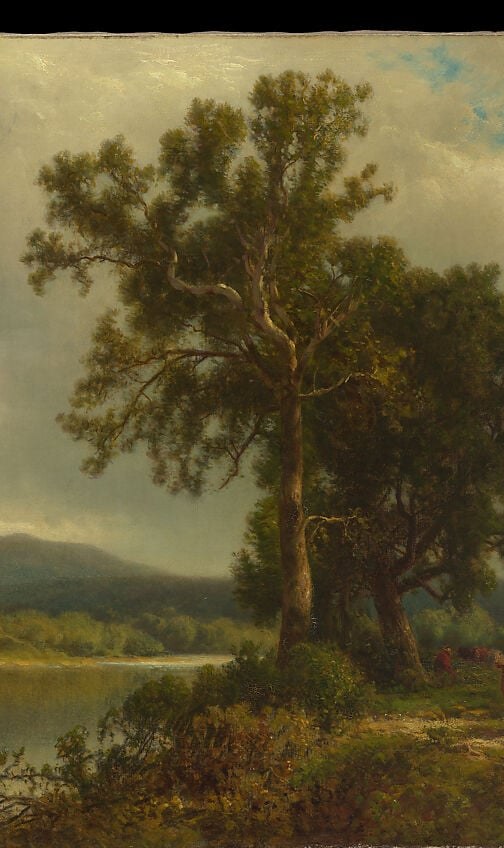
William Hart's 'Scene at Napanoch' (1883) once hung in the shadows of art history. After modernism declared the Hudson River School obsolete, canvases like this one gathered dust, their value more sentimental than financial. Today, this serene pastoral view is housed in The Metropolitan Museum of Art's American Wing, a quiet survivor of a brutal shift in taste.
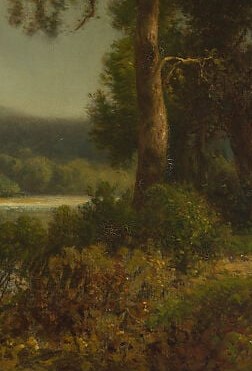
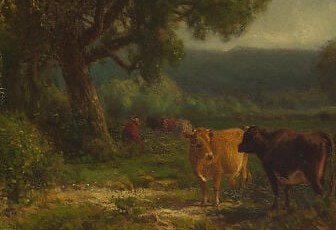
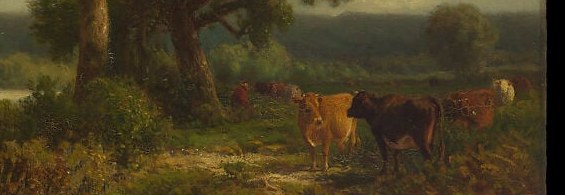
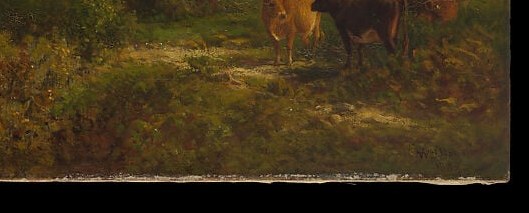
Look first at how Hart built the composition. The great leaning elm on the right is the spine of the entire image, its rough trunk rendered with confident impasto strokes. The two resting cows are not just livestock; their warm russet coats are the only major warm accent against an ocean of cool greens and blues, anchoring the foreground. Hart was a cattle painter by specialty, and his patrons knew him for exactly this kind of quiet, dignified animal presence.
Born in Scotland in 1823, Hart emigrated as a child and became a central figure in the second generation of the Hudson River School. He worked alongside his brother James and sister Julie, all of them painters. By the 1880s, when he made this work, he was an established success. But the art world can be fickle. By the early 20th century, his luminist landscapes were seen as old-fashioned and hopelessly out of step.
The rehabilitation took nearly a century. As collectors and museums re-examined 19th-century American art, Hart's stock rose again. Works that once sold for modest sums now achieve strong prices, a reminder that what is ignored in one generation can be treasured in the next. Where would you have stood, with the modernists, or with the cows?
Details
Transcript
In 1883, a Scottish-born artist painted this quiet farm. His name was William Hart. He was at the top of his game. This single leaning elm is the spine of the whole scene. Look how the paint itself becomes rough bark. Hart sold work like this for a living. And then taste changed. Modernism swept in. The Hudson River School fell from favor. For decades, a painting like this was nearly worthless. Then the market turned. Today, a Hart can command over forty thousand dollars.