William Scott-Elliot of Arkleton (1811–1901) by Henry Raeburn
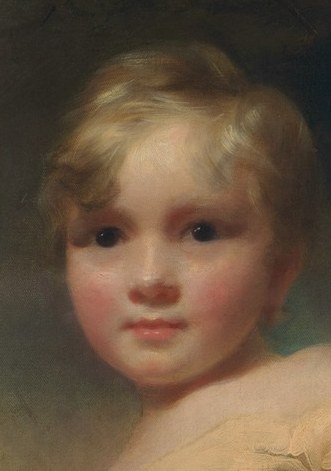
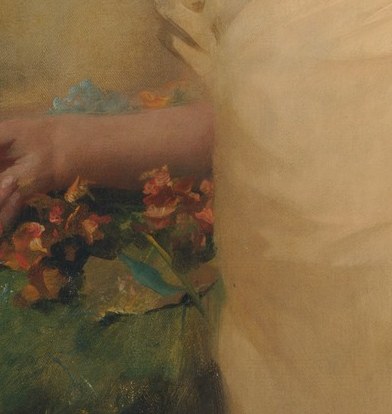
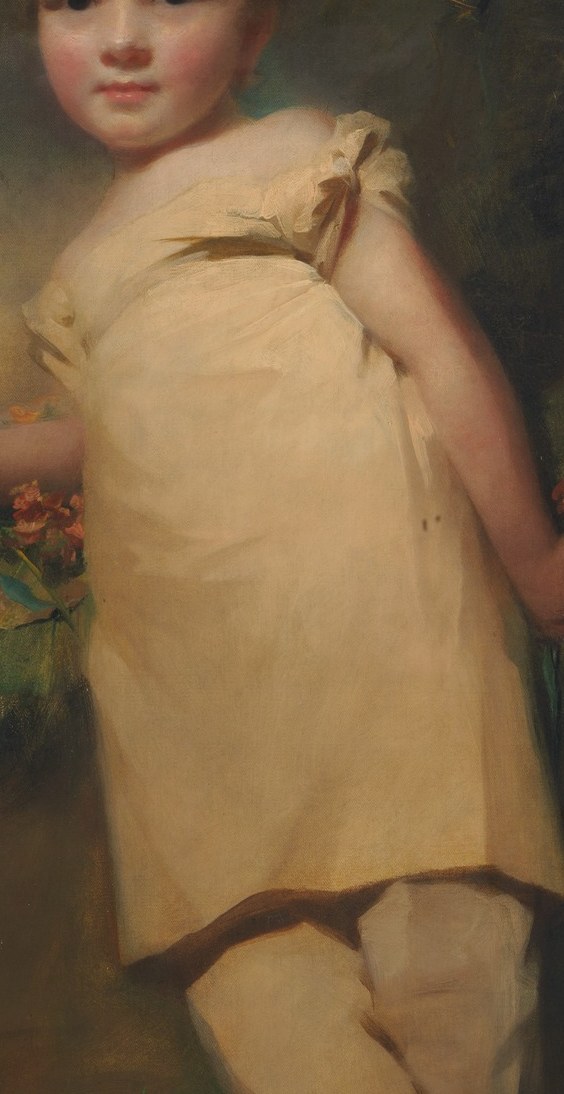
This painting is William Scott-Elliot of Arkleton, by Henry Raeburn, circa 1815. It seems like a straightforward portrait of youth, but the darker areas hide a surprisingly criminal past. Raeburn, the artist who also painted for King George IV, created this portrait of the young William. He is shown with a direct, engaging gaze, holding a small cluster of flowers, dressed simply in a white shirt and light trousers.
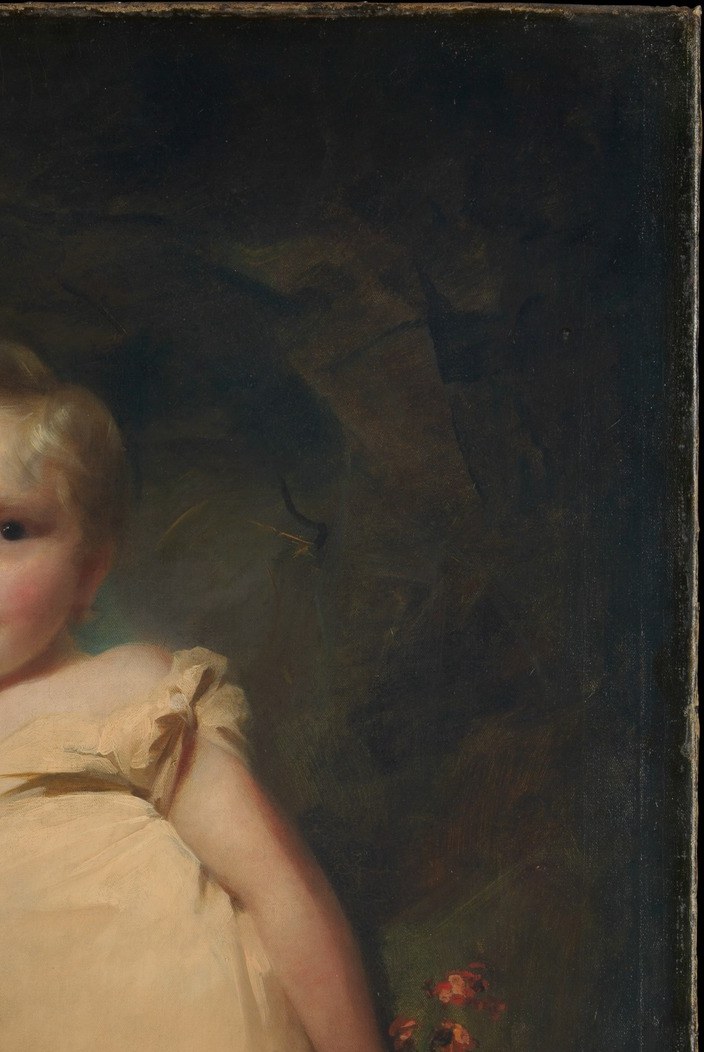
Notice the contrast between the bright, illuminated figure of the boy and the deep, shadowy background. The light catches in his eyes, giving him a spark of life, and the flowers he holds add a touch of color. The impressionistic trees and muted sky behind him create a sense of depth.
While the painting itself is serene, its history is not. The dark areas in the background are remnants of an earlier composition, one that was painted over by Raeburn. This was done to conceal evidence of theft; the original composition depicted stolen jewels. The painting was later acquired by the Scott-Elliot family, who chose to keep the secret hidden within the canvas.
A quiet portrait hiding a noisy crime.
Details
Transcript
He looks right at you. This boy is William Scott-Elliot. His artist also painted the King. Look at the flowers in his hand. A tiny spark of light in his eyes. Raeburn painted this in 1815. The background hides a crime.