Familien Waagepetersen by Wilhelm Bendz
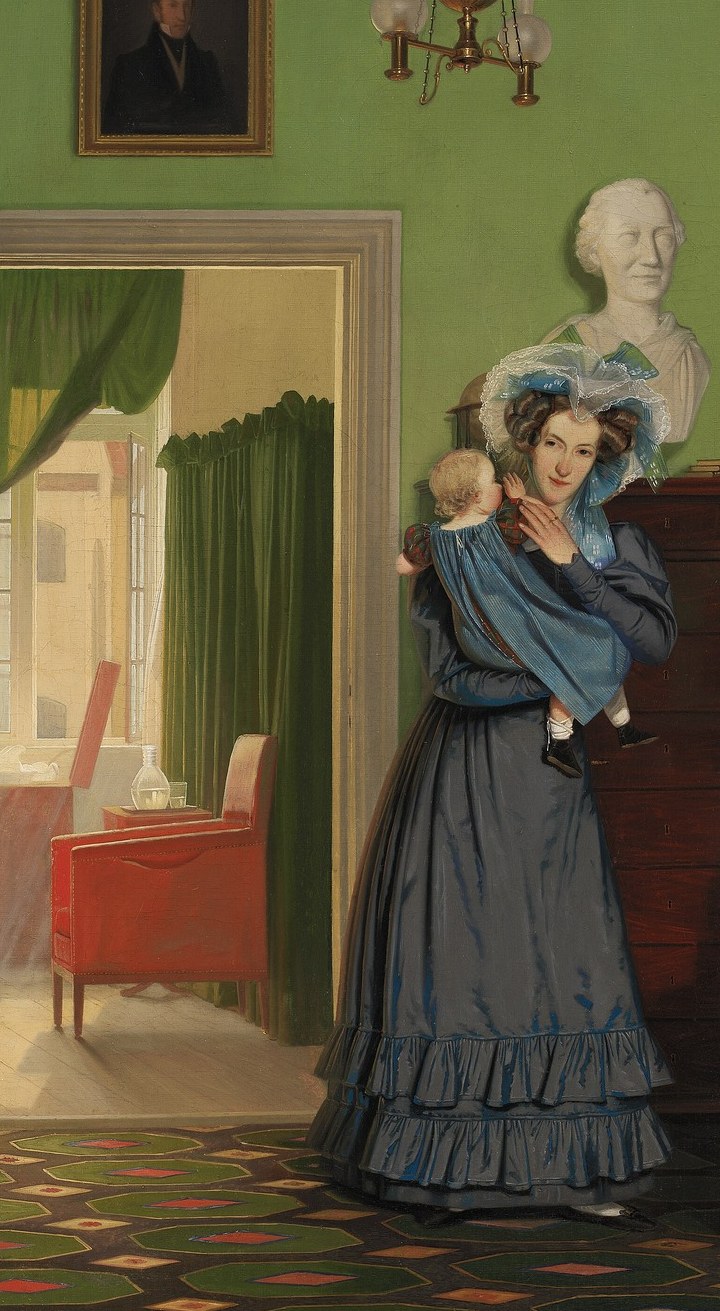
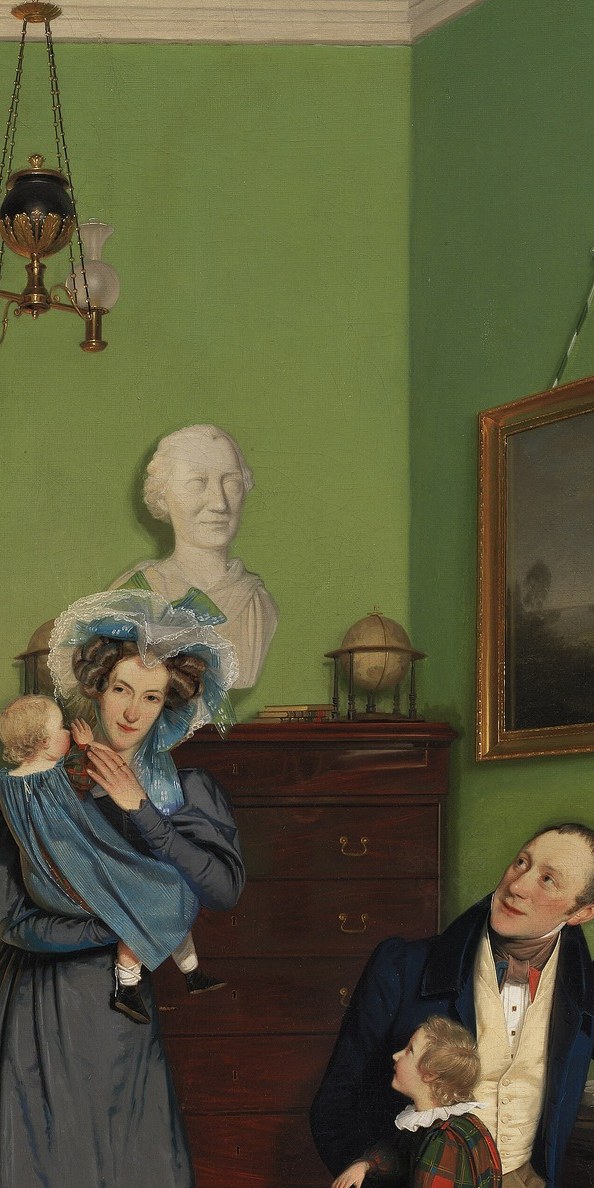
Wilhelm Bendz painted 'The Waagepetersen Family' in 1830, capturing the wine merchant Christian Waagepetersen, his wife Albertine, and two of their children in their Copenhagen home. It hangs today in the National Gallery of Denmark.
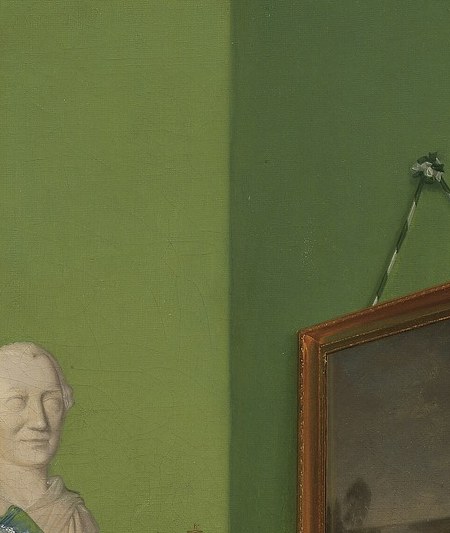
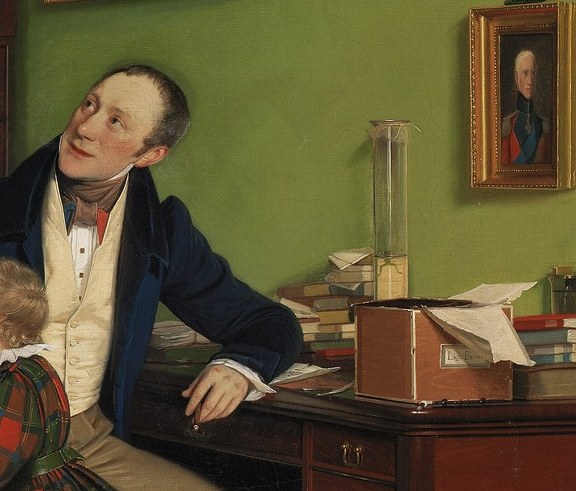
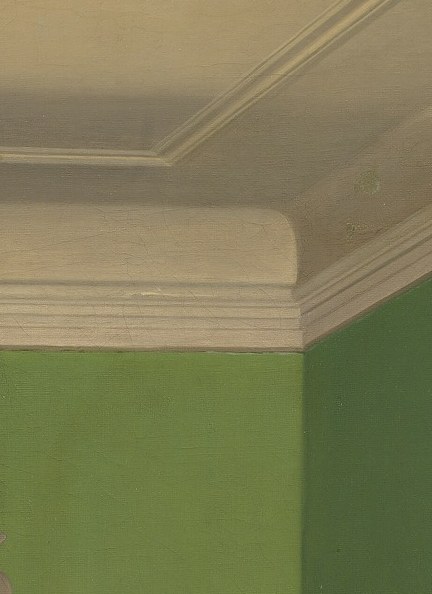
The first thing the eye finds is the infant's white christening gown, the brightest accent against Albertine's deep blue dress. Then the composition opens: a second child in tartan at the father's knee, a classical bust atop a dark secretary cabinet, a hanging brass lamp, and an open doorway revealing a sunlit room beyond. The vivid apple-green walls are the painting's most audacious choice, a precisely documented Danish Biedermeier interior color.
Christian Waagepetersen was a wealthy wine merchant, but his true legacy is as a patron. During the English bombardment of Copenhagen in 1807, when the city burned, he hid paintings from his collection inside empty wine casks to save them from the flames. The dark cabinet behind him in this portrait is filled not with ledgers alone, but with art and cultural objects. This is a painting about a man whose business was wine, but whose passion was preservation.
Bendz was only 28 when he died of typhoid fever in Italy, just two years after completing this portrait. His small oeuvre made him one of the Danish Golden Age's most poignant losses, and this domestic scene, with its hidden history of salvage, one of its quietest triumphs.
Details
Transcript
A prosperous Copenhagen family, at home. Christian Waagepetersen made his fortune in wine. But not all his bottles held wine. During the English bombardment of Copenhagen in 1807, he hid priceless paintings inside empty wine casks. Look at what fills the cabinet behind him. Busts, papers, a lamp, a merchant who collected art, not just money. Bendz painted their quiet world. It would outlast him by decades.