The Mission Tent by Jerome Myers
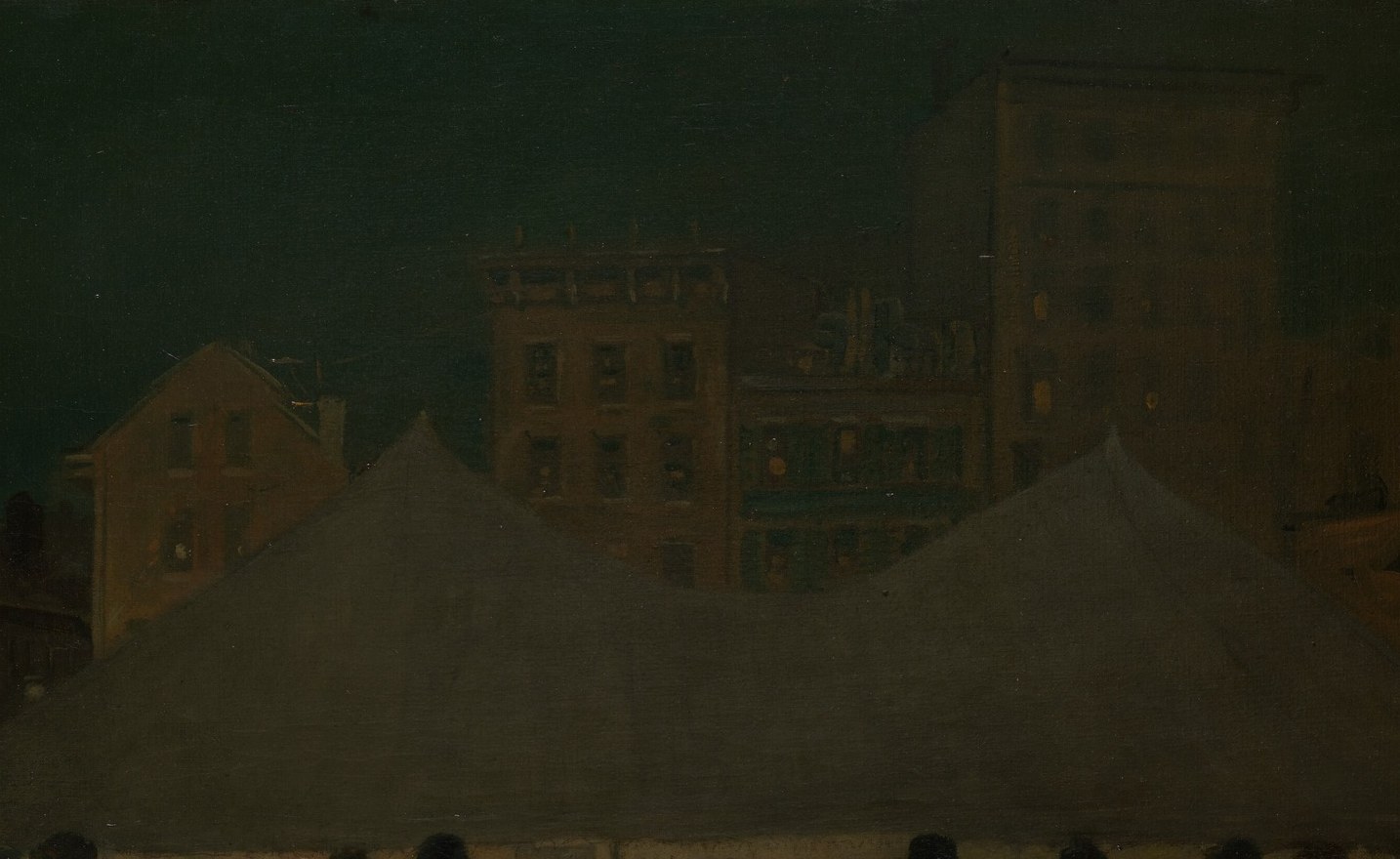
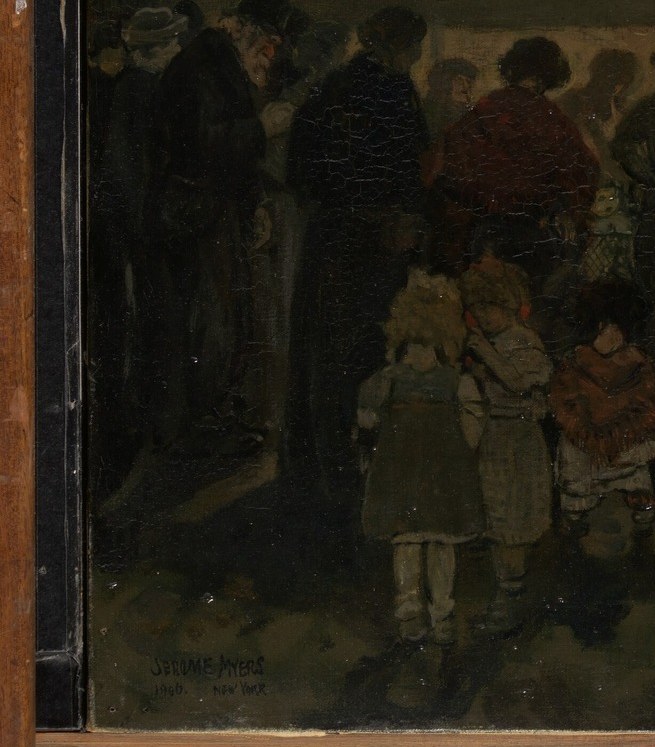
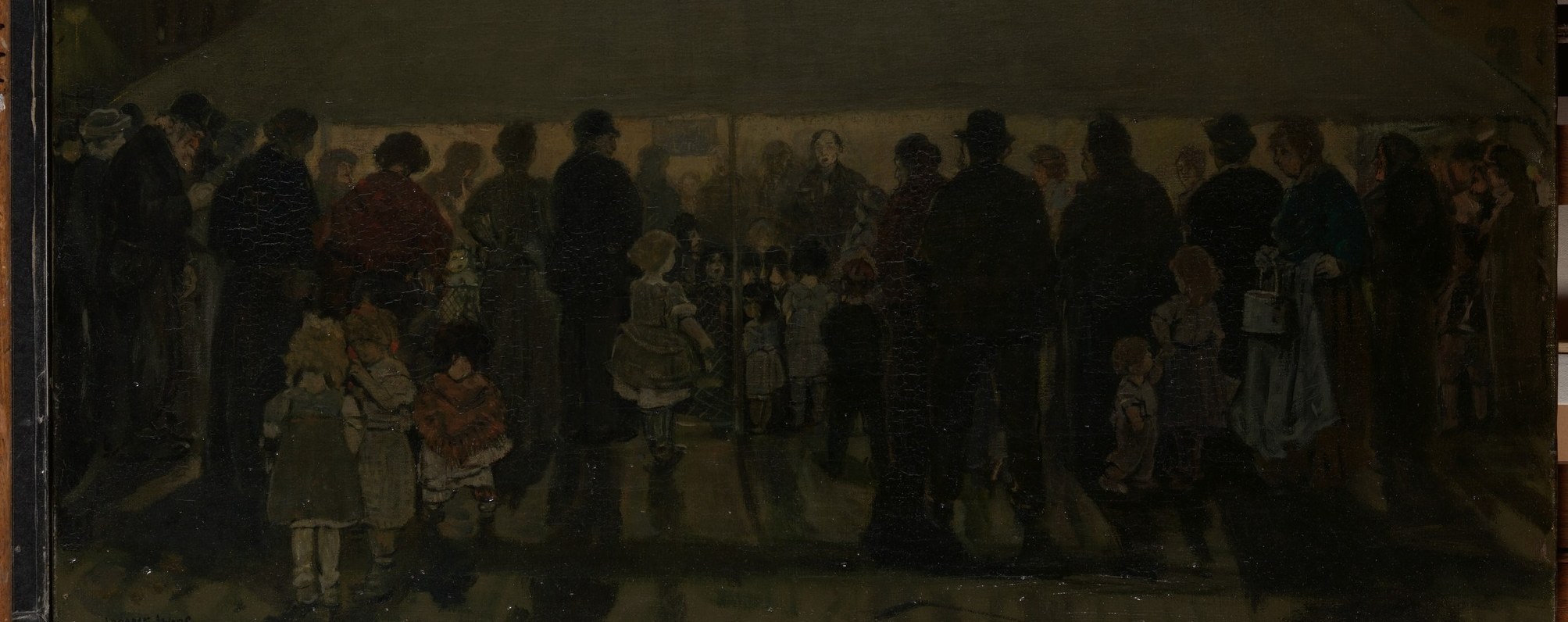
This is "The Mission Tent," painted by Jerome Myers in 1906. The painting, now in the collection of The Metropolitan Museum of Art, captures a nighttime religious gathering on a New York City street. Myers was an American artist who rejected the grand subjects of his era, choosing instead to document the lives of immigrant families on the Lower East Side with deep and visible empathy.
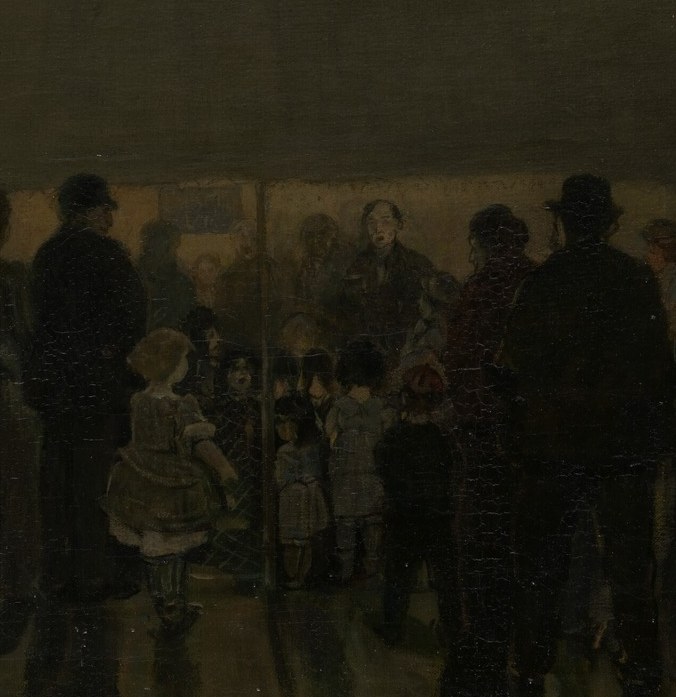
In this scene, a crowd gathers around the warm glow of a mission tent. Myers renders most of the figures as dark, flat silhouettes, a deliberate choice to anonymize the mass of the poor. But look at the center. There, a small family, a man, a boy, and a girl, emerges from the darkness. Their faces are distinct. They lean toward the tent's light, an anchor of humanity in a sea of shadow.
Myers believed his real classroom was not a Parisian academy but the sidewalks of New York. He spent decades drawing and painting the city's newest arrivals, capturing them not in their cramped tenements but in moments of public dignity and community. He once wrote that he was drawn to the "life of the people, their theatre, their religion, their business."
This painting is not about a sermon. It is about a pause in a hard week, a father with his children, and a fragile light in the urban darkness. What does the way Myers painted this family make you feel about them?
Details

Transcript
New York City, 1906. A tent glows on a dark street. A crowd gathers. The painter gave most of them no faces. Jerome Myers believed his classroom was the streets of the Lower East Side. But at the center, he painted three people with care. A father. A boy. A girl. Their faces tilt toward the light. They were his real subject. New York's immigrant families, beginning again.