Hunting in the Pontine Marshes by Vernet, Horace
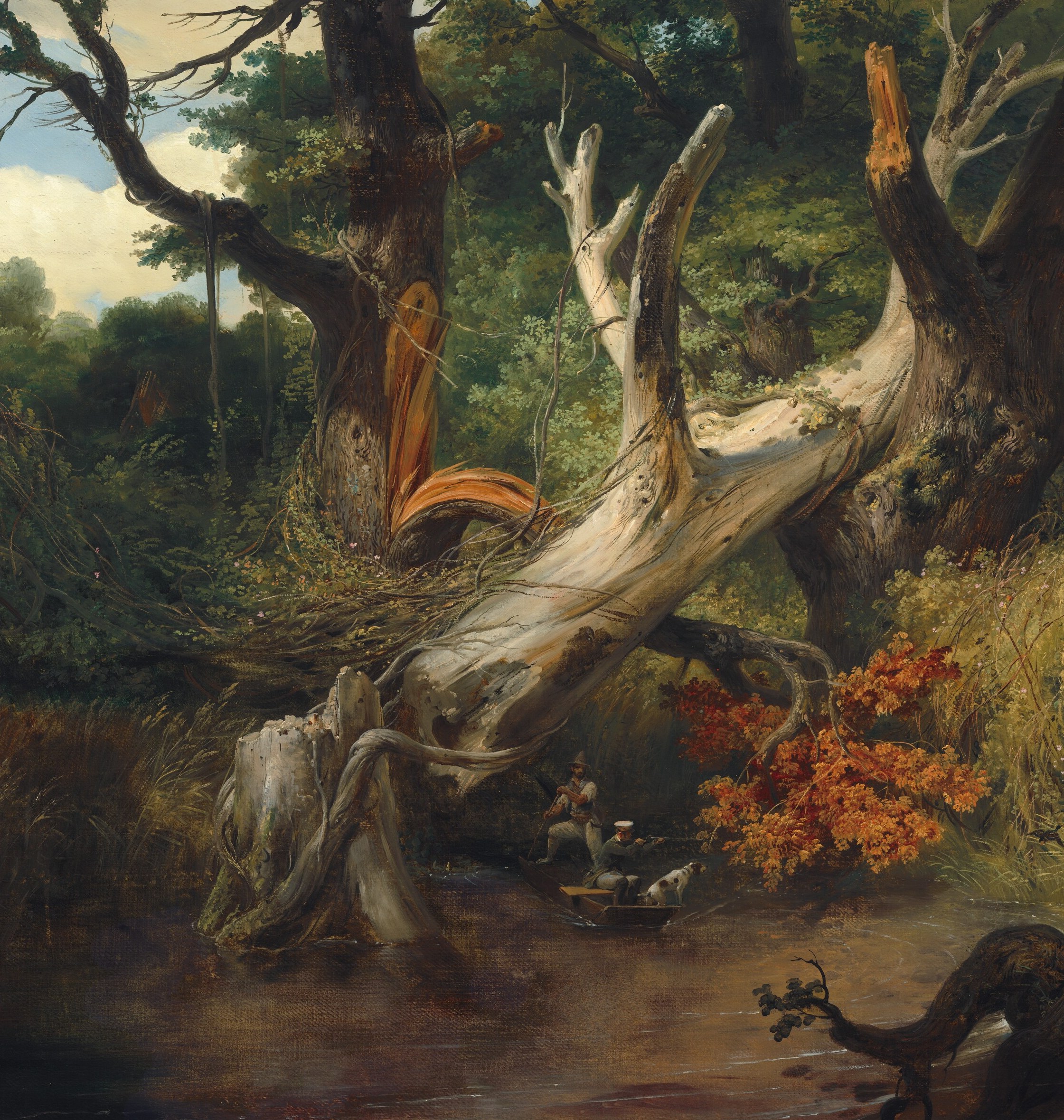
Horace Vernet's "Hunting in the Pontine Marshes," painted in 1833, offers a rare glimpse into a landscape now transformed. This oil on canvas, housed in a private collection, depicts a specific, dangerous ecosystem that once stretched south of Rome.
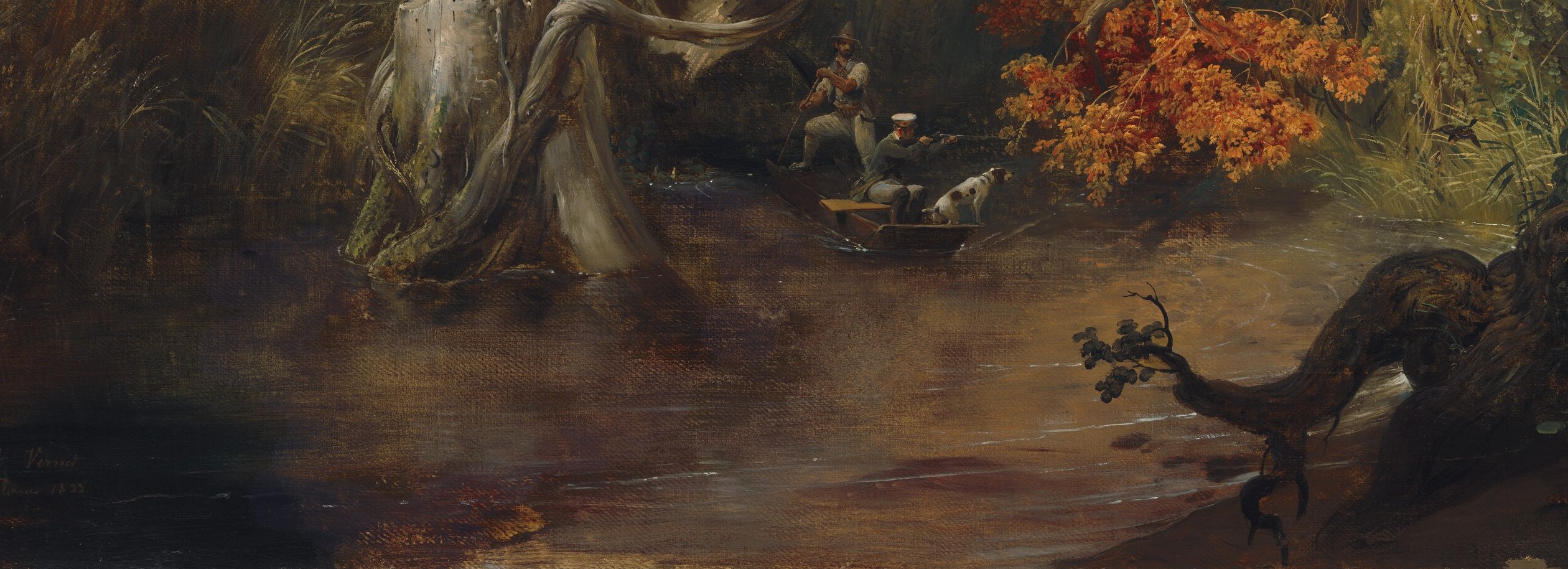
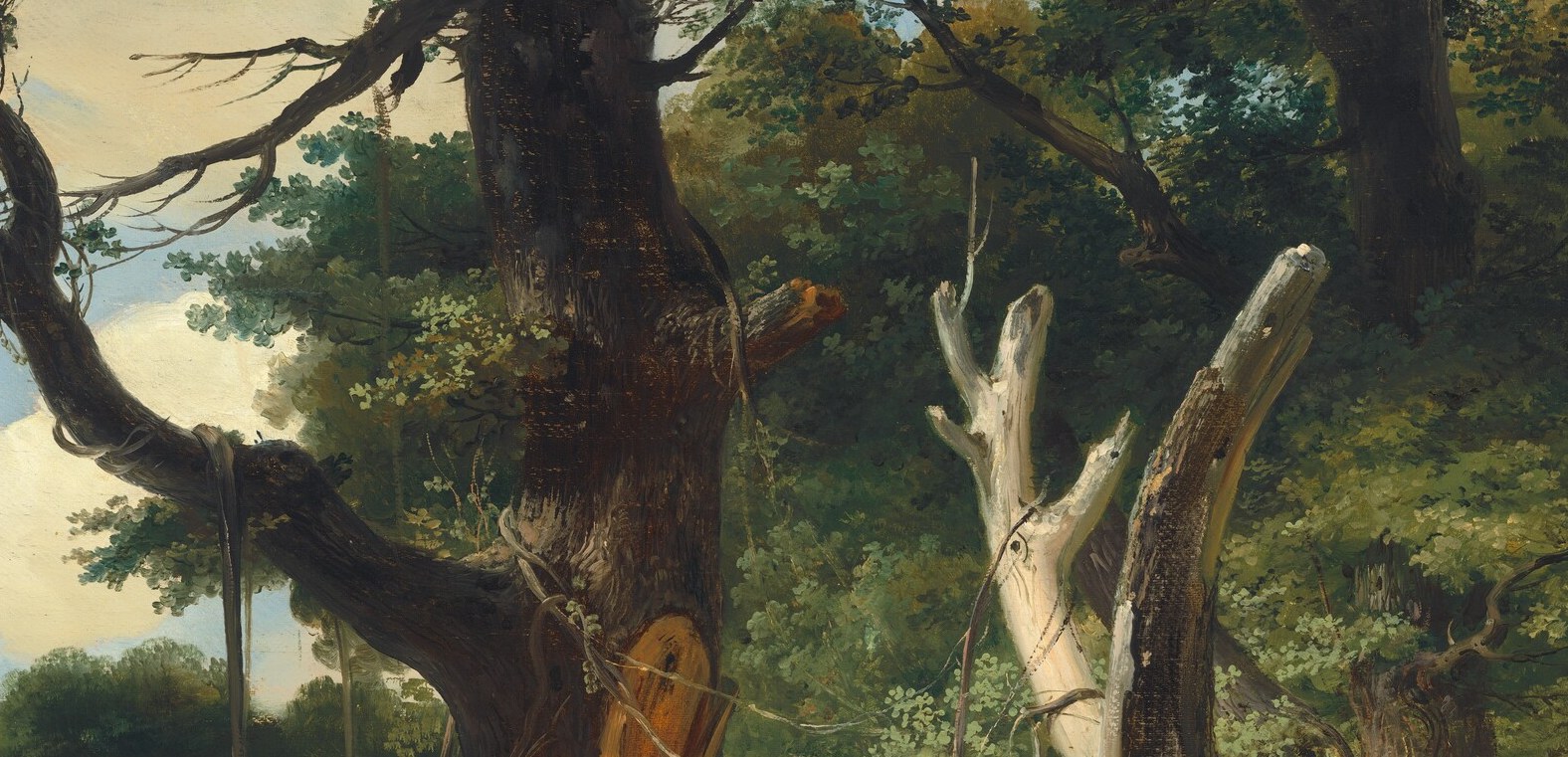
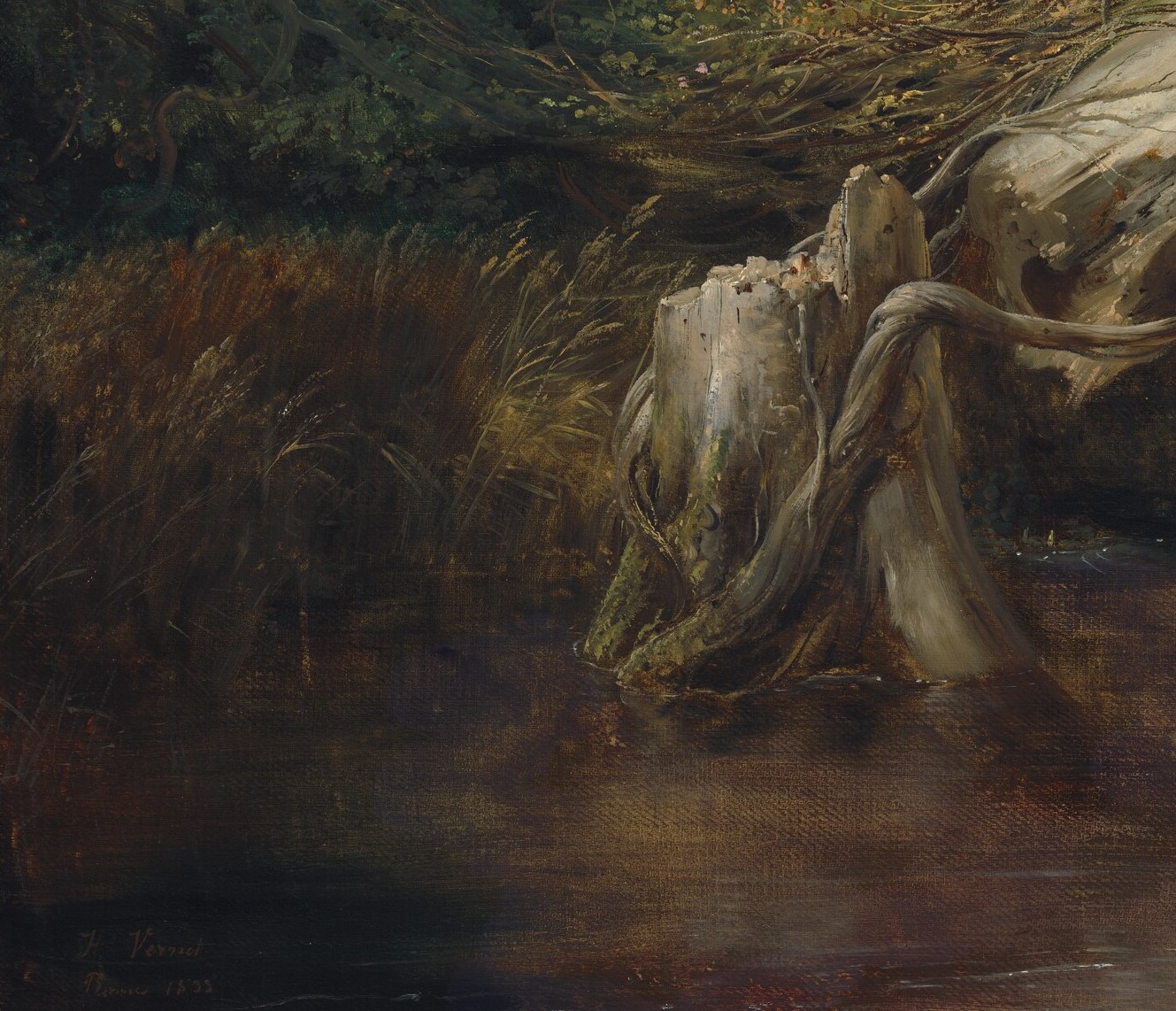
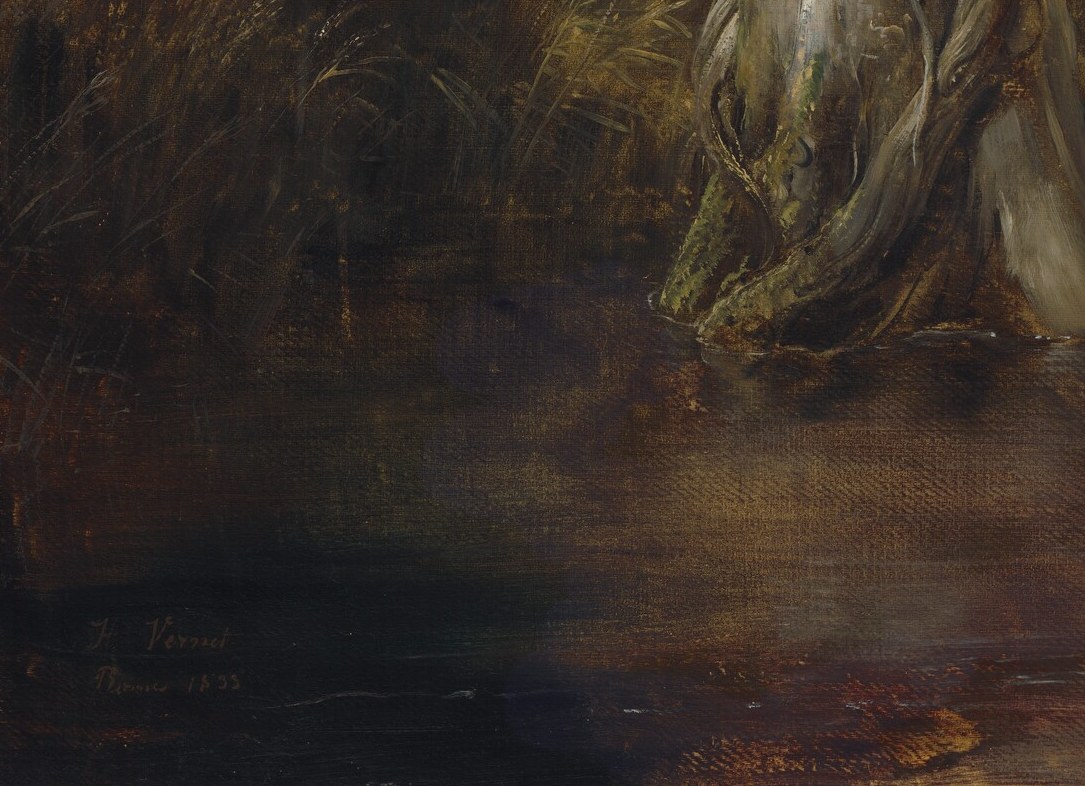
Vernet meticulously renders the marsh's distinct features, from the tangled ground flora to the looming dead trees. The exposed roots and splintered wood of the central tree are a masterclass in texture, while a hidden hunter suggests the human presence in this wild expanse.
Historically, the Pontine Marshes were a malarial wasteland, a formidable barrier to travel and development in central Italy. They remained largely undrained until the ambitious public works projects of the 1930s, making Vernet's detailed depiction a valuable document of a vanished landscape.
It makes you wonder, what other specific, lost places are preserved in paint?
Details
Transcript
In 1833, the Pontine Marshes were a vast, dangerous wilderness. This painter shows us its specific, tangled undergrowth. The marshes were notorious for malaria, undrained until the 1930s. This enormous dead tree dominates the scene. Its splintered heartwood catches the light, a technical showpiece. But look closely, hidden in the roots. A hunter, a ghost in the marsh.