Portrait of a Man by Tommaso Lunetti
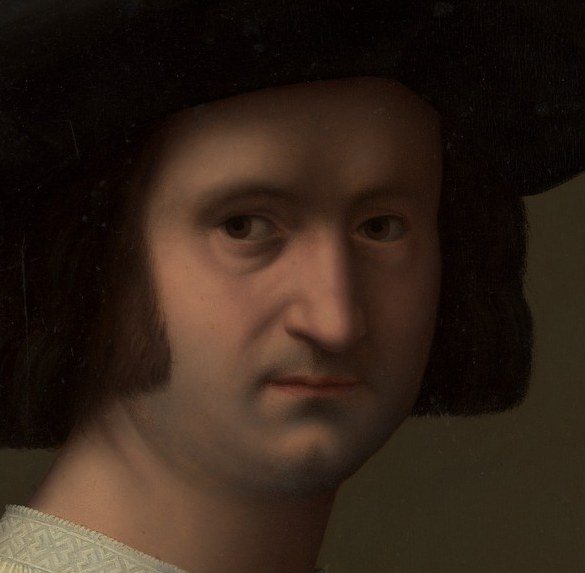
Tommaso Lunetti's "Portrait of a Man," painted in 1521, is more than just a likeness; it's a carefully constructed visual message. This intriguing oil painting, housed at The Metropolitan Museum of Art, invites viewers to decode the sitter's identity through subtle cues.
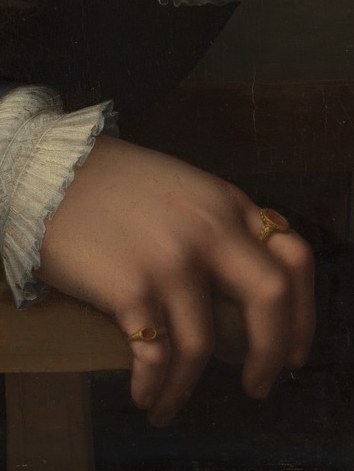
Observe the man's hands: his right hand extends a commanding finger, drawing attention and suggesting a direct address to the viewer. His left hand, resting on a wooden railing, prominently displays a gold ring, a common symbol of wealth, marital status, or social standing in the Renaissance.
Lunetti, a Florentine artist, was known for his mastery of such symbolic details. Through chiaroscuro, he created a striking contrast between light and shadow, making these elements stand out with pronounced depth. Each gesture and object adds a layer to the sitter's story, allowing us to piece together a sense of who this man might have been.
What do these silent signals tell you about his world?
Details
Transcript
This portrait is an enigma, with subtle clues hidden in plain sight. Look at the man's right hand, pointing with authority. The extended finger, a direct address, draws us into his world. His left hand, on the railing, displays a prominent gold ring. This ring suggests his marital status or high social standing. The painter, Tommaso Lunetti, excelled at such coded details. Every gesture and object builds a silent, powerful statement.