On the Heath near Laren by Anton Mauve
On the Heath near Laren by Anton Mauve, painted in 1887, now hangs in the Rijksmuseum. It looks at first like a quiet, unremarkable pastoral scene and in one sense it is. But Mauve's sheep paintings were so commercially successful that American collectors created a price differential between 'sheep coming' and 'sheep going.'
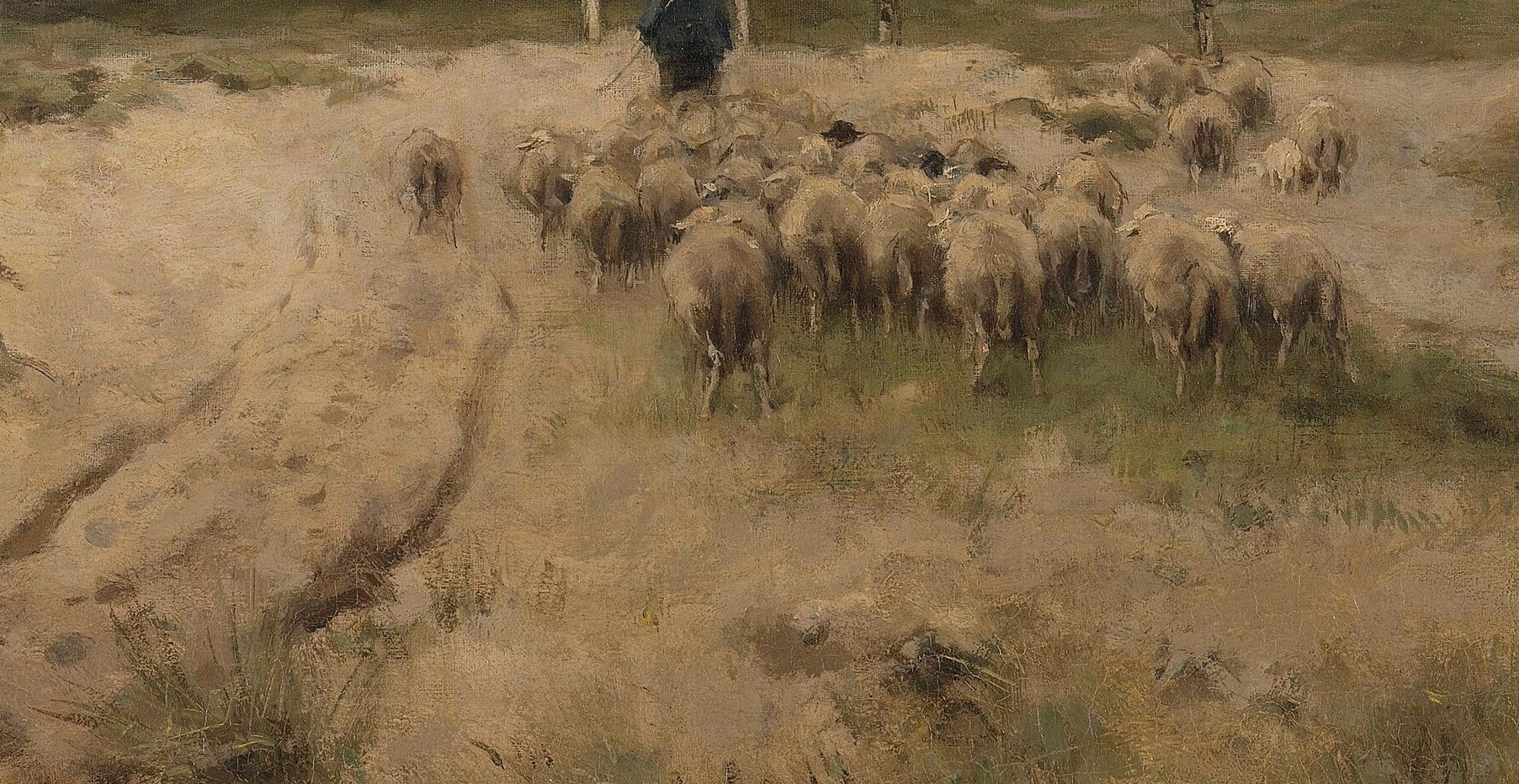
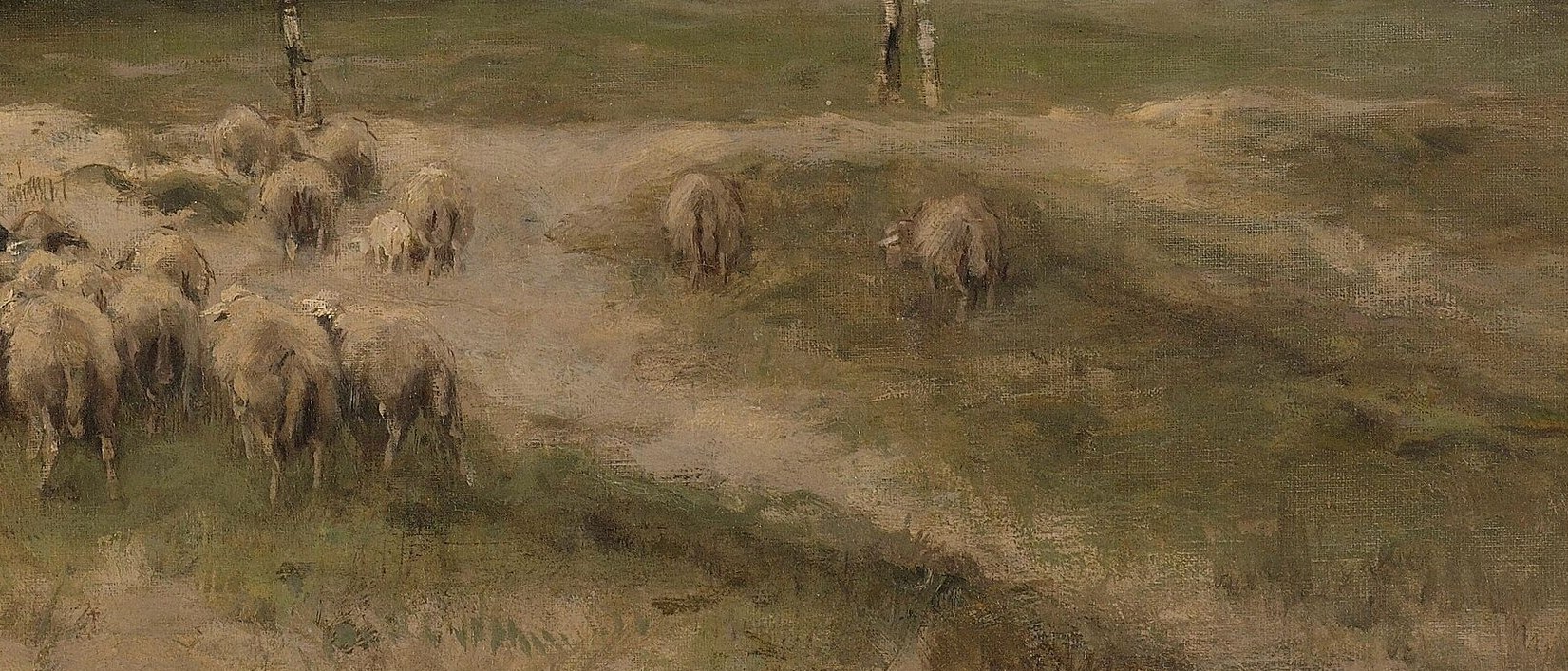
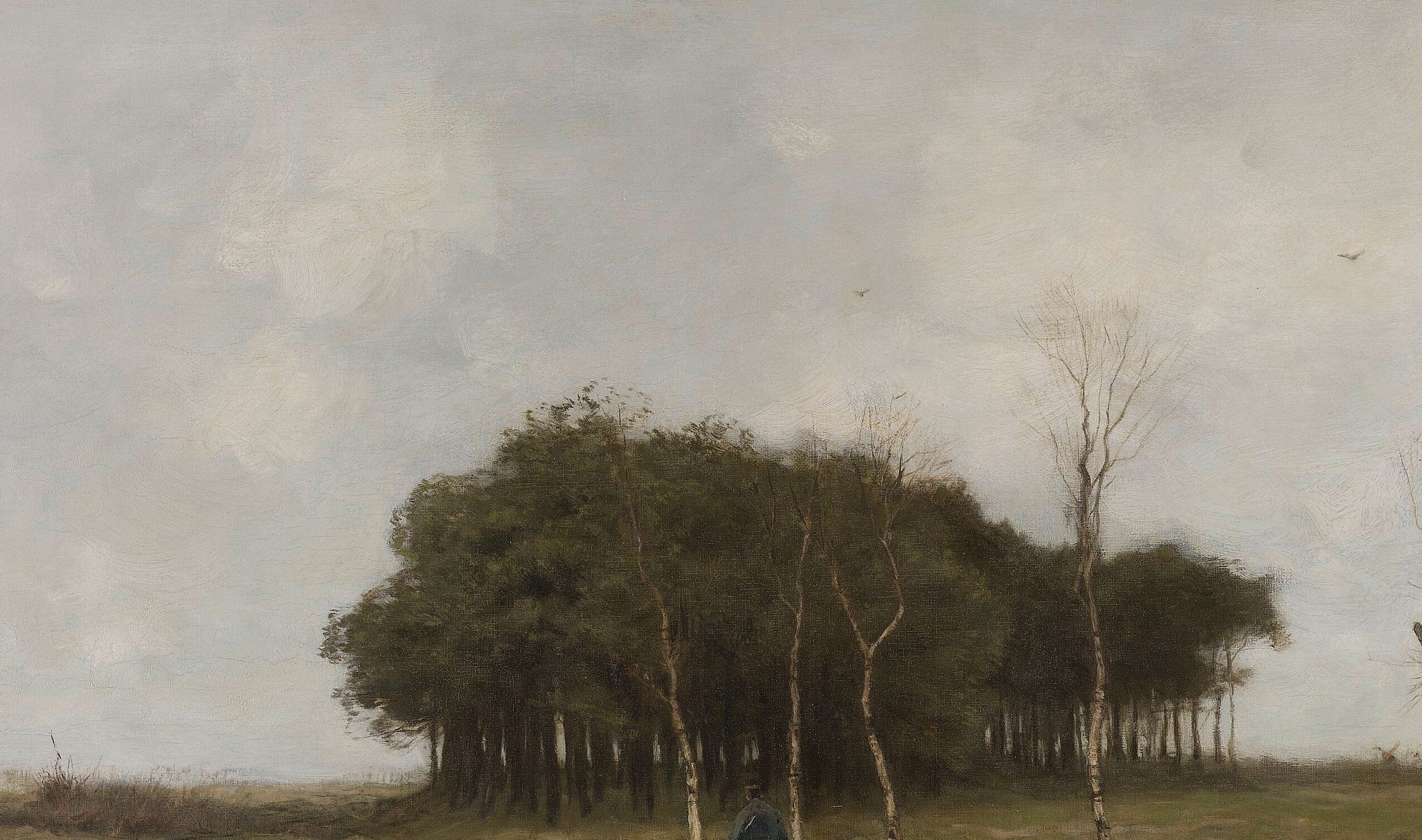
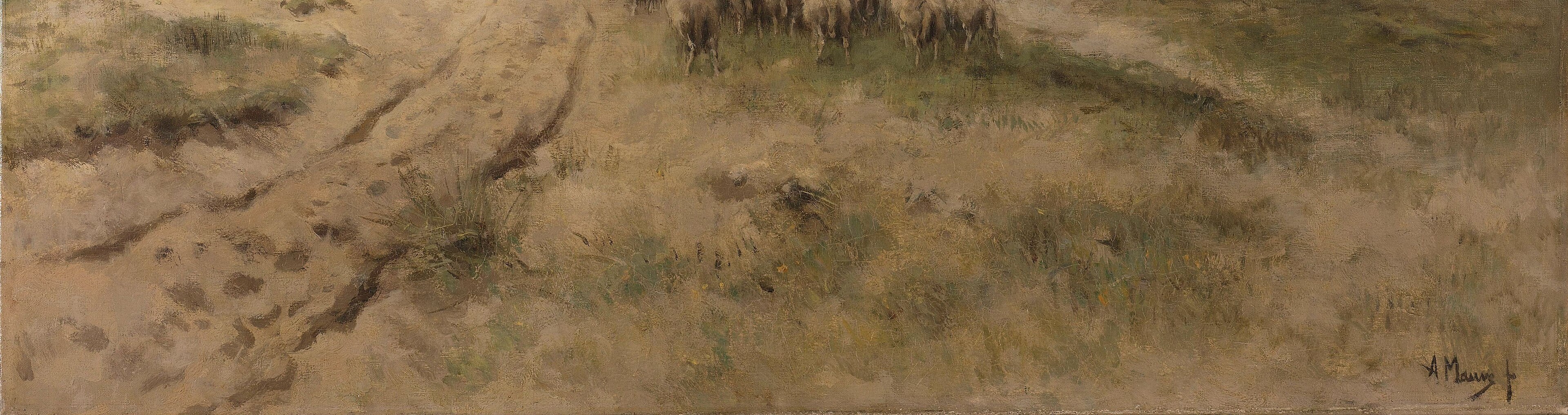
The painting rewards anyone who pauses. The shepherd is a near-silhouette anchoring the composition, but the true focal point is a luminous patch of sand in the mid-distance. That glow is no accident. Mauve constructed the entire overcast sky to diffuse light evenly and direct it to that one spot of pale, powdery ground. The sandy foreground is painted with visible directional brushwork, dry and gritty, pulling your eye inward along a faint track toward the light.
Anton Mauve was a leading member of the Hague School and a master colorist whose muted palette defined an era of Dutch realism. He was also Vincent van Gogh's cousin-in-law, and an important early influence on him. Mauve died unexpectedly just a year after this painting was completed, at age 49, leaving behind a body of work that quietly shaped Dutch art.
Most people scroll past this painting. The ones who don't find the light.
Details

Transcript
A shepherd and his flock on a grey Dutch heath. Anton Mauve painted this in 1887. His sheep scenes were so popular in America, some collectors paid extra. It even affected the market. 'Sheep coming' cost less than 'sheep going.' But the painting keeps a secret in plain sight. Look at the mid-distance. Not at the shepherd. That single luminous patch of sand is the painting's real subject. Mauve built the whole overcast sky to deliver light to this one spot of ground. He was a master colorist, and Vincent van Gogh's cousin-in-law and early teacher.