Thusnelda at the Triumphal Entry of Germanicus into Rome by Karl von Piloty
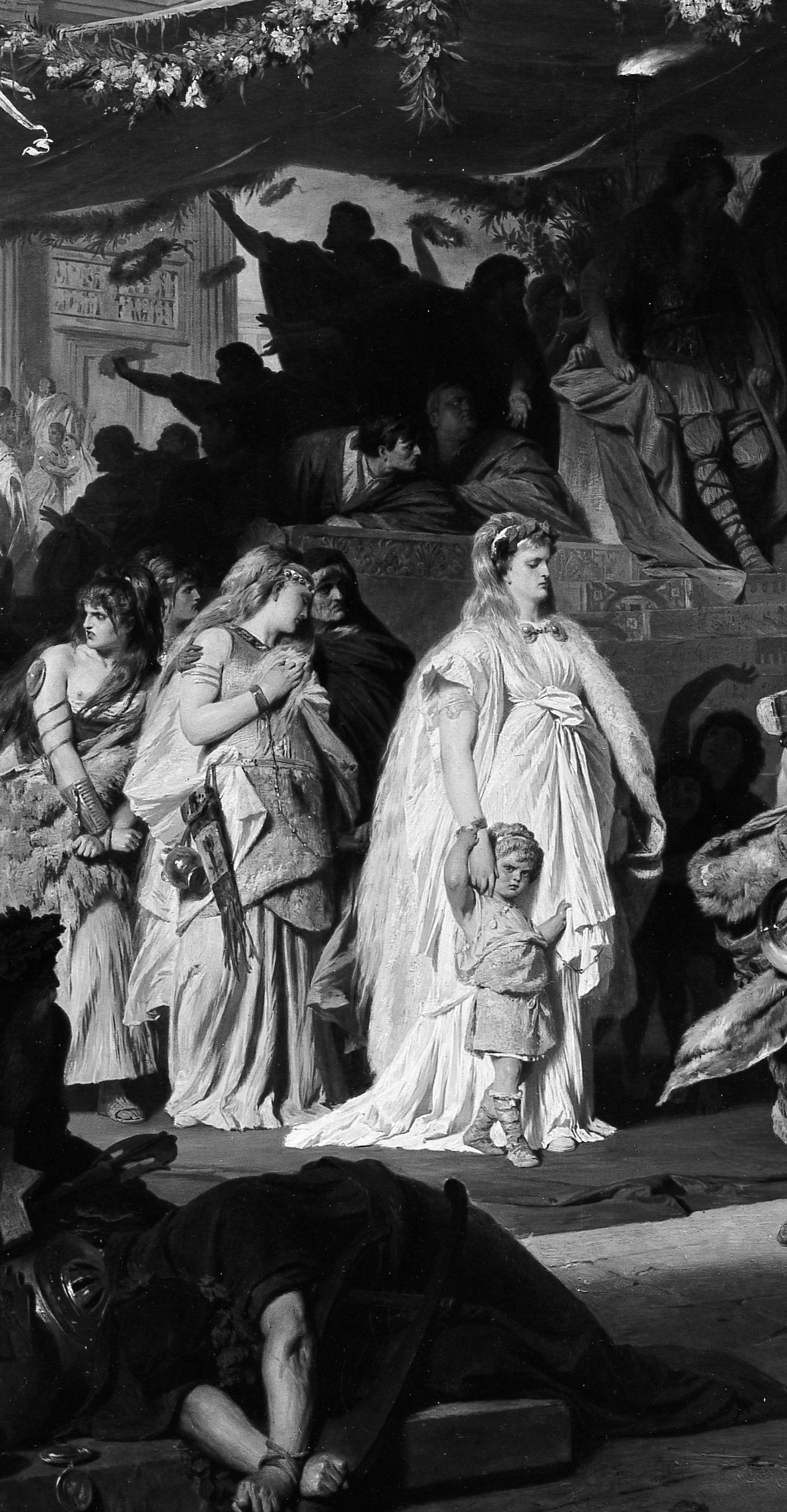
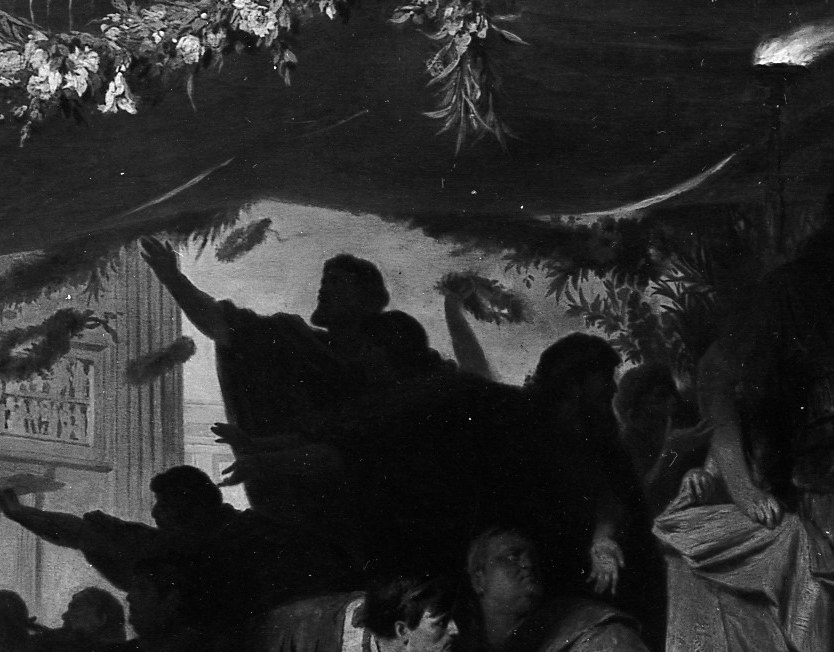
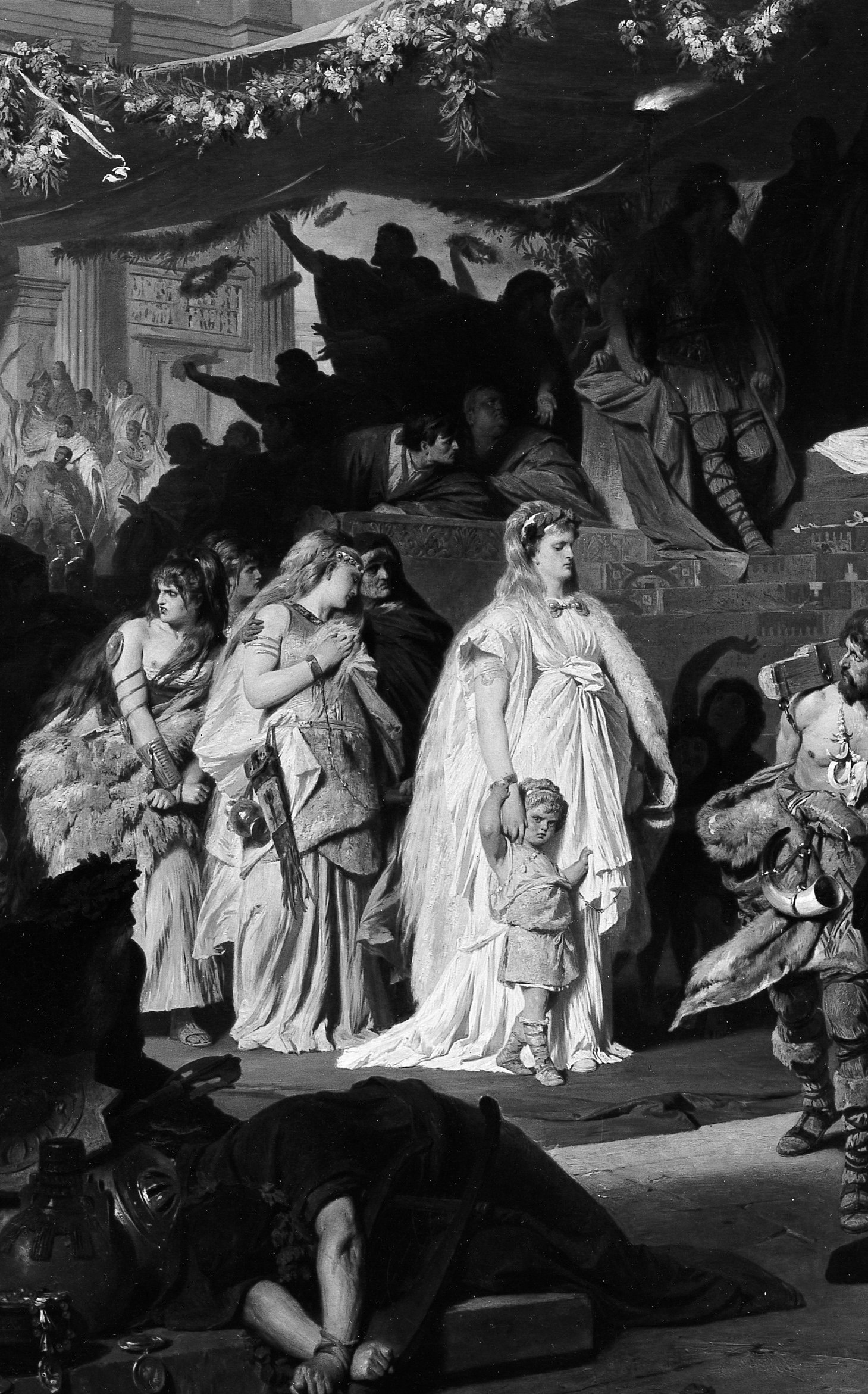
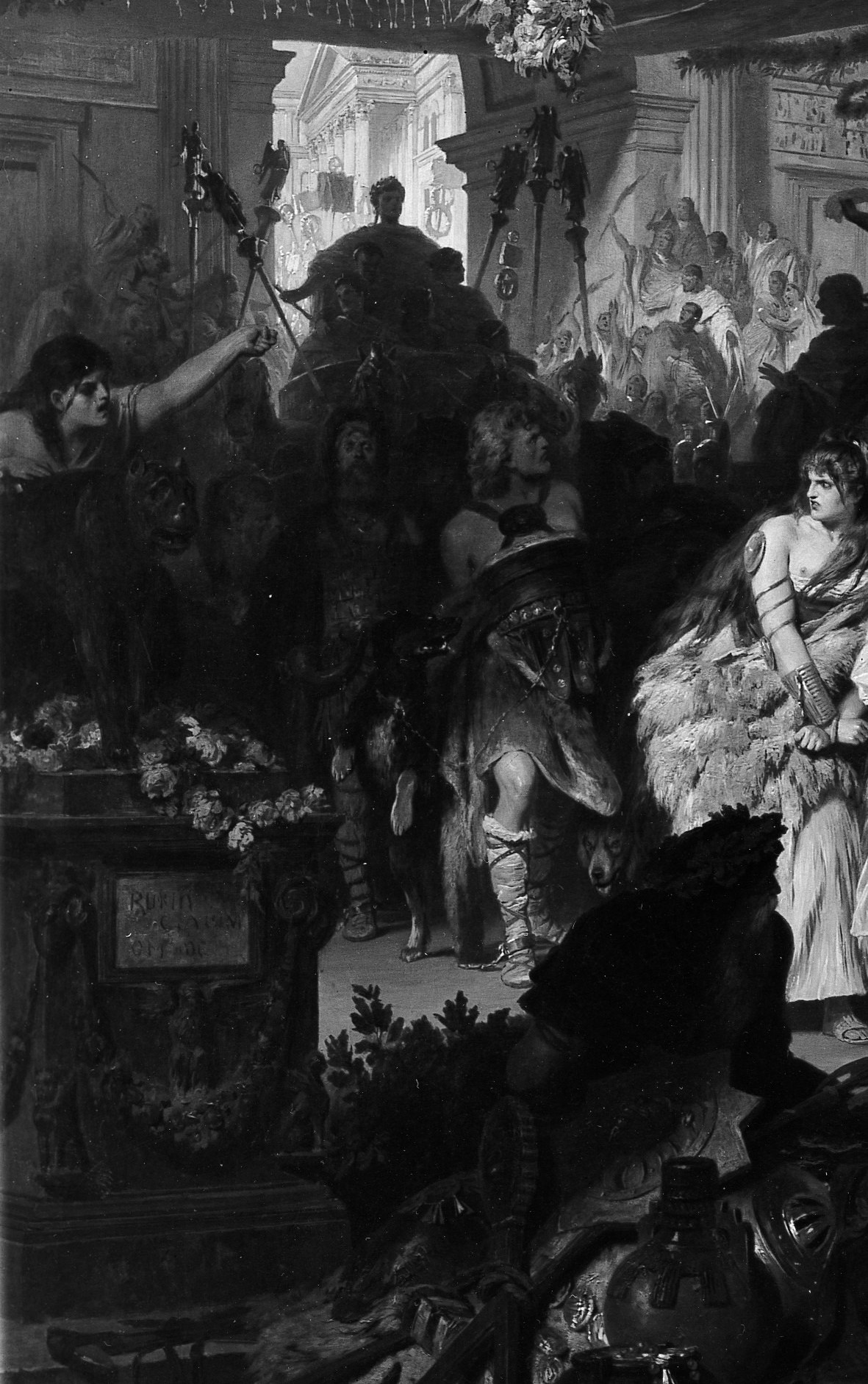
This is Karl von Piloty's "Thusnelda at the Triumphal Entry of Germanicus into Rome," painted in 1875 and held at The Metropolitan Museum of Art. The painting stages a moment from 17 AD: the Roman general Germanicus parades his Germanic captives through the streets. But Piloty, a leading voice in German realism, inverts the expected propaganda. The conquerors in the frame are pushed into shadow, and the foreign prisoner becomes the only thing worth lighting.
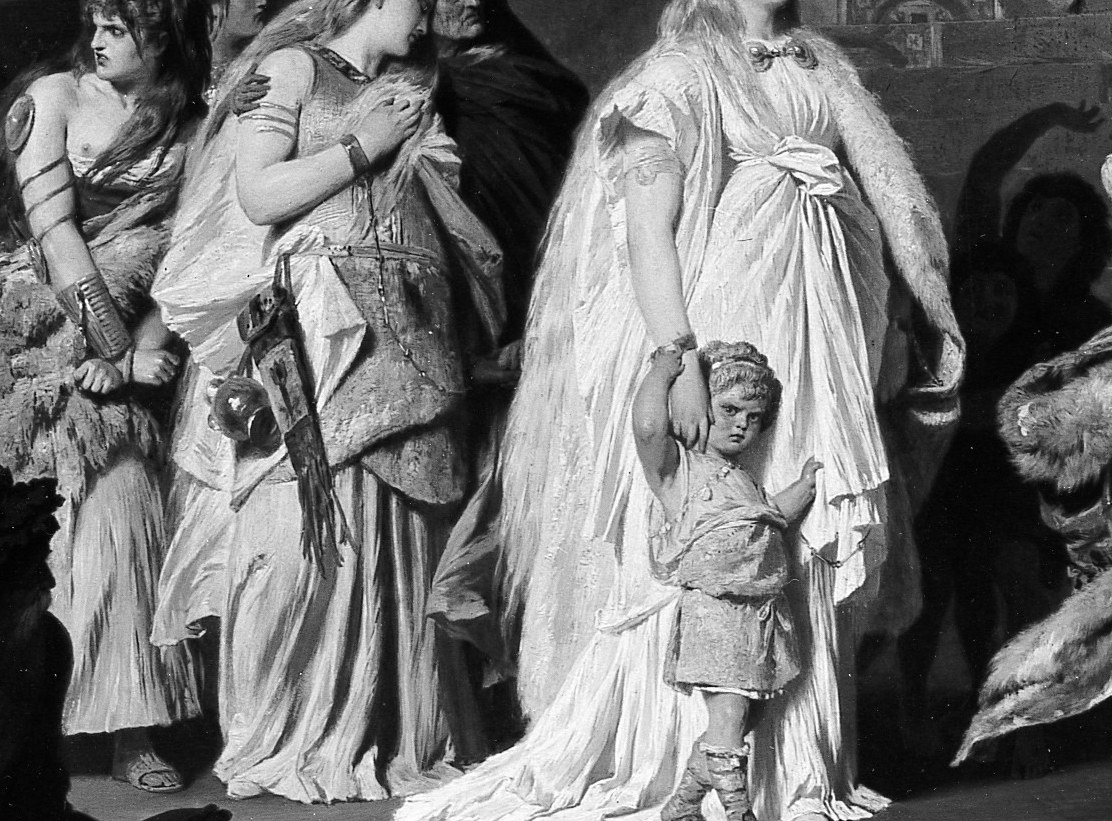
Let your eye go straight to the figure in white. Thusnelda, a Cheruscan noblewoman, stands upright on the viewing platform, her face unreadable but her posture refusing submission. The theatrical light, a Piloty signature, hits her and only her. The Roman crowd behind her is a dark, churning mass. Her hands are still. They appear restrained by her circumstances, but the dossier notes Piloty stopped short of painting ropes on her wrists; the stillness reads as dignity, not defeat.
Beside her is her small son, Thumelicus. The historical record is sparse but brutal: the boy was raised Roman and eventually trained as a gladiator. His presence alongside his mother turns the painting from a single moment of public humiliation into a story of generational erasure. Piloty gives the victors all the architecture and armor, but gives the captive all the light.
It is a quiet painting about an empire's machinery, made in 1875 by an artist who understood that history painting is about who the painter chooses to illuminate. What do you notice first: the crowd's spectacle, or a mother standing still at the center of it?
Details
Transcript
Rome, 17 AD. A general parades his captives. But look at the prisoner in white. She does not bow. She does not weep. Her hands are still. Restrained, but not bound. Karl von Piloty painted her as the moral center of the scene. The light is a stage spot, and she is the only thing it touches. The small child beside her is her son, Thumelicus. Taken to Rome to be trained and killed as a gladiator.