Assinneboine Chief before and after Civilization by Catlin, George
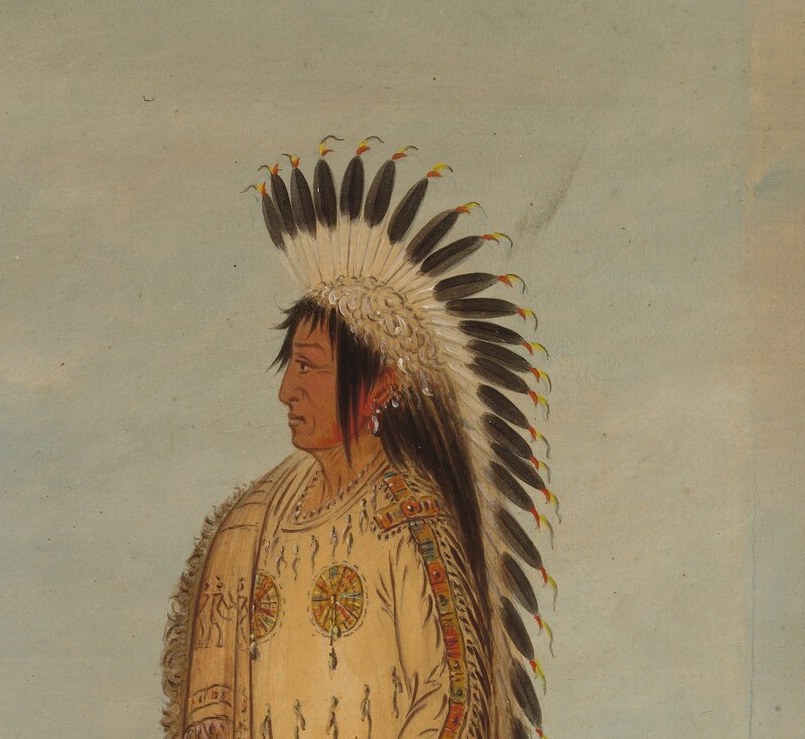
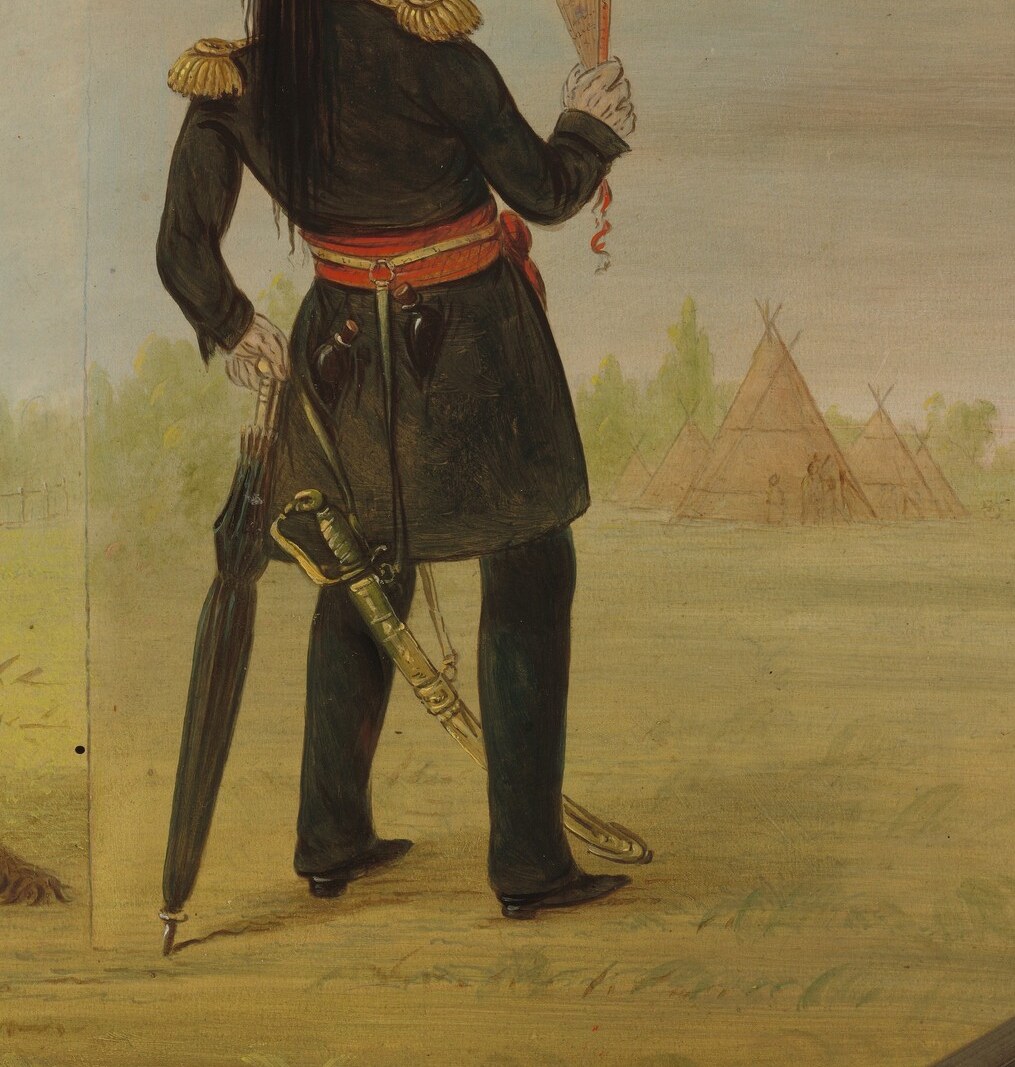
George Catlin, a lawyer-turned-painter, created *Assinneboine Chief before and after Civilization* in 1861. This compelling oil on card work offers a dual portrait, starkly contrasting two states of the same individual: one in traditional regalia and the other in European attire, highlighting the cultural transformation imposed on Native peoples during westward expansion.
Notice the detailed traditional chief's headdress and pipe on the left, embodying Indigenous customs. On the right, the chief is depicted in a European suit and top hat, holding a book, reflecting assimilation pressures. The artist's subtle signature and catalog number '126' are found in the bottom left corner, a testament to his methodical documentation.
Catlin traveled the American West extensively in the 1830s, documenting the life of Plains Indians. His work aimed to record what he perceived as a vanishing way of life amidst the United States’ westward push, combining ethnographic observation with portraiture.
This piece continues to provoke thought about identity, culture, and the lasting impact of historical change. What details do you find most striking?
Details
Transcript
This painting shows a chief, before and after. On the left, his traditional dress. On the right, a European suit and hat. The artist, George Catlin, traveled the American frontier in the 1830s. He sought to document Native American life. Look closely at the bottom left. His tiny signature and a catalog number, 126.