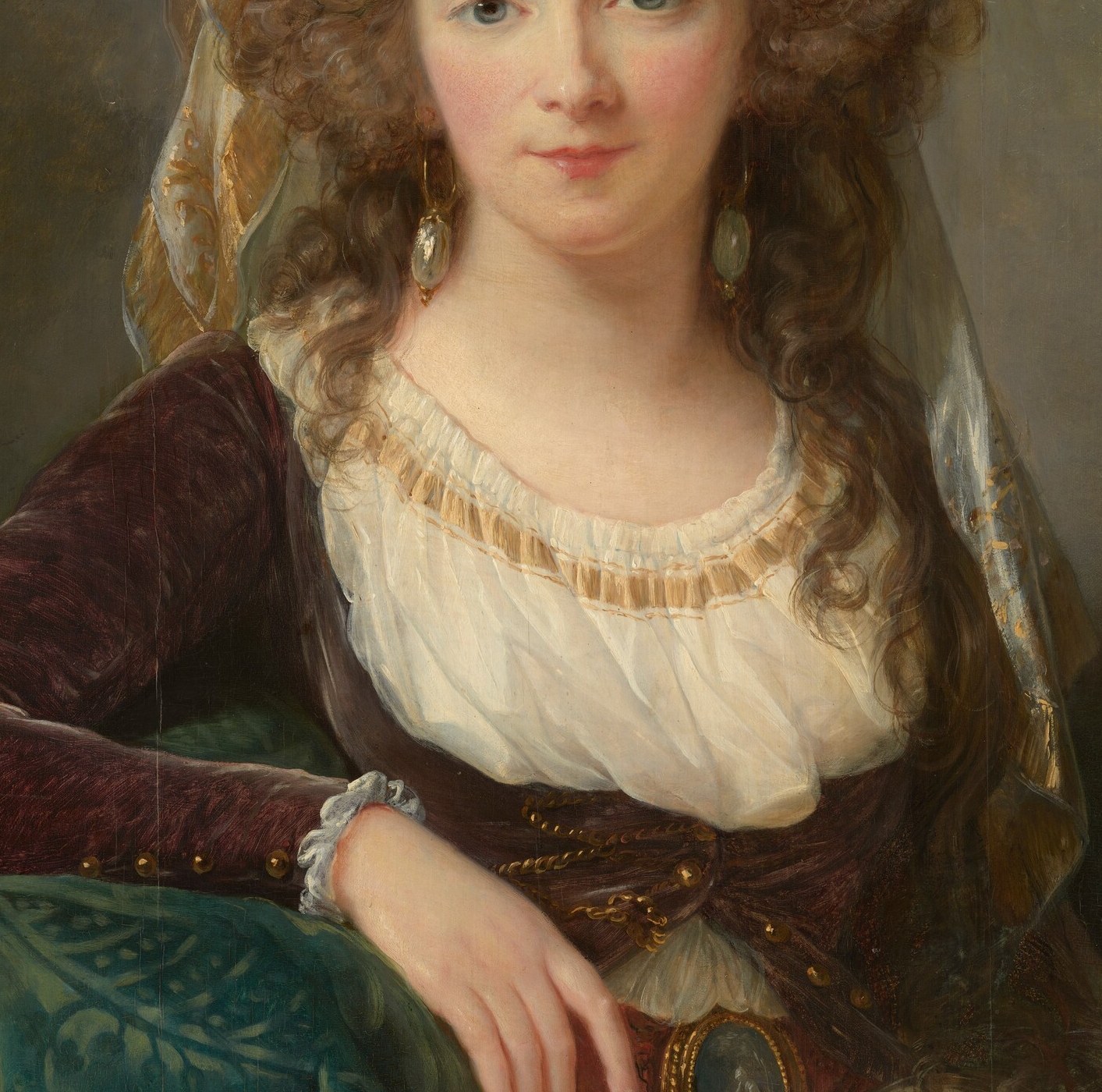
Madame d'Aguesseau de Fresnes by Vigée Le Brun, Élisabeth Louise
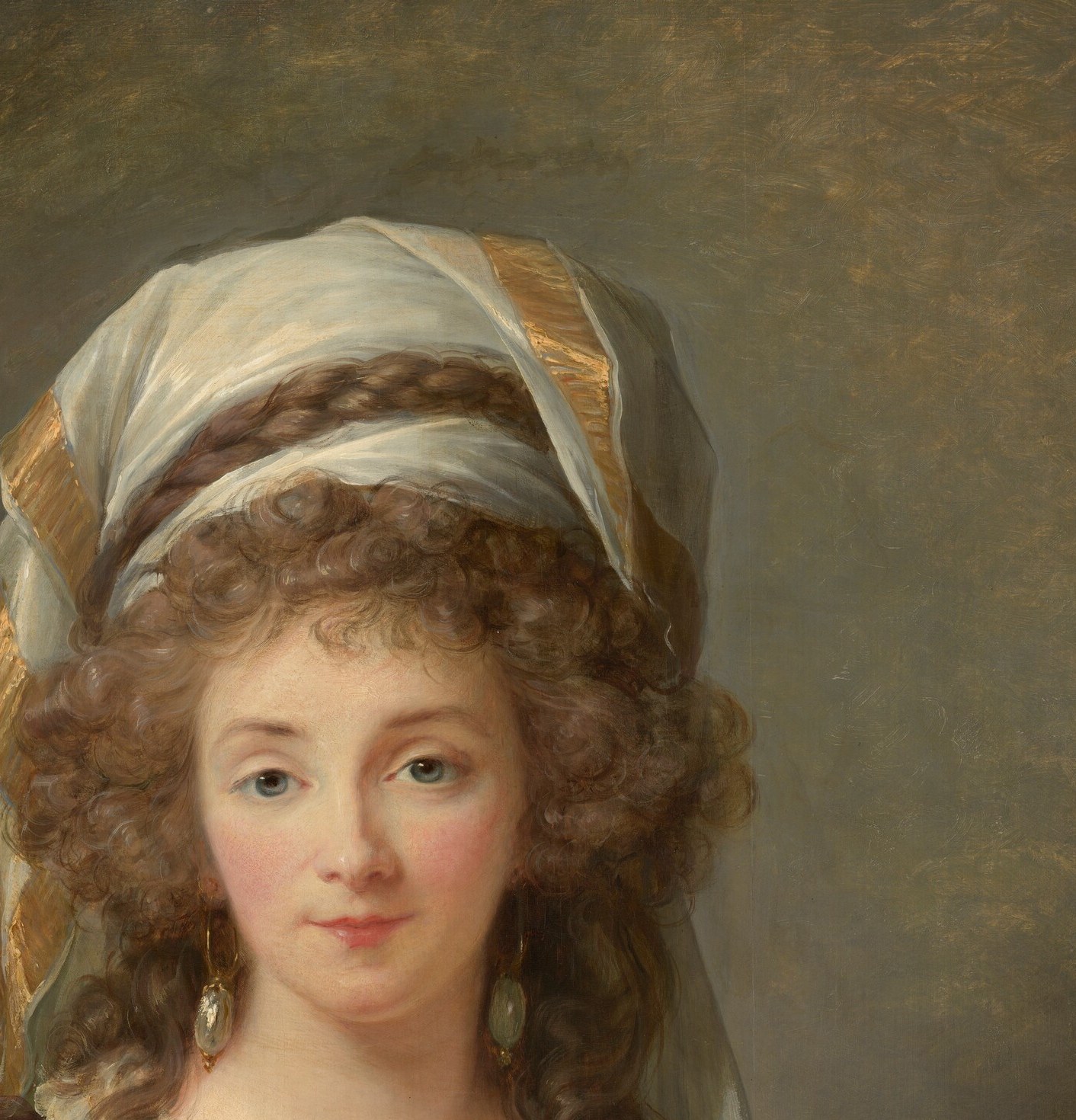
Élisabeth Louise Vigée Le Brun’s 1789 portrait, Madame d'Aguesseau de Fresnes, is an intriguing snapshot of a moment in history. Painted the year the French Revolution began, it subtly reflects changing social norms through fashion and artistic convention.
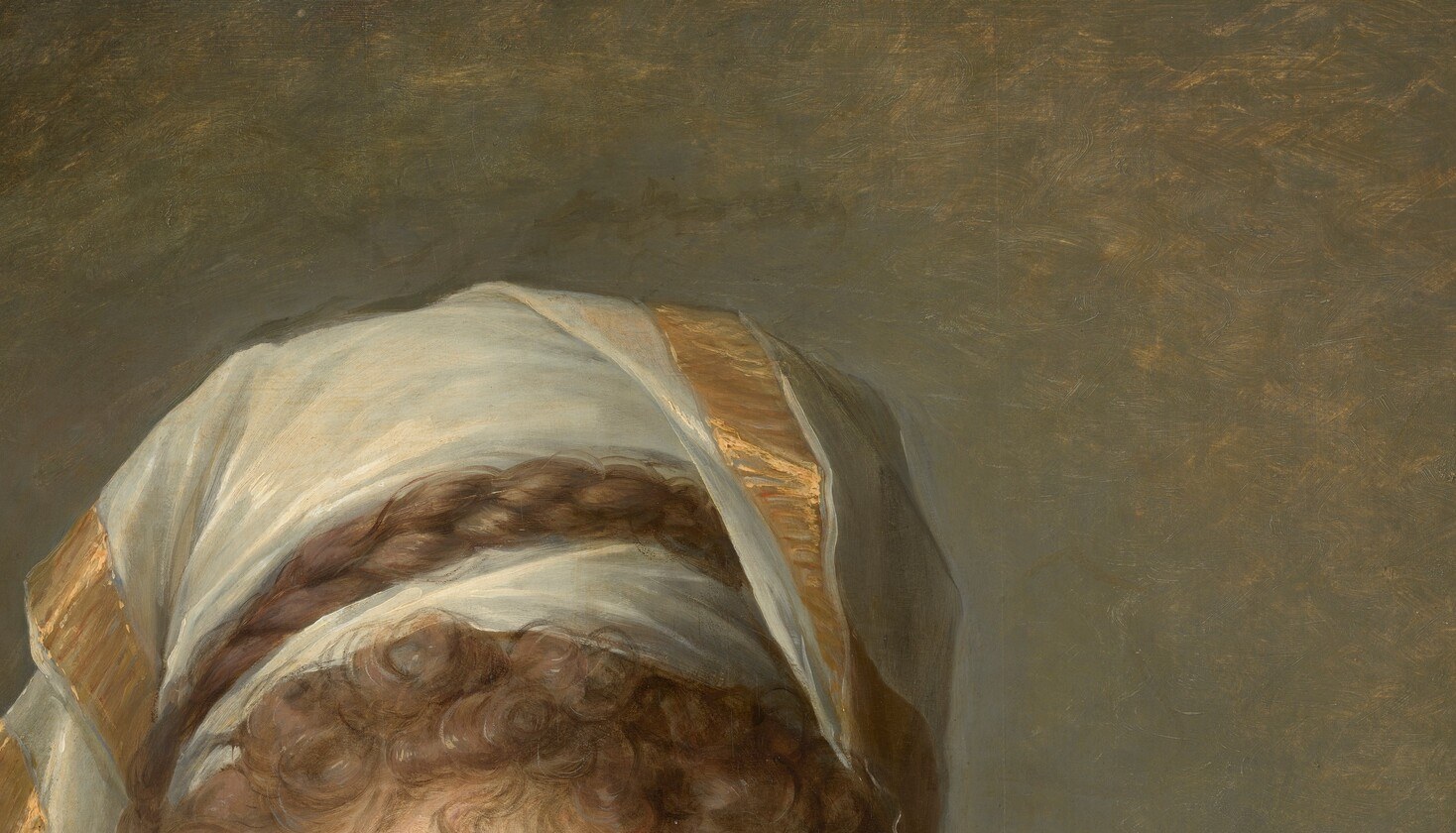
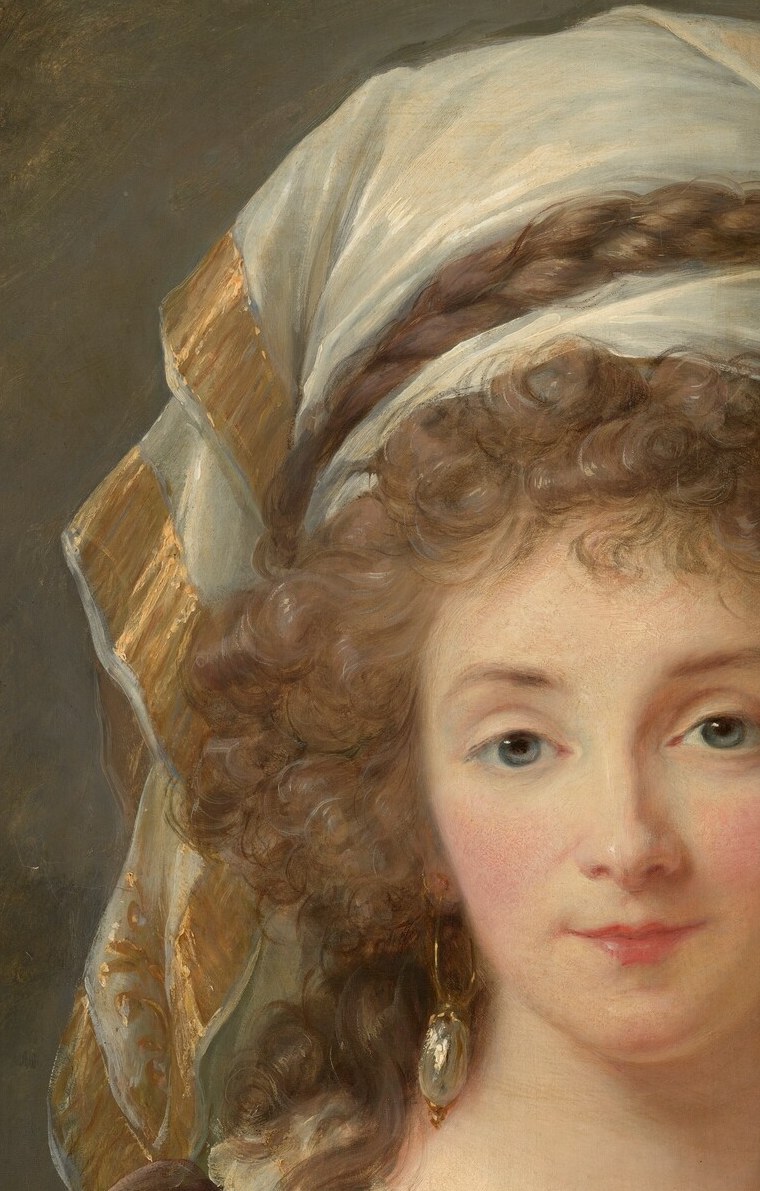
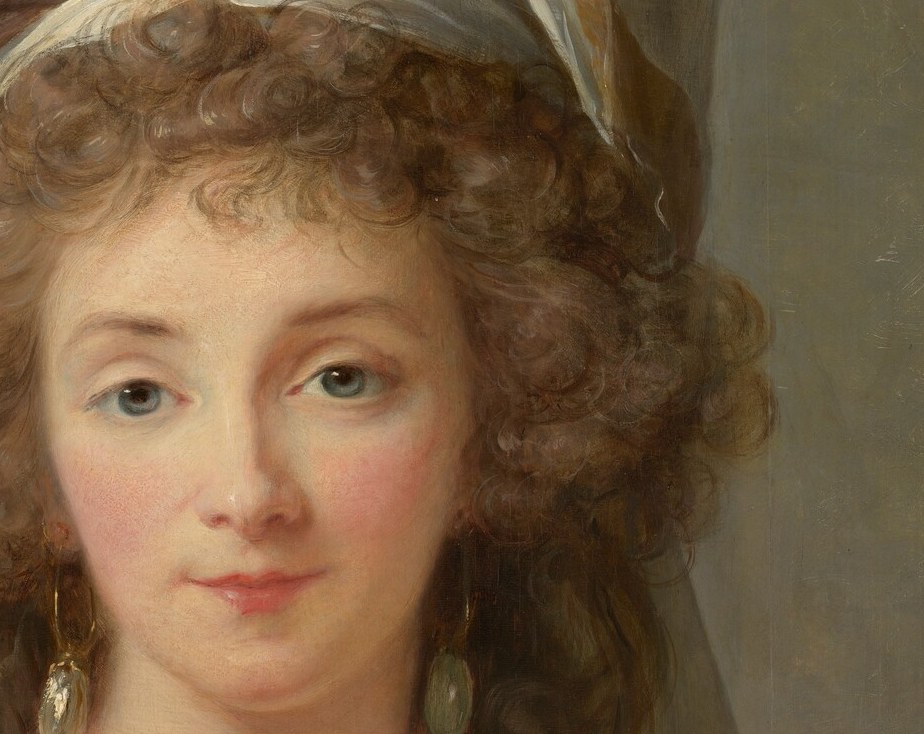
Look closely at Madame d'Aguesseau’s attire. Her delicate muslin cap and loose hair, part of a fashionable “undress” style, challenged the rigid formality of earlier aristocratic portraits. This choice for informality was seen as scandalous by some, reflecting a broader societal shift towards more naturalistic ideals.
Vigée Le Brun herself was known for pushing boundaries. She was celebrated, and sometimes criticized, for giving her sitters subtly parted lips and visible teeth, a departure from academic tradition that made her portraits feel more vivacious and lifelike. This portrait, now at the Museum, captures both the sitter's composure and the artist's bold vision.
How do you think these subtle choices in art reflect the revolutionary spirit of 1789?
Details
Transcript
This woman, Madame d'Aguesseau, sat for her portrait in 1789. It was a year the French Revolution began. Notice her informal hair and simple gauze headpiece. This “undress” style was new, and scandalous to some. The artist was also known for painting visible teeth. She broke convention for livelier, more natural portraits.