Separation of David and Jonathan by Rembrandt
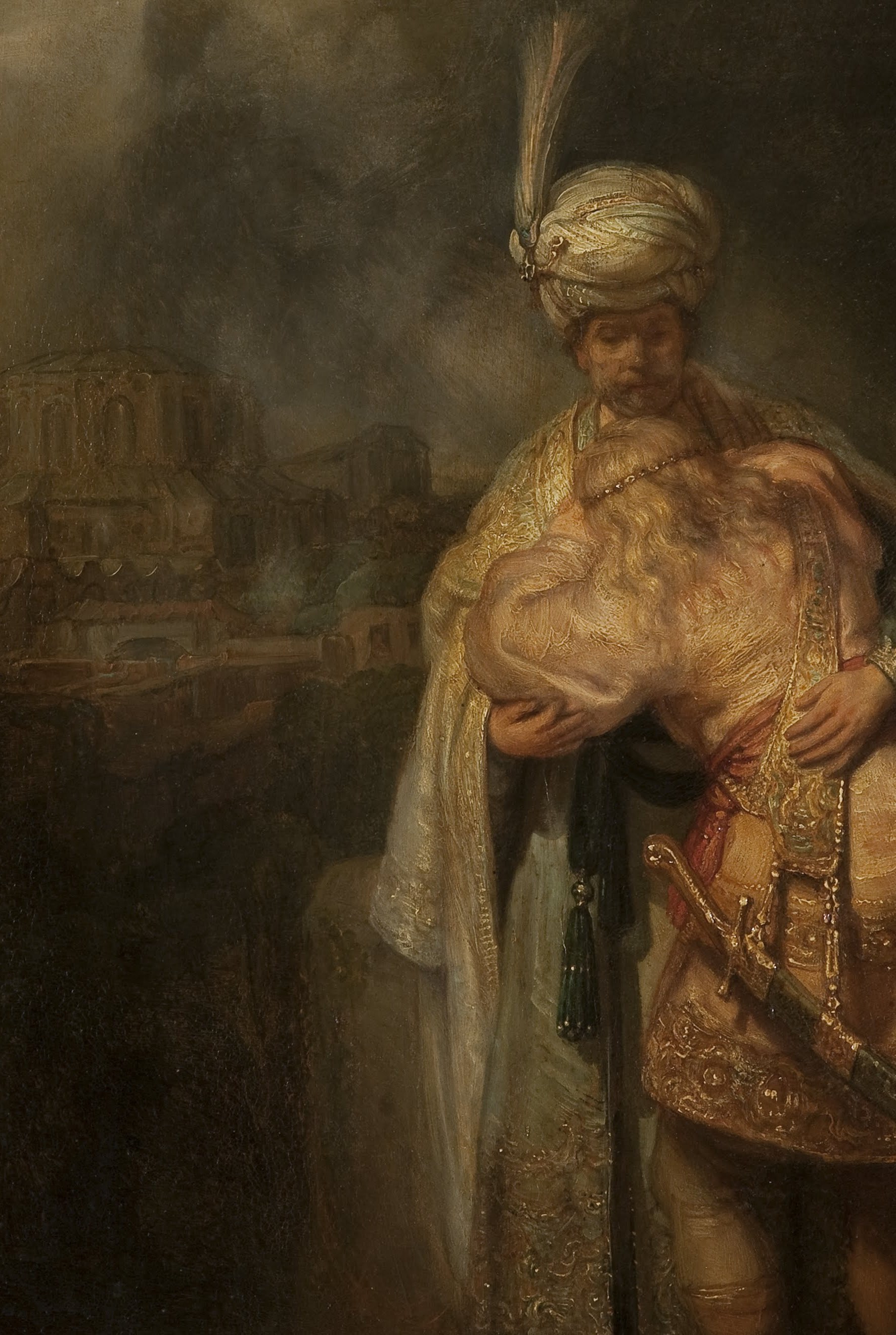
Rembrandt painted The Separation of David and Jonathan in 1642, the same year his beloved wife Saskia died. The painting now hangs in the Hermitage Museum in Saint Petersburg, where it was among the founding works of the collection when the museum opened to the public in 1882. The subject is a wrenching scene from the First Book of Samuel: Jonathan, son of King Saul, has just warned his friend David that Saul intends to kill him. This is their last embrace by the stone Ezel before David flees into exile.
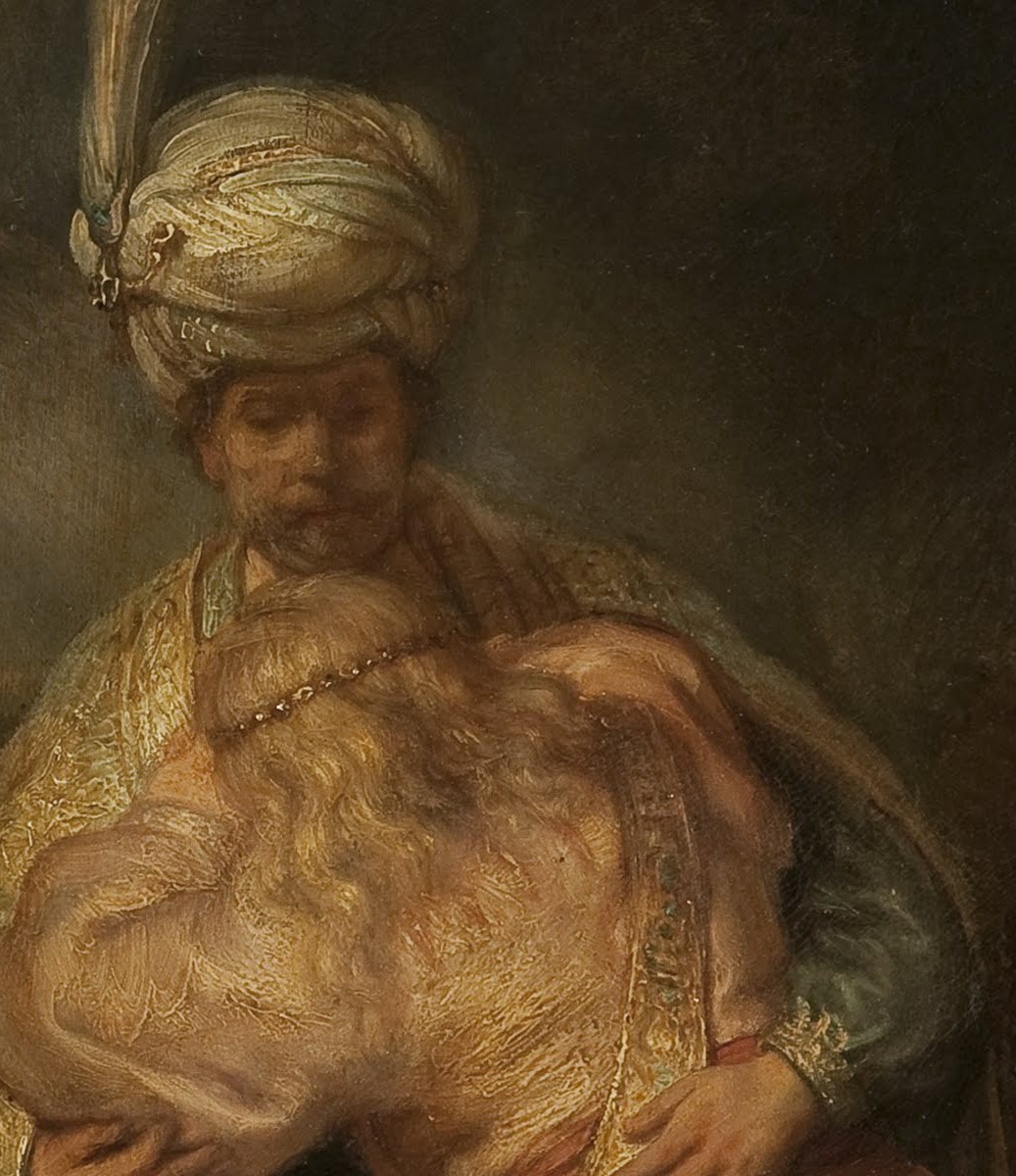
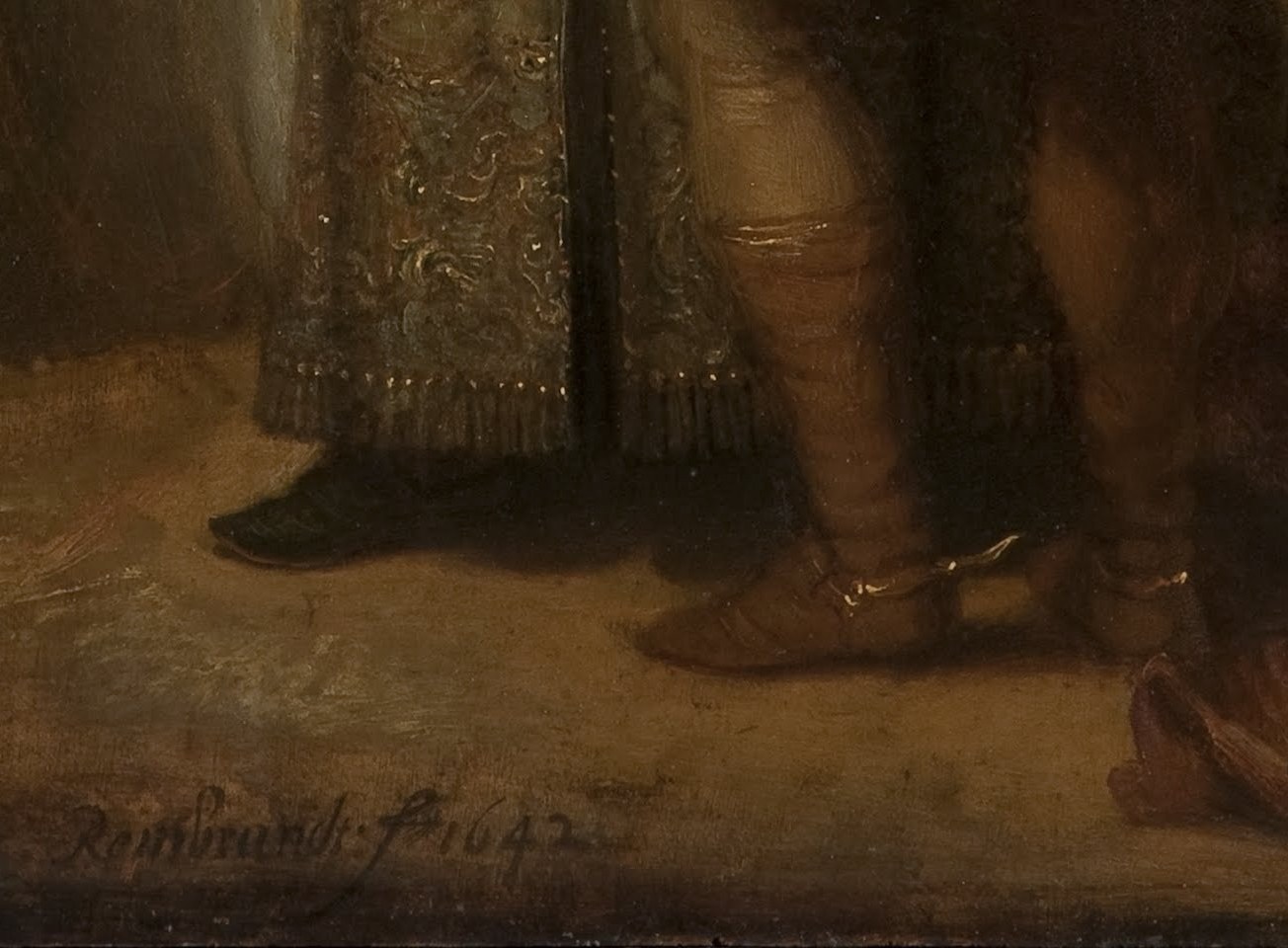
David buries his face in Jonathan's chest and weeps uncontrollably. Rembrandt makes the remarkable choice to hide David's face almost completely, the hunched posture, the red fabric and the gold trim communicate grief more powerfully than any expression could. Jonathan, older and more restrained, looks outward with a solemn, tear-streaked face. He is holding it together because David cannot. On the ground at their feet lies the quiver of arrows Jonathan shot as a coded signal, the warning now delivered, words replacing signs.
The personal context is impossible to ignore. Rembrandt had just lost Saskia, probably to tuberculosis, leaving him with an infant son. A painter who had spent years depicting his wife with tenderness and pride now turned to a biblical story about love, loyalty, and the pain of separation. The emotional weight in Jonathan's face, that specific look of someone suppressing their own sorrow because another person needs them to be steady, reads like something drawn directly from life.
A painting about two men saying goodbye, made by a man who had just done the same thing.
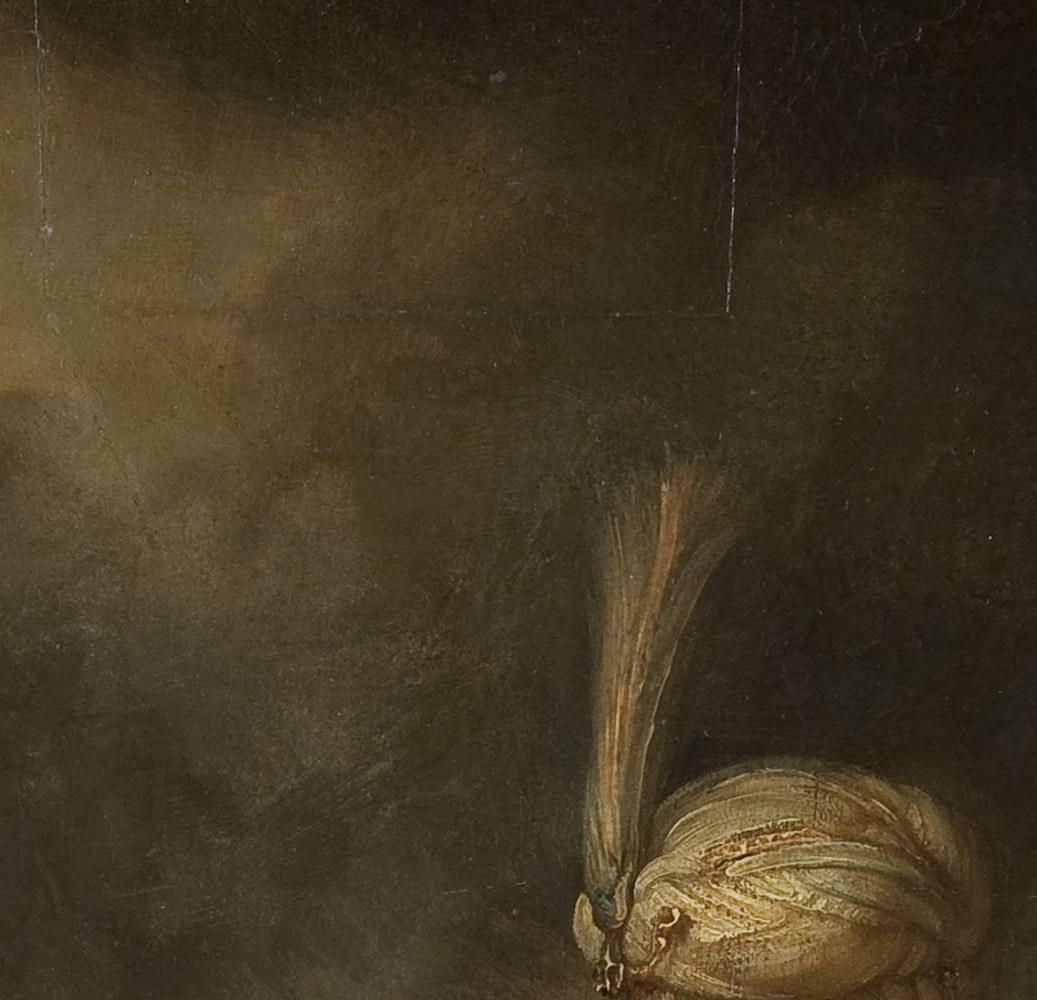
Details
Transcript
They look like a biblical farewell. But Rembrandt had just buried his wife, Saskia. Look at Jonathan's face. He holds back tears because David's grief is already too much. Rembrandt hides David's face entirely. Grief so total it has no features. The arrows on the ground: Jonathan's coded warning, already delivered. A painter who knew loss painted the cost of loyalty.