Portrait of a Boy by Louis-Léopold Boilly
This is Louis-Léopold Boilly's Portrait of a Boy, painted in Paris around 1805 and now in the collection of The Metropolitan Museum of Art. It captures the exact moment French bourgeois families began treating childhood as a subject worthy of serious oil portraiture.
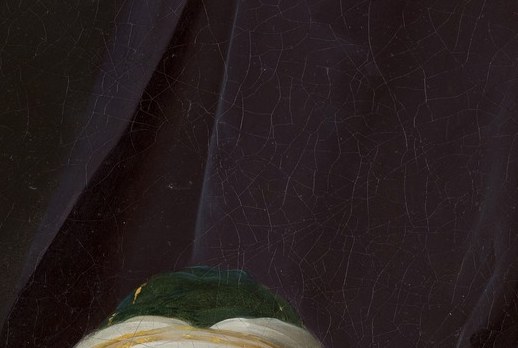
The first thing you notice is the turban. It is a costume, Orientalist dress-up was wildly fashionable in Napoleonic France, and dressing a toddler in exotic masquerade signaled the family's cultural awareness. The second thing is the boy's stare. Boilly was famous for painting eyes that lock onto the viewer no matter where you stand.
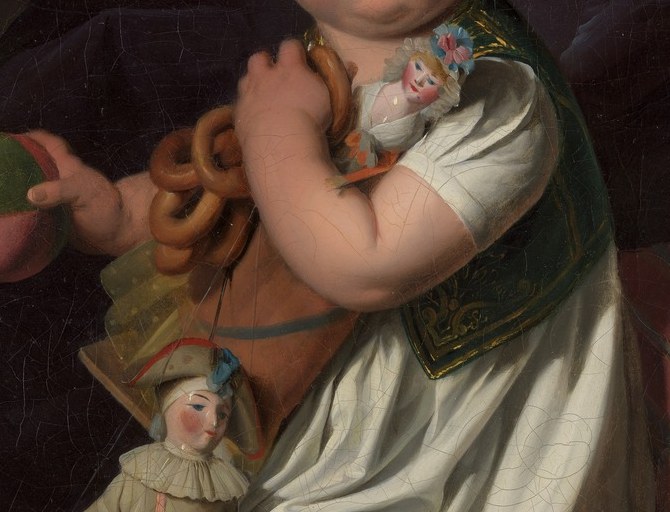
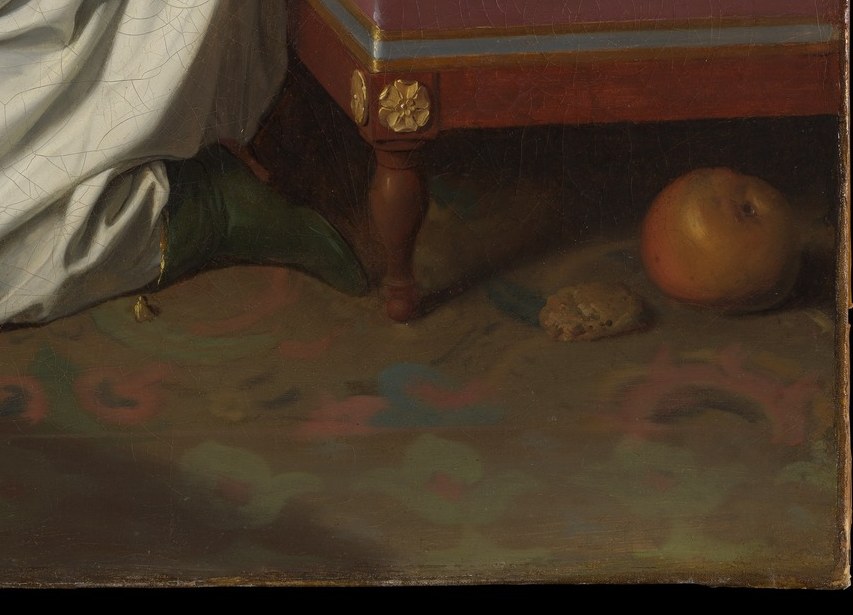
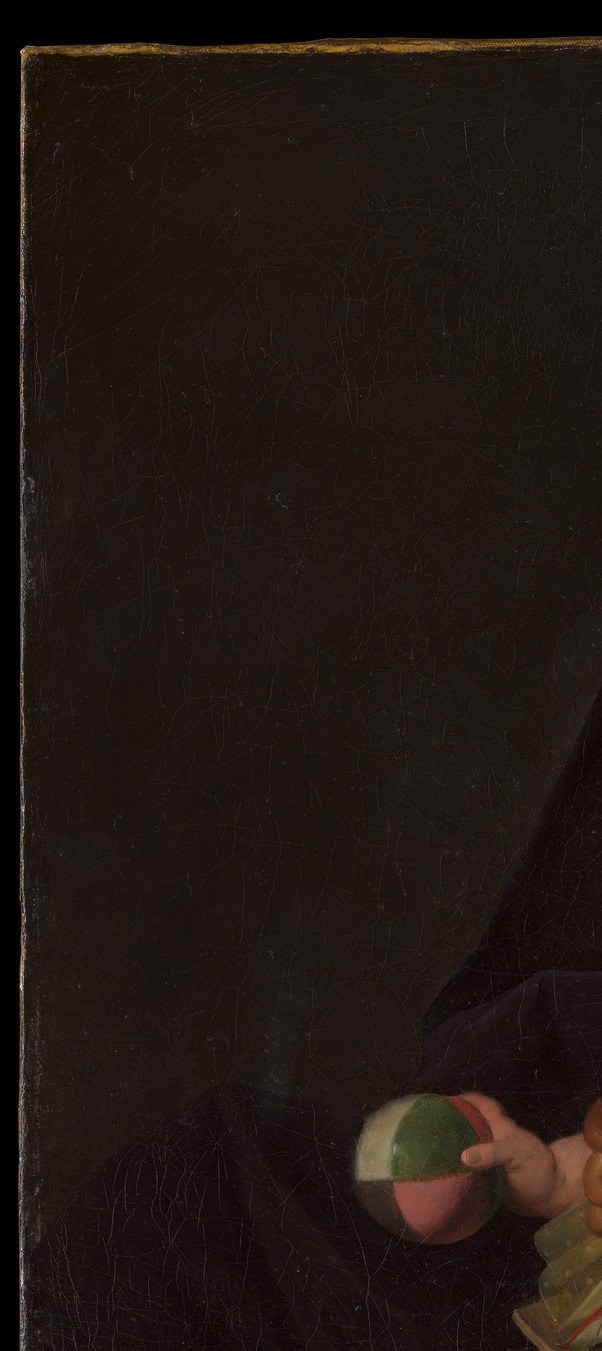
Boilly lived across an astonishing span of French history, from the monarchy through the Revolution, Napoleon's empire, and two restorations. He made his name painting the new middle class at home: their parlors, their feasts, their children surrounded by toys and food. A pretzel, an orange, a doll, each object says this family has abundance and taste.
The scattered floor is the real signature. Boilly never idealized. The child has been playing, and the play has been interrupted by the portrait sitting. What we see is a performance, but a performance rooted in a real, specific afternoon.
Details
Transcript
Paris, 1805. Napoleon had just crowned himself Emperor. French society was obsessed with the exotic. This boy wears a crisp white turban, a costume, not his identity. Look at his hands. He clutches a doll like a possession. At his feet: a pretzel, scattered toys. The painter shows interrupted play. Boilly lived through the Revolution, Napoleon, and two restorations. He documented a new middle class performing their prosperity.