Bouquet of Flowers by Odilon Redon
Odilon Redon painted Bouquet of Flowers in 1902, and it hangs now at The Metropolitan Museum of Art. At first glance it is a perfectly lovely still life, the kind of picture you smile at and scroll past. But Redon was a Symbolist, and for him even the prettiest things carried a secret.
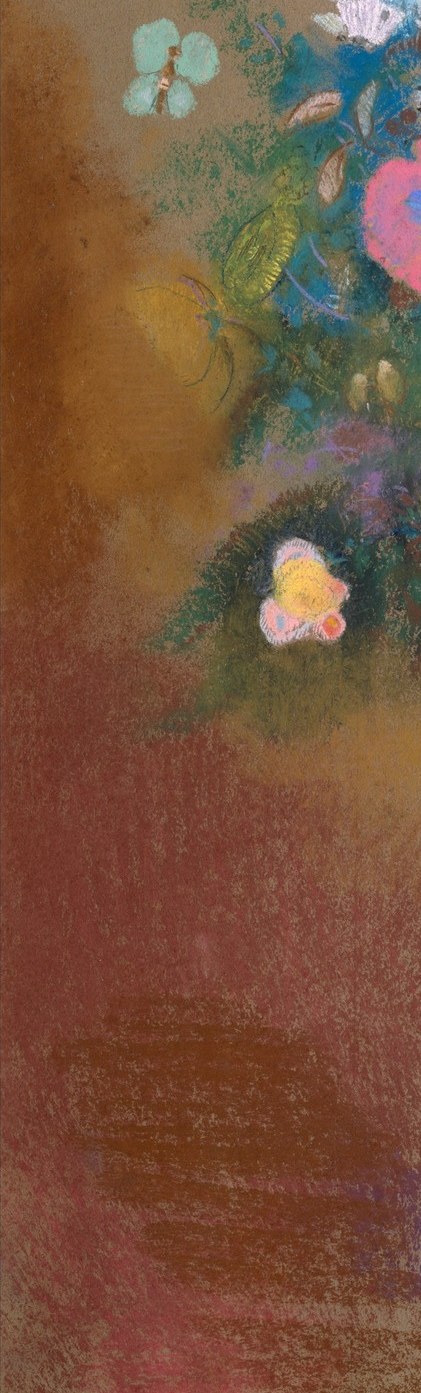
The first clue is at the very center of the bouquet: a single flower so dark it is nearly black. It anchors the whole composition and weighs it down, a reminder of the charcoal drawings Redon had built his reputation on, the works he called his noirs. He abandoned them completely after 1900, but he buried a memory of them here.
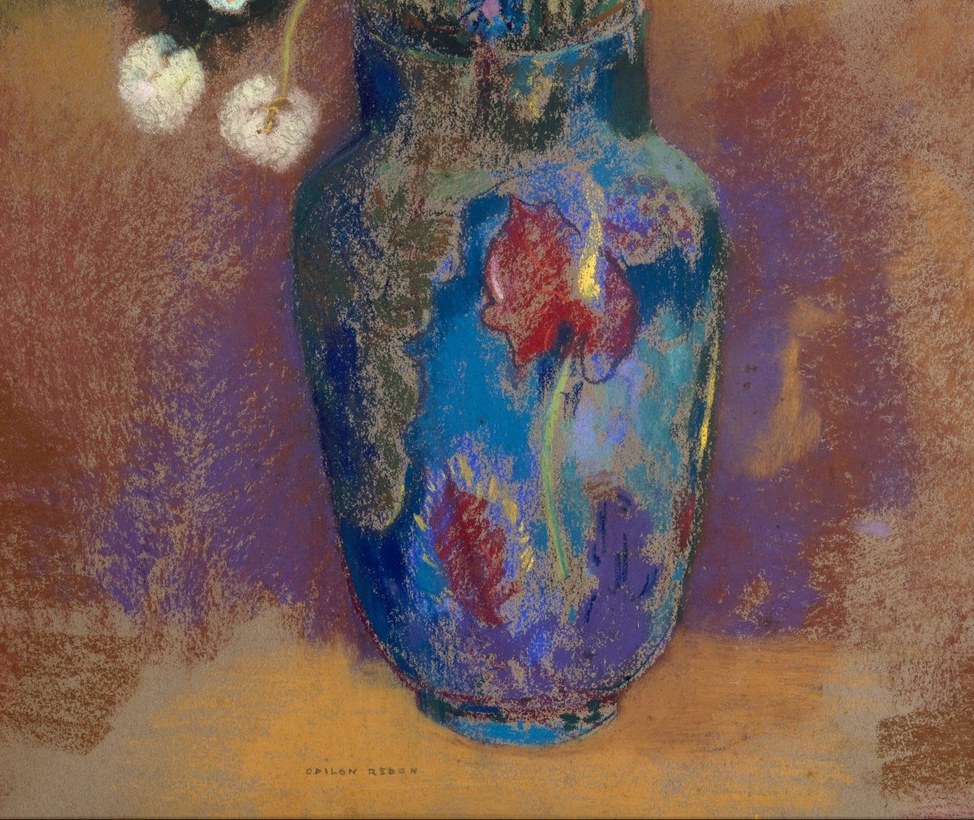
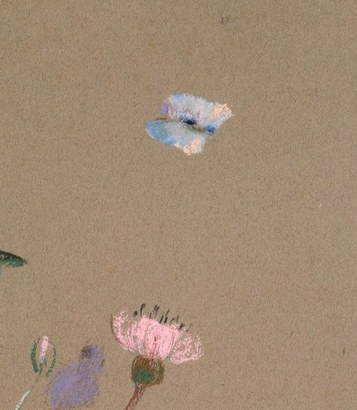
Then look at the blue vase. Faint figurative motifs are painted onto its ceramic surface, a tiny scene rendered in lighter blue, a painted image of the very thing the vase holds. It is a hall of mirrors done with flowers. And above the bouquet, so small you could cover it with a thumb, a blue butterfly hovers. Redon loved butterflies. They appear throughout his late work, turning a still life into something animate, almost a daydream.
The painting is a bridge between two halves of one career: the darkness he left behind and the color he discovered late. What do you make of that single black flower at the center of all that light?
Details


Transcript
A vase of flowers, bright and cheerful. But this painter began his career in total darkness. Before color, Redon drew only in charcoal. He called them his noirs. That black flower at the center is a shadow from his past. Now look at the vase itself. There are tiny painted figures on the ceramic. A painting, inside a painting, of a vase of flowers. And above it all, a blue butterfly no bigger than a fingerprint.