The Gardener - Old Peasant with Cabbage by Pissarro, Camille
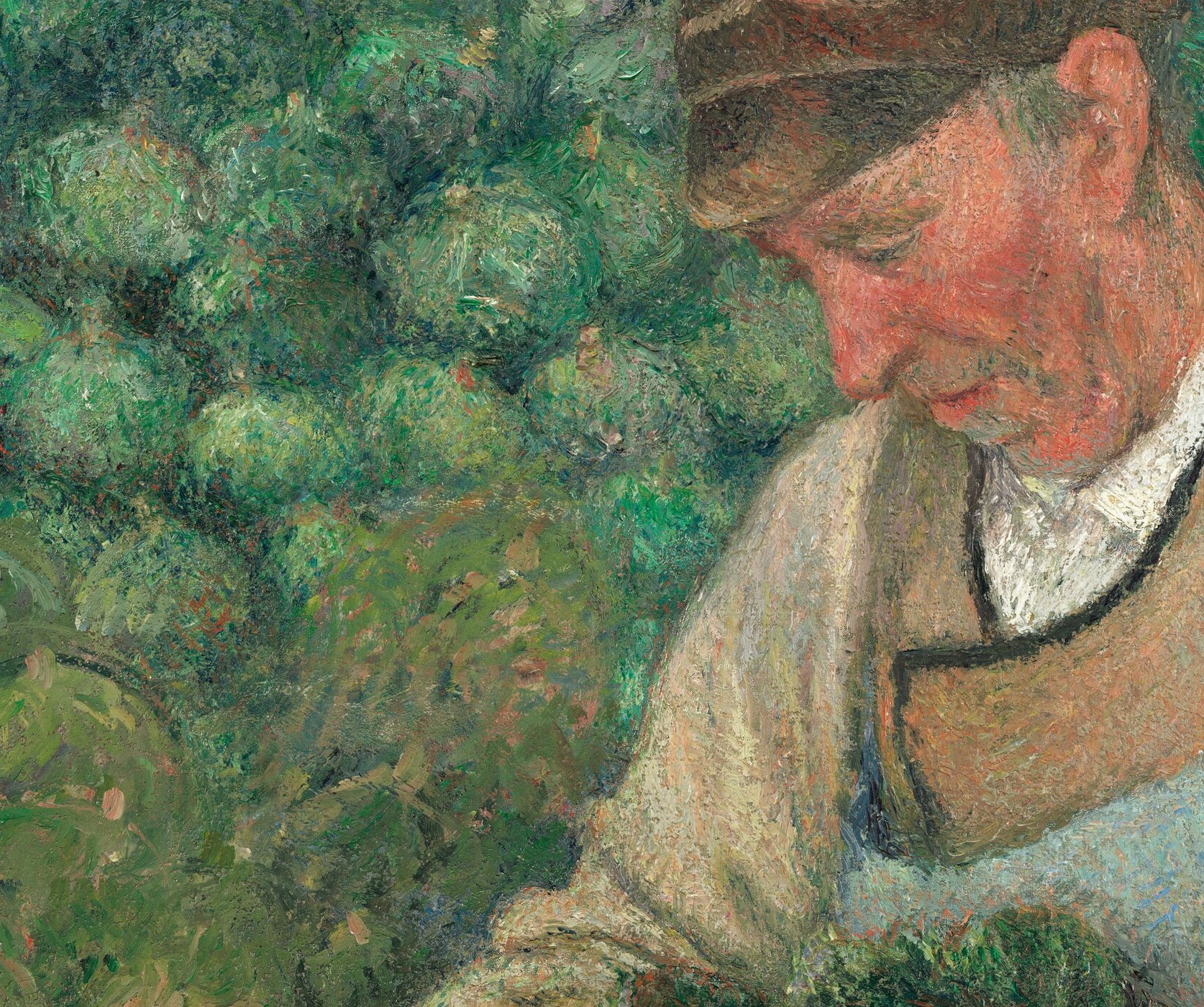
This is The Gardener - Old Peasant with Cabbage by Camille Pissarro, painted between 1883 and 1895. It is not a portrait of a specific man but a quiet, deliberate argument for the dignity of agricultural work, built out of ordinary objects.
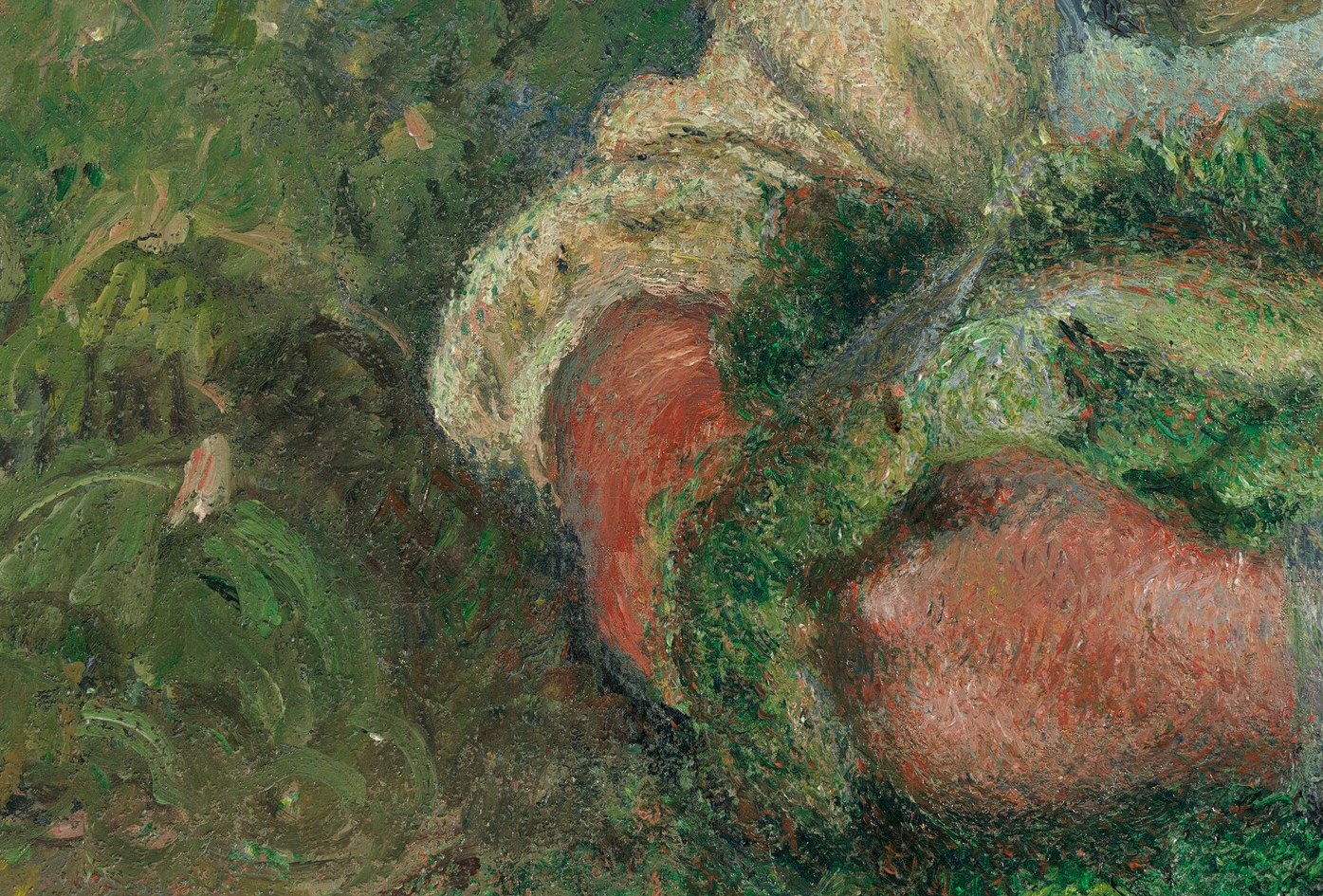
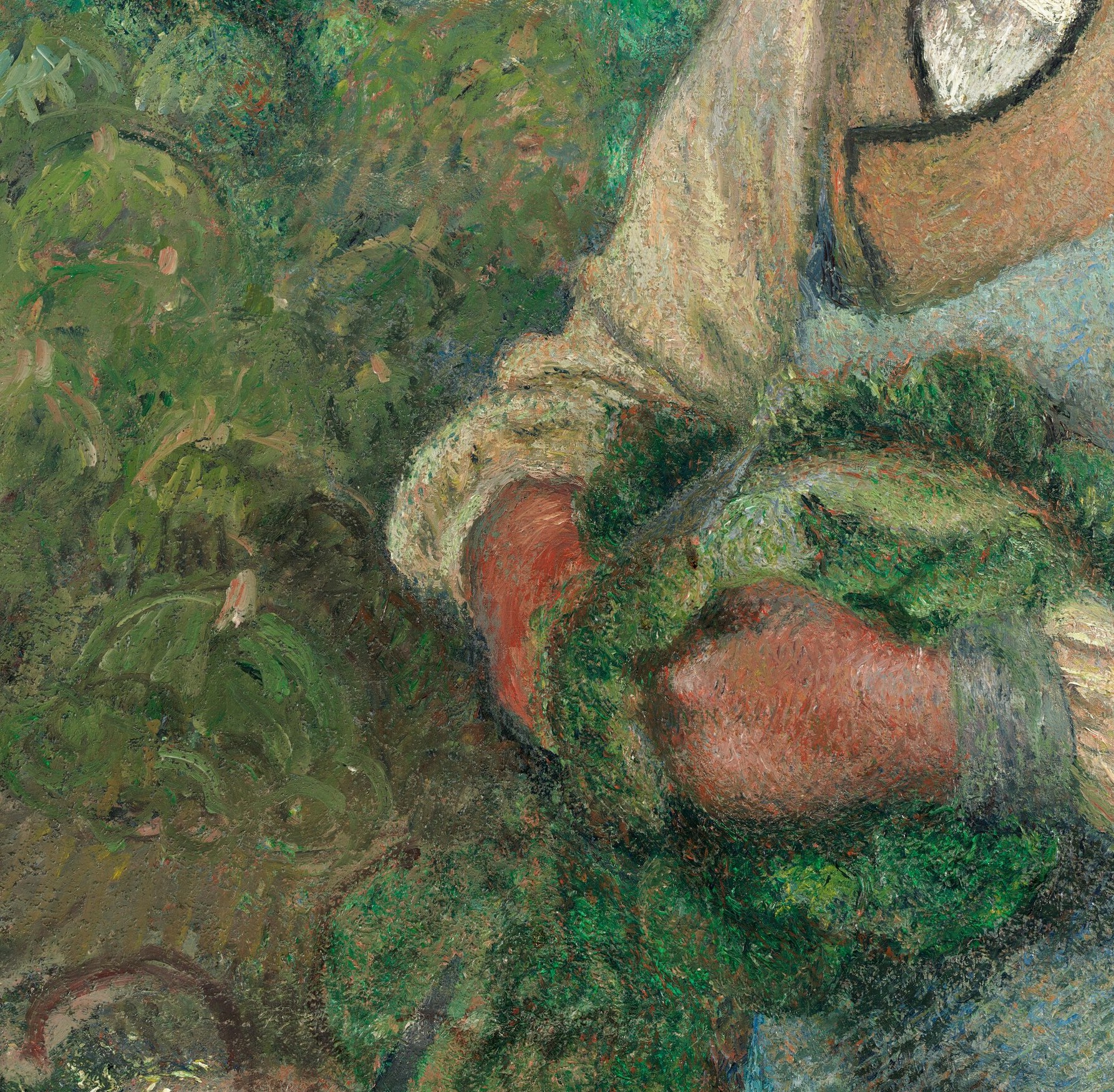
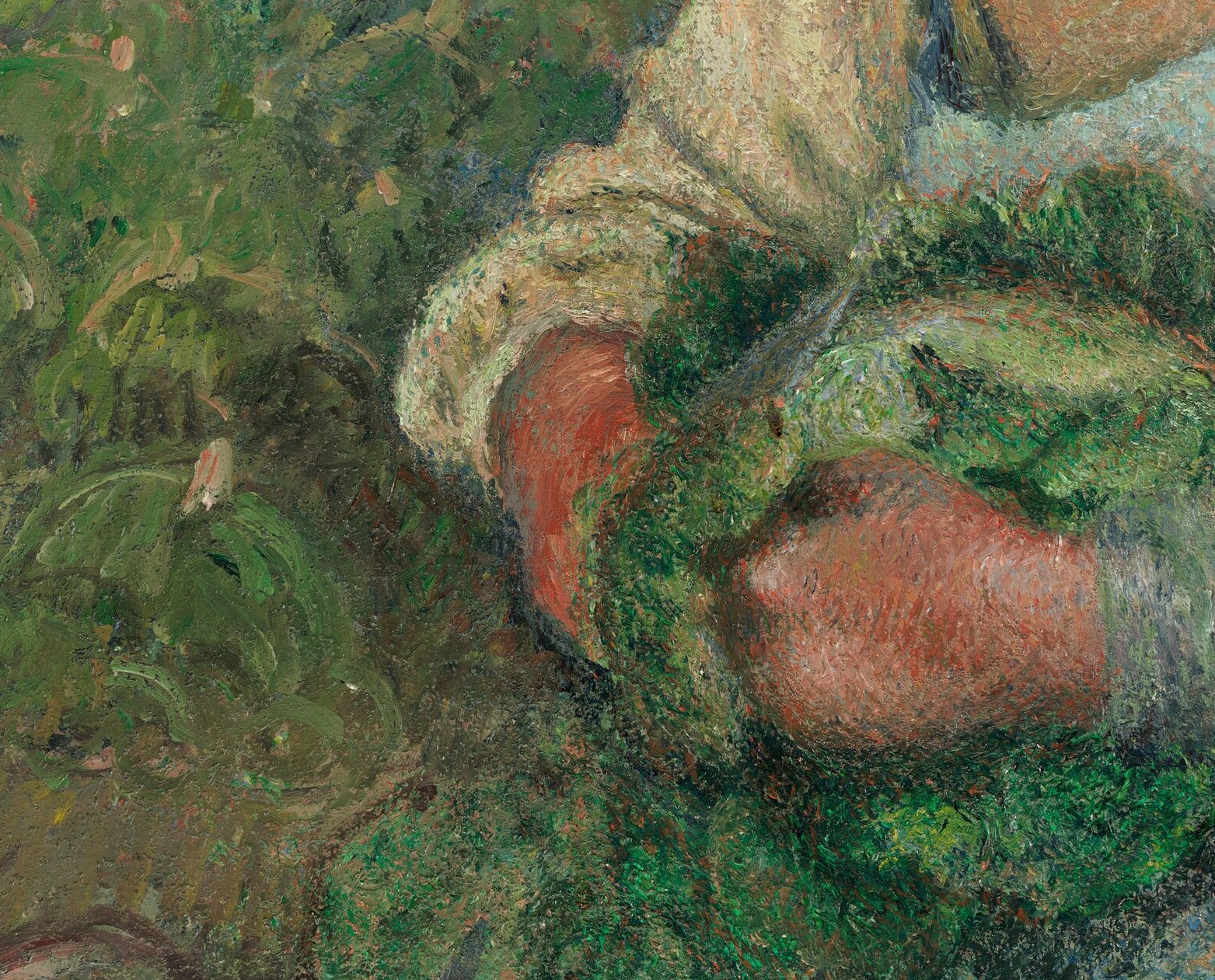
Look at the blue apron. In late 19th-century rural France, that particular blue-grey linen was the near-universal uniform of the working peasant. Pissarro does not idealize the man's face or soften his hands. The cabbage he holds is not a grand harvest, it is a single, modest vegetable, cradled like something earned.
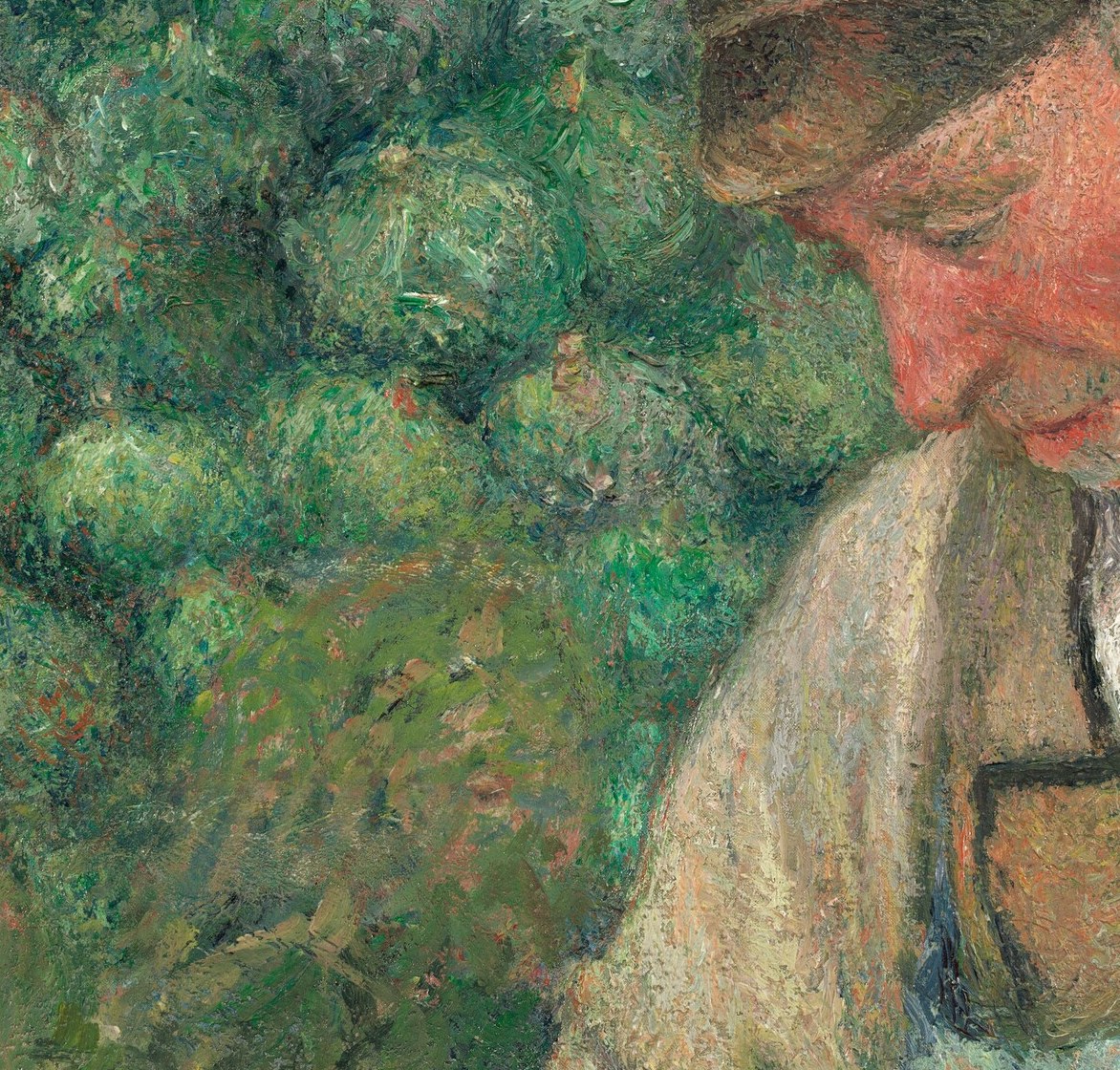
Pissarro painted this in his late sixties, when a tremor in his hands made smooth brushwork impossible. Instead of hiding it, he leaned in. The paint sits on the canvas in distinct, bumpy patches, most visible in the white of the shirt. What could have been a limitation became the painting's honest texture: the physical labor of the artist mirrors the physical labor of the gardener.
The figure is almost swallowed by the cabbage field behind him, pressed into the vegetable world he tends. Only a sliver of pale sky in the upper right gives any distance. The narrow band of dark soil at the bottom completes the cycle, earth to cabbage to laboring hands. Everything in the frame points back to work.
What ordinary object do you think would tell the story of your own labor best?
Details
Transcript
Start with the hands. Thick fingers, rough skin. This man works the soil. The blue apron was not a fashion choice. In rural France, this exact shade marked the working peasant. He cradles a single cabbage like a hard-won prize. Pissarro painted this in his late sixties, as his hands trembled. So every bumpy ridge of paint is also a record of labor, the artist's own. The code adds up: the earth, the hands, the painter, all working.