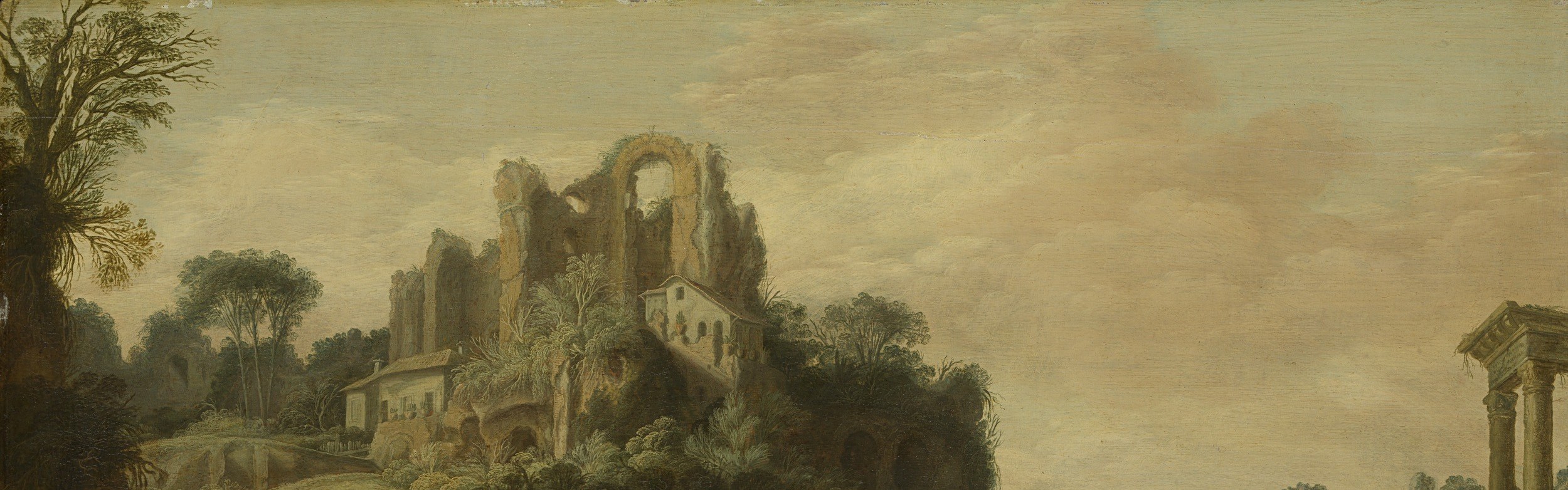
Roman landscape with the Palatine (left) and the parts of the Forum Romanum (right) by Pieter Anthonisz. van Groenewegen
Pieter van Groenewegen's Roman Landscape at the Rijksmuseum was painted around 1650. The artist lived in Rome for eight years and came home with this: not a view, but a coded message about time and power.
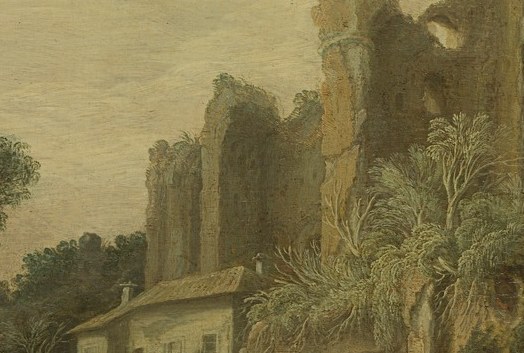
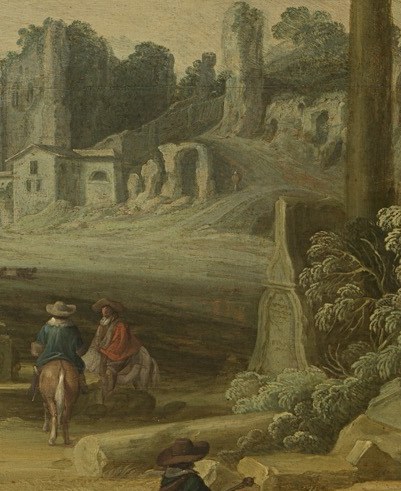
Look at the broken arch on Palatine Hill, once the seat of emperors. Then find the small house tucked into the ruins, ordinary life filling imperial ground. The temple columns on the right lie in fragments. In the foreground, a man walks his dog through the Forum. Each ruin is a piece of the argument.
Van Groenewegen joined the Bentvueghels, a club of Dutch painters in Rome who gave each other nicknames, his was Leeuw, the Lion. He returned to Delft and painted Roman scenes from memory for decades. The painting now hangs in the Rijksmuseum, a quiet 375-year-old statement.
The argument: empires fall, temples crumble, but the ordinary person the history books ignore, the dog-walker, outlasts them all.
Details
Transcript
This painter knew Rome. He lived there for eight years. The broken arch on Palatine Hill. Once the seat of power. A small house in the ruins. People still live here. The temple columns on the right. Reduced to broken stone. The empire fell. The dog-walker stayed.