The Grand Canal above the Rialto by Francesco Guardi
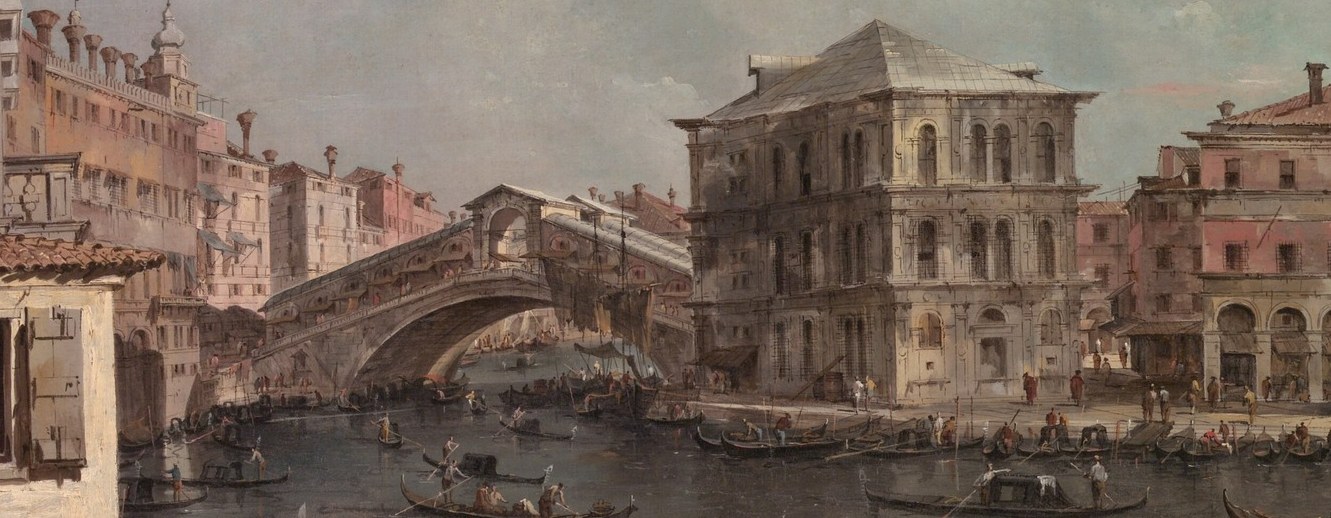
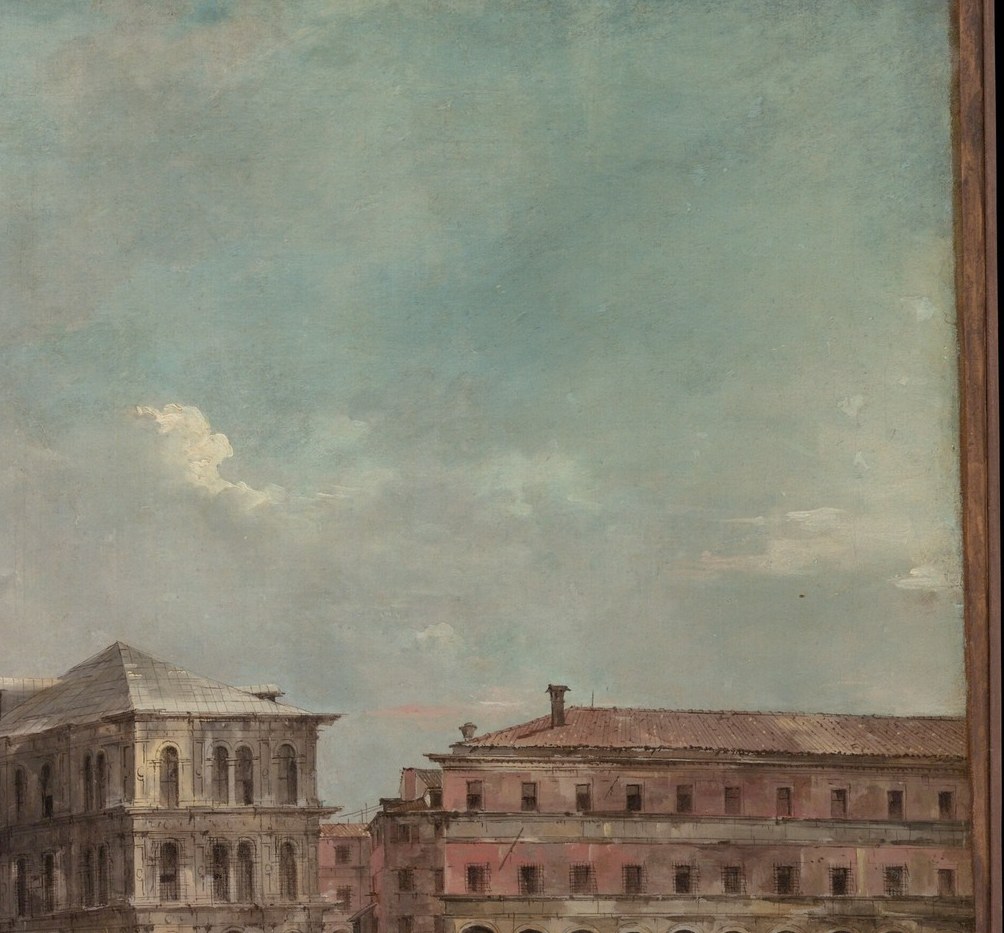
This is Francesco Guardi's 'The Grand Canal above the Rialto,' painted around 1760. On the surface, it is exactly what an 18th-century English traveler on the Grand Tour wanted to bring home: a perfect, shimmering postcard of Venice's most famous bridge.
Look at the water first. Guardi built his reputation on a loose, flickering brushstroke that makes the canal feel alive. The boats are not just parked; they bob. The light is not just described; it glints off the broken strokes of white and gray. Then, let your eye travel through the central arch of the bridge. That framed glimpse is not an empty void. Guardi painted a receding cityscape back there, a distant campanile, more buildings, more water, dissolving into the lagoon haze. It rewards a closer look.
Guardi inherited the veduta market from Canaletto but took it somewhere more poetic. Where Canaletto gave precise, almost surgical records of the city, Guardi gave atmosphere. After his brother died in 1760, he focused almost entirely on these views, and his style grew progressively looser and more expressive. The buildings on the left here are purposefully shadowed and weathered, pushing your eye into the light. It is stagecraft.
He knew most people would glance at the bridge and smile. He put a secret city inside it anyway, just for the people who leaned in.
Details
Transcript
Everyone knows the postcard view of the Rialto. The Grand Canal, busy with gondolas and trade. The artist, Francesco Guardi, sold these scenes to tourists. He gave them the monuments they paid for. But he hid a reward for the patient. Through the arch, a whole other city recedes. A distant campanile, lost in the haze.