Facsimile of a Pawnee Doctor's Robe with Fantastic Professional Designs by Catlin, George
George Catlin, a lawyer-turned-artist, dedicated his career to documenting Native American life, particularly the Plains Indians, during his travels in the American frontier in the 1830s. His painting, "Facsimile of a Pawnee Doctor's Robe with Fantastic Professional Designs," created around 1861, is an oil on card mounted on paperboard and can be found in a museum collection.
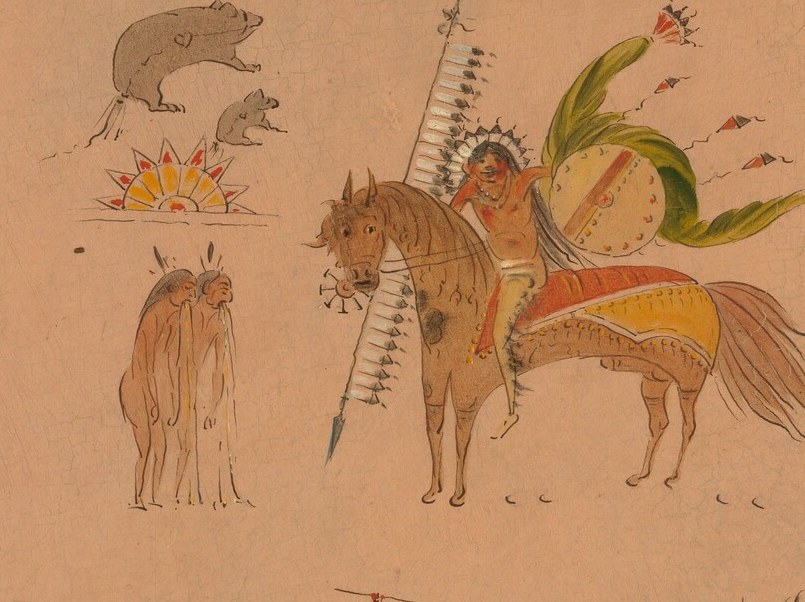
This piece is a meticulously rendered reproduction of a Pawnee ceremonial robe. Observe the intricate details: the central horse and rider, the powerful buffalo head symbol, and the prominent feathered headdress, all significant elements in Pawnee culture.
Catlin's approach was to blend documentary observation with a folk art aesthetic, aiming to preserve indigenous visual culture through European painting techniques. This work reflects his lifelong effort to record and share the rich traditions he encountered.
His paintings offer a window into a world that was rapidly changing, making his artistic legacy an invaluable record. What stories do you imagine these figures tell?
Details
Transcript
In the 1830s, this artist traveled the American frontier. He aimed to document the lives of Plains Indians. This painting reproduces a Pawnee ceremonial robe. The buffalo was vital for sustenance and power. He tried to preserve indigenous visual culture. His work blends documentary observation with folk art.