Erasmus of Rotterdam by Hans Holbein the Younger
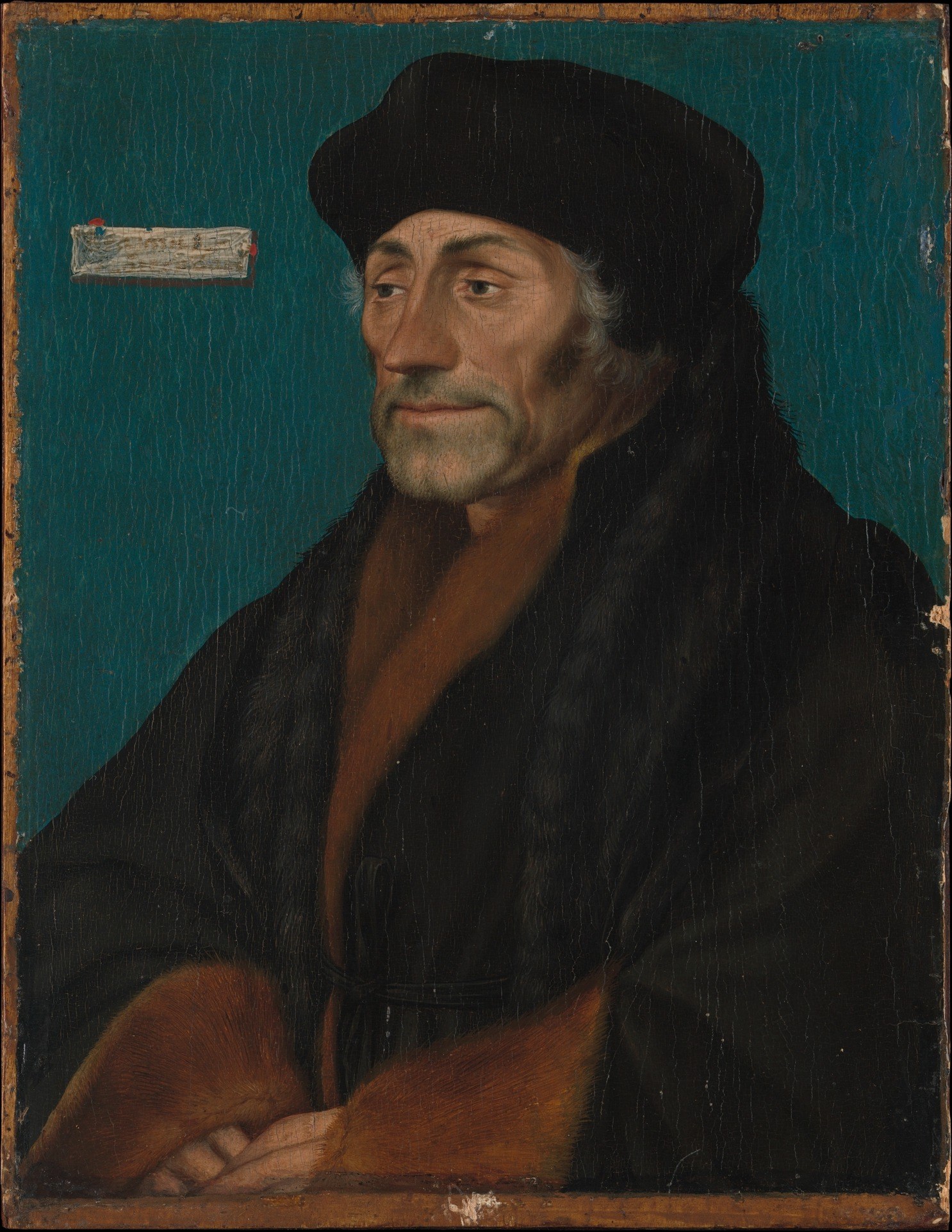
Hans Holbein the Younger's *Erasmus of Rotterdam* (c. 1532) from The Metropolitan Museum of Art shows a coded message about the scholar's life.
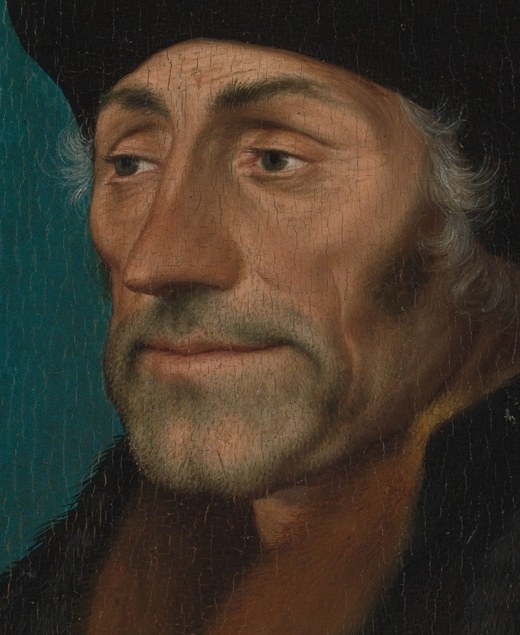
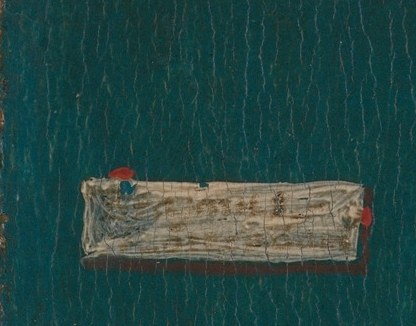
Look at the book on the shelf, a clear symbol of Erasmus's dedication to knowledge and writing. The paper on the wall, though faint, suggests hidden messages and the intellectual discourse he engaged in. His direct gaze and thoughtful expression convey his intellectual acuity.
Painted in 1532, this portrait by the renowned German-Swiss artist Hans Holbein the Younger captures the Dutch humanist scholar. It is a prime example of Northern Renaissance portraiture, emphasizing detailed realism and individual character over idealized forms, contrasting with the Italian Renaissance style.
The composition and details work together to present Erasmus not just as a man, but as a symbol of humanism and intellectual pursuit.
Details
Transcript
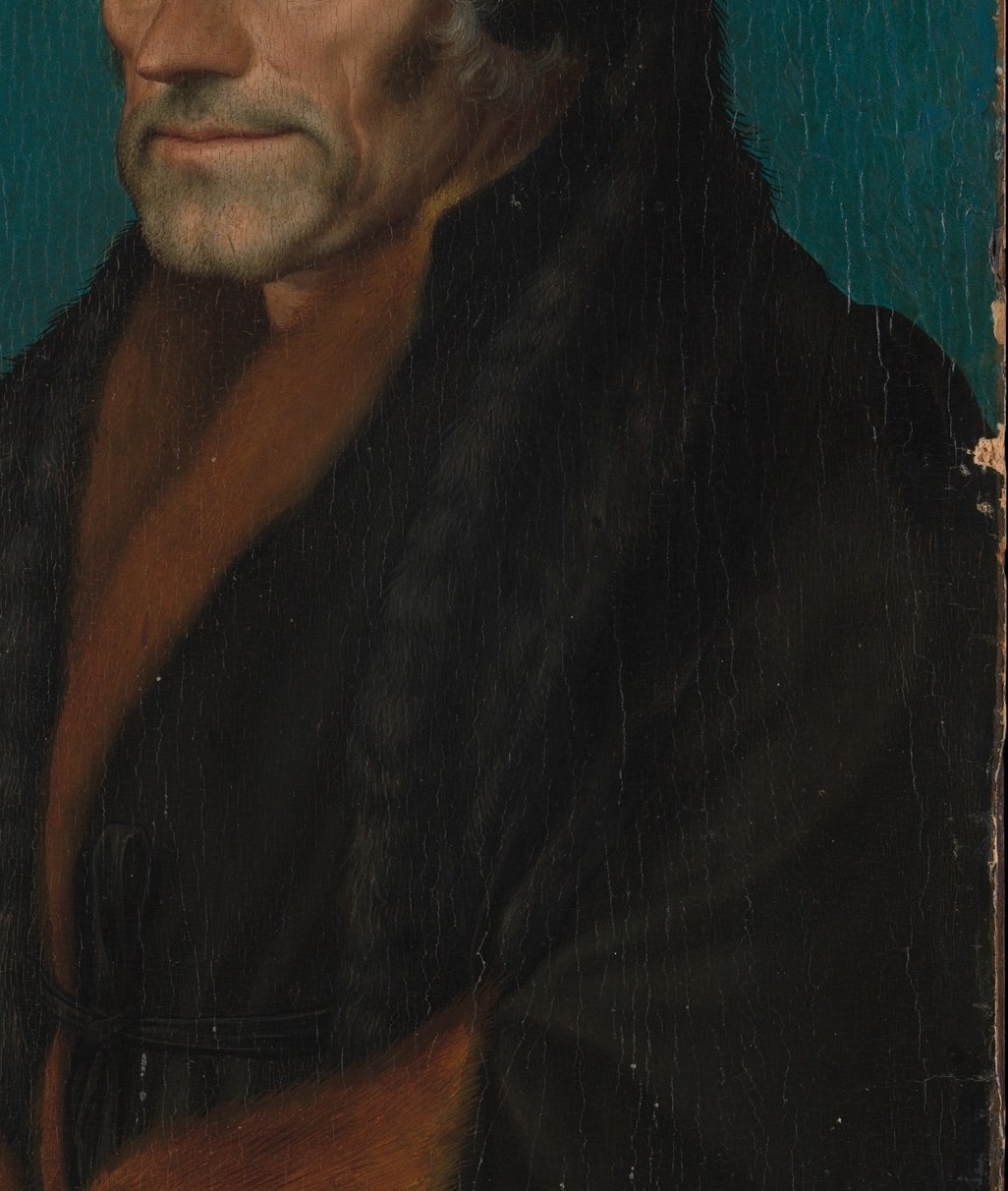
The scholar's face looks directly at you. His intelligent eyes suggest deep thought. A book on the shelf signals his life's work. His fur robe shows his high status. This paper contains faint writing. Holbein painted this in 1532. The background wall is deep teal. Holbein was known for his portraits.