Spring Landscape by Thomas Doughty
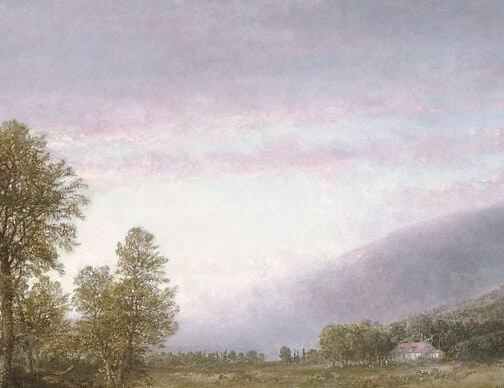
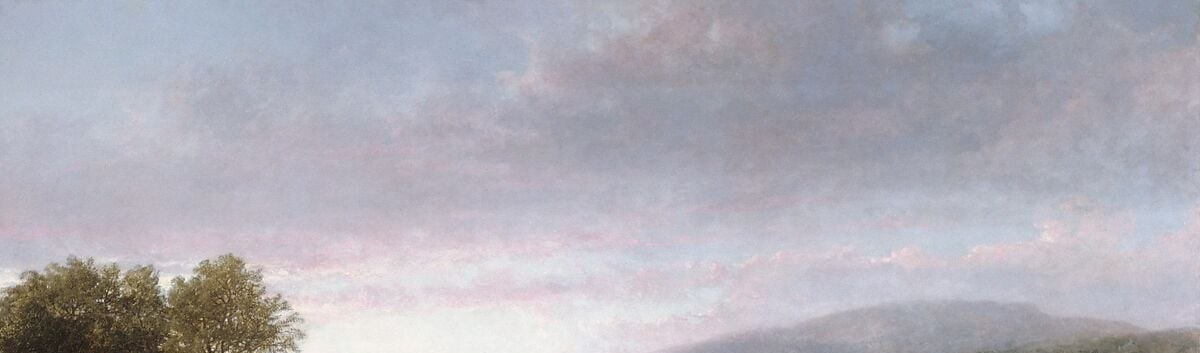
Thomas Doughty's "Spring Landscape" (ca. 1853-56) is an early American painting that asks you to look at nothing but the air. In the 1850s, most American painters were still following European formulas: historical scenes, allegories, portraits. Doughty painted a quiet valley with no story and no people, and that was the point. The landscape itself was enough.
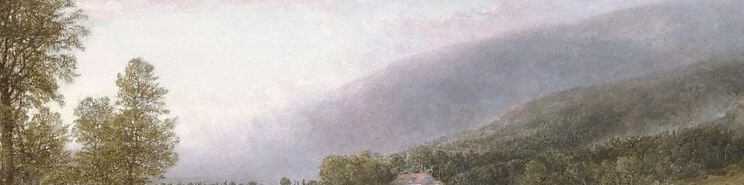
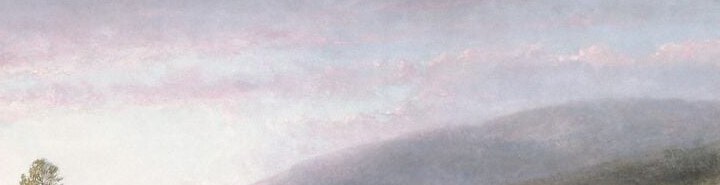
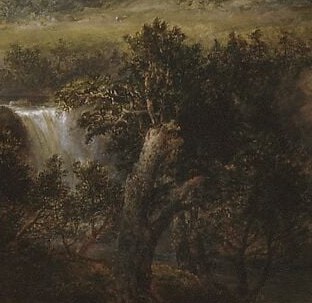
Look straight into the center where the valley glows. Doughty built that luminous mist with thin, smooth layers of oil paint, one glaze over another, until solid land dissolves into light. The distant ridgeline is barely separable from sky, a technical study in how paint can manufacture infinite distance. On the right, a small waterfall cuts through dark rock, the only movement in an otherwise still world, painted with an almost impossibly restrained brush.
Doughty was part of the Hudson River School's first generation, working when American artists were just beginning to treat native scenery as a subject worthy of serious painting. This direct, unembellished approach helped lay the groundwork for the grander landscapes that followed. The painting now lives at the Metropolitan Museum of Art.
What holds your eye longest: the breath of mist across the valley floor, or the one small cascade that sounds inside the silence?
Details
Transcript
A landscape with no story, no people, no allegory. This was strange in the 1850s. Doughty wanted you to look at the air. That glowing center is not fog. It is layered oil paint. Thin, smooth glazes make moisture visible. The mountains dissolve at exactly the right distance. One kinetic note: the waterfall's white energy. Painted with the quietest possible brush.