Watermelon and Grapes by Francis, John F.
In John F. Francis’s 1863 painting, "Watermelon and Grapes," the artist masterfully uses light and shadow to bring still life to vivid life. Created with oil on a smooth wood panel, the painting showcases the tactile qualities of the fruit in exquisite detail.
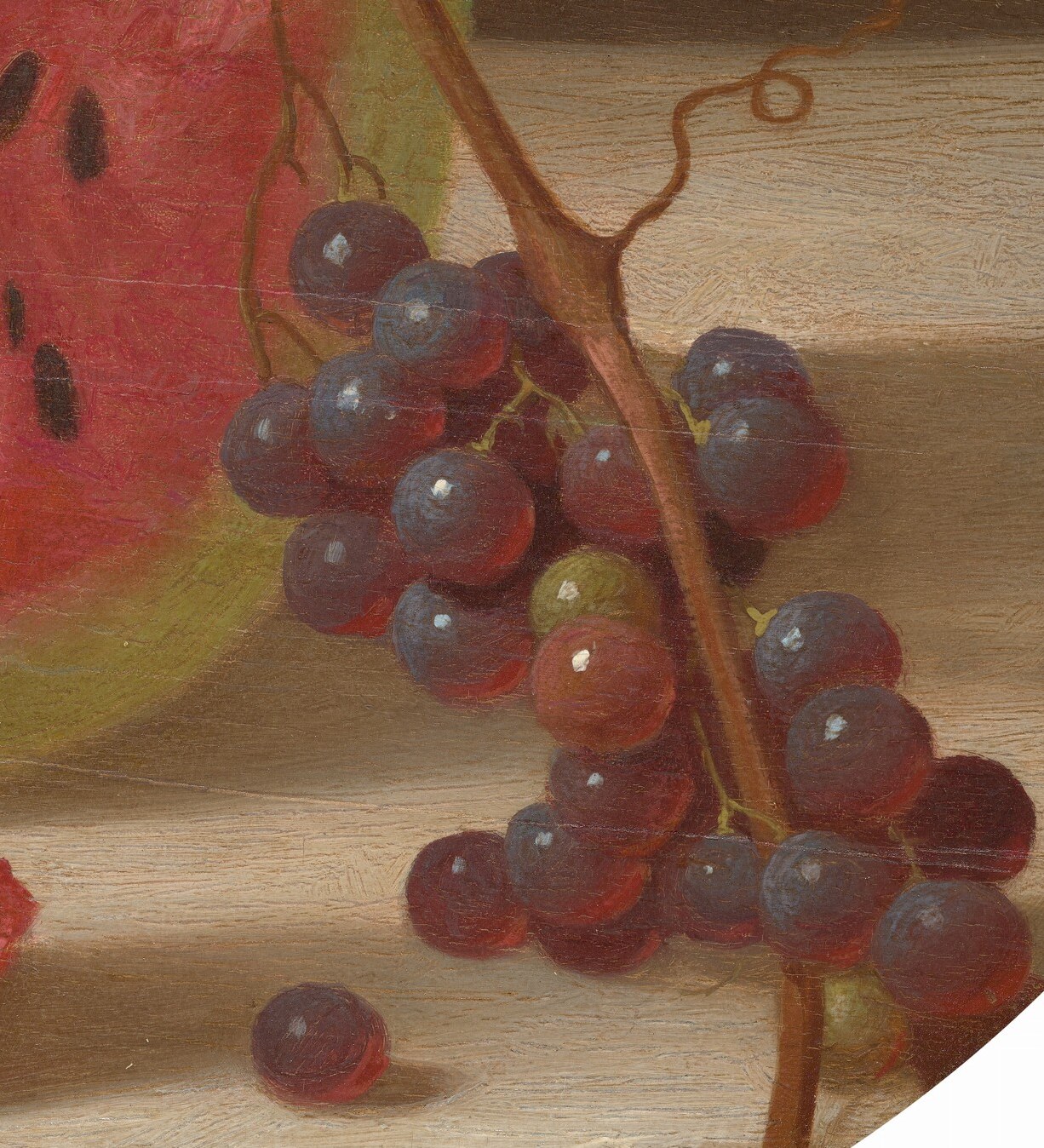
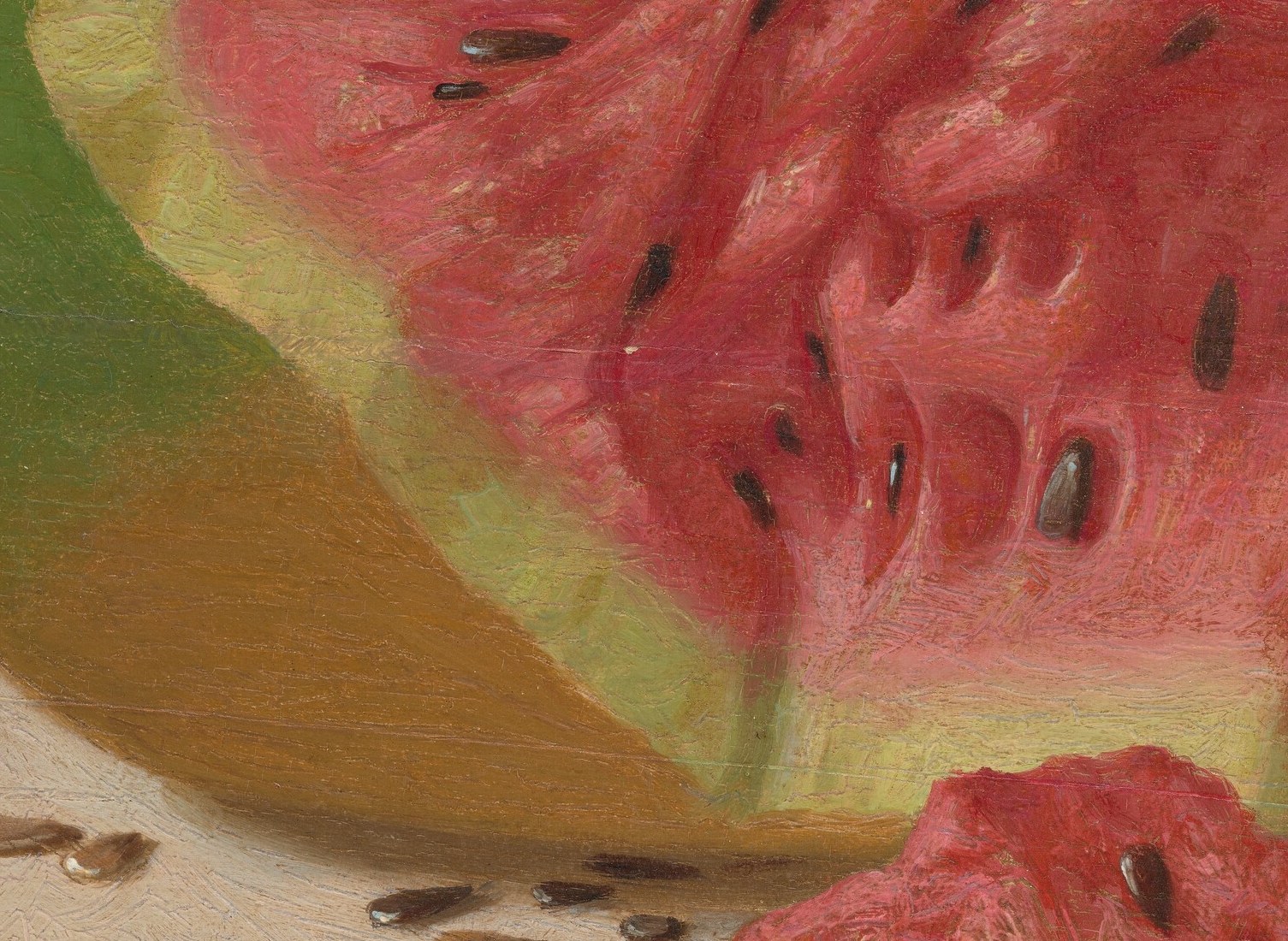
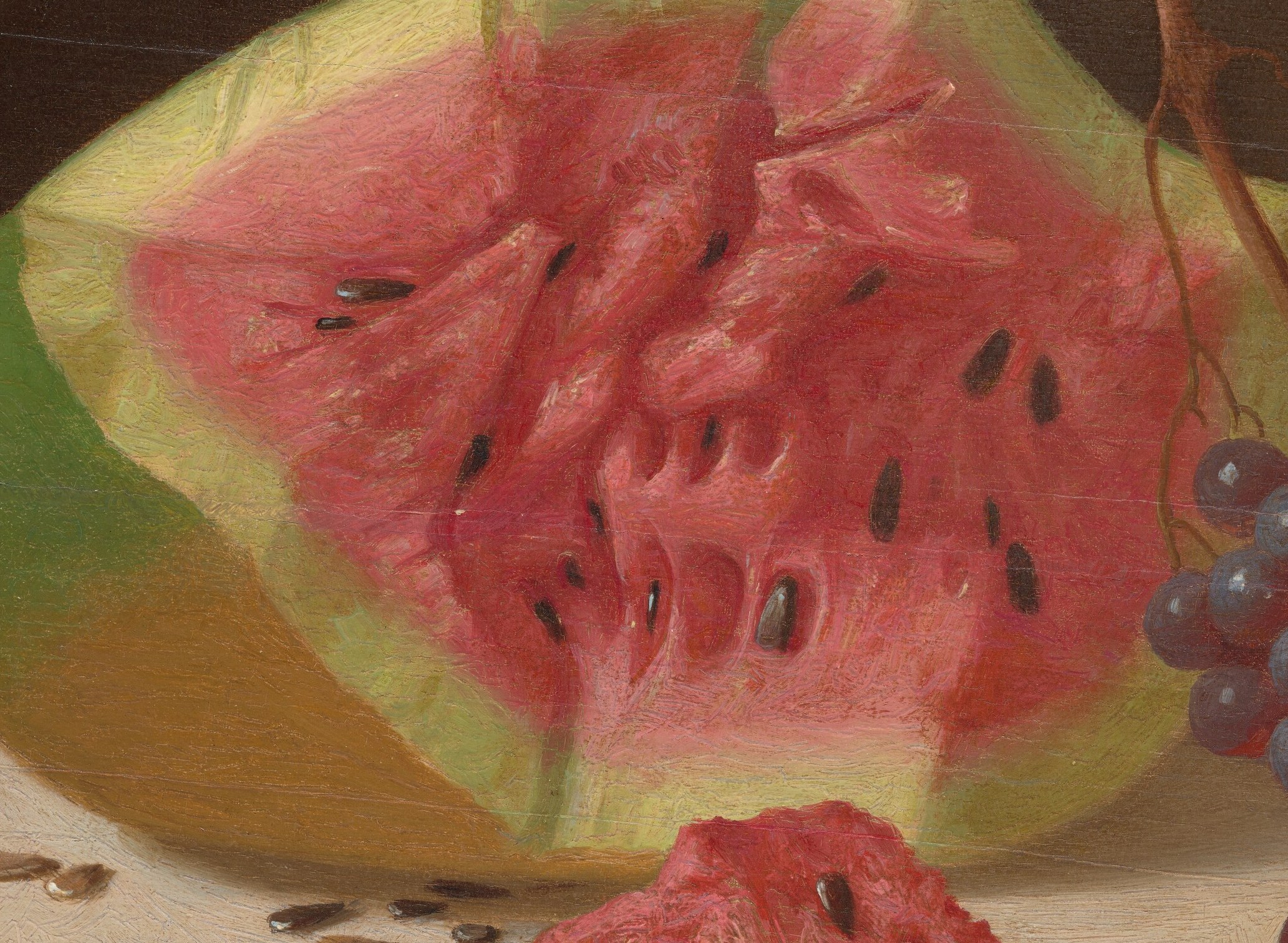
Notice the grapes, each one seemingly ready to burst with juice. The subtle highlights and deep, translucent tones are built through Francis's careful layering of paint, creating an almost edible realism. The sliced watermelon, too, benefits from this precise technique, with its vibrant flesh and delicate rind.
Francis painted this work during the American Civil War, a turbulent period during which he continued to produce tranquil domestic still lifes. His work was exhibited in 19th-century catalogues and remains cherished in private collections today, a testament to his skill in elevating everyday objects.
What other textures do you see brought to life in this painting?
Details
Transcript
This painter uses deep shadows to make fruit glow. Look at the grapes. They seem to almost burst with light. Each grape catches a distinct, sharp reflection. He applies paint in fine layers, building translucence. It makes them look soft and sweet enough to eat. This entire painting is oil on wood, not canvas. The smooth support enhances the fruit's rich texture.