An Alligator's Nest by Catlin, George
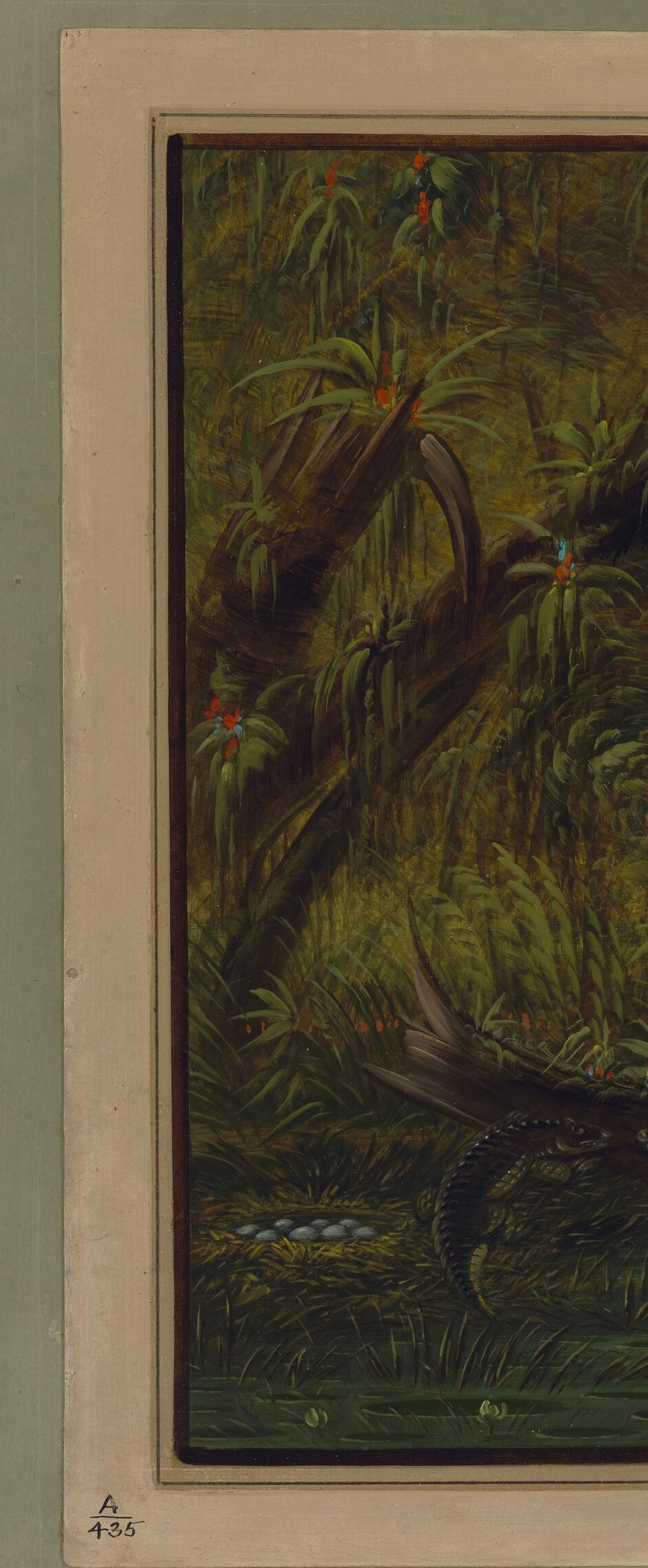
George Catlin's "An Alligator's Nest," painted between 1854 and 1869, captures the hidden dangers and biological precision of American wildlife, a lesser-known aspect of his work. While primarily famous for documenting Native American life, Catlin was also a keen observer of the natural world, as seen in this oil on card painting, now in a private collection.
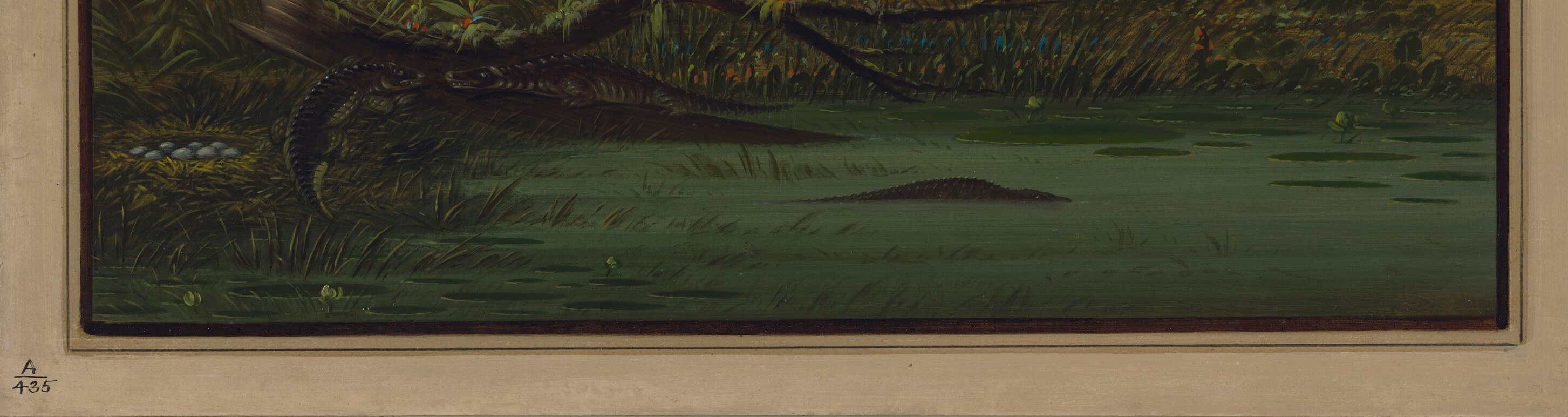
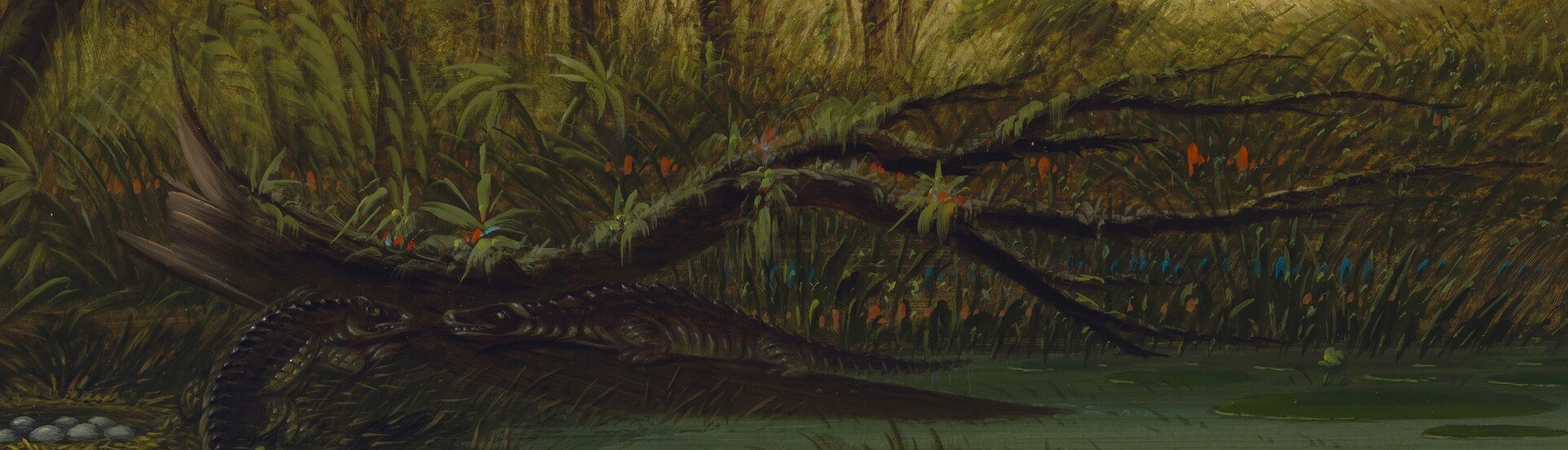
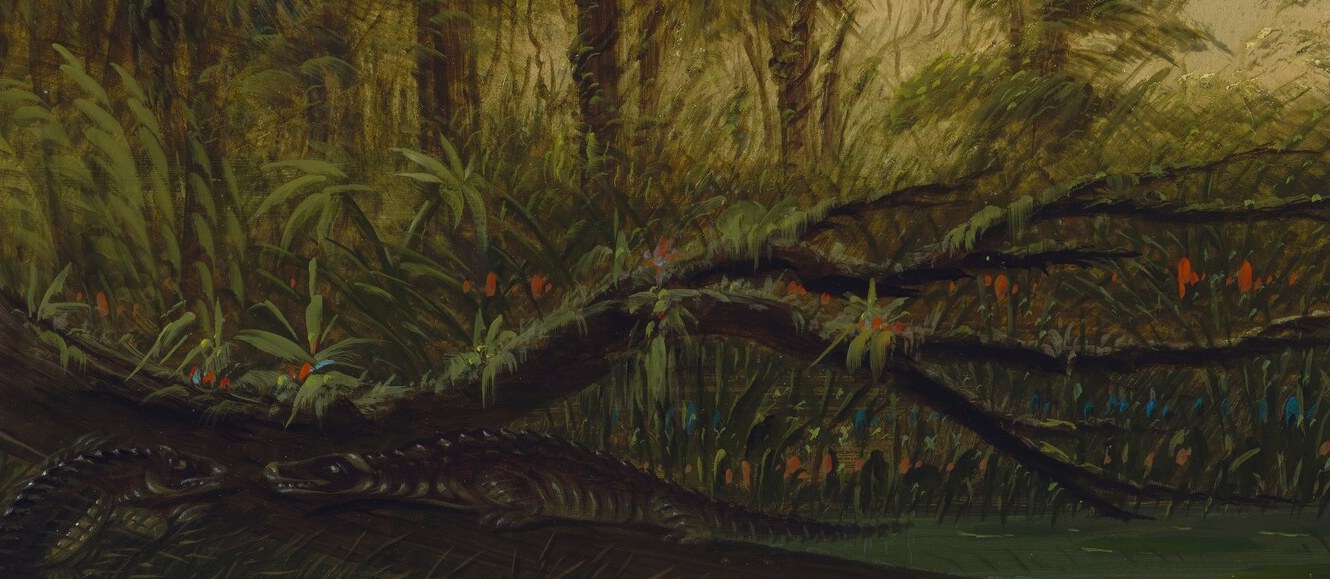
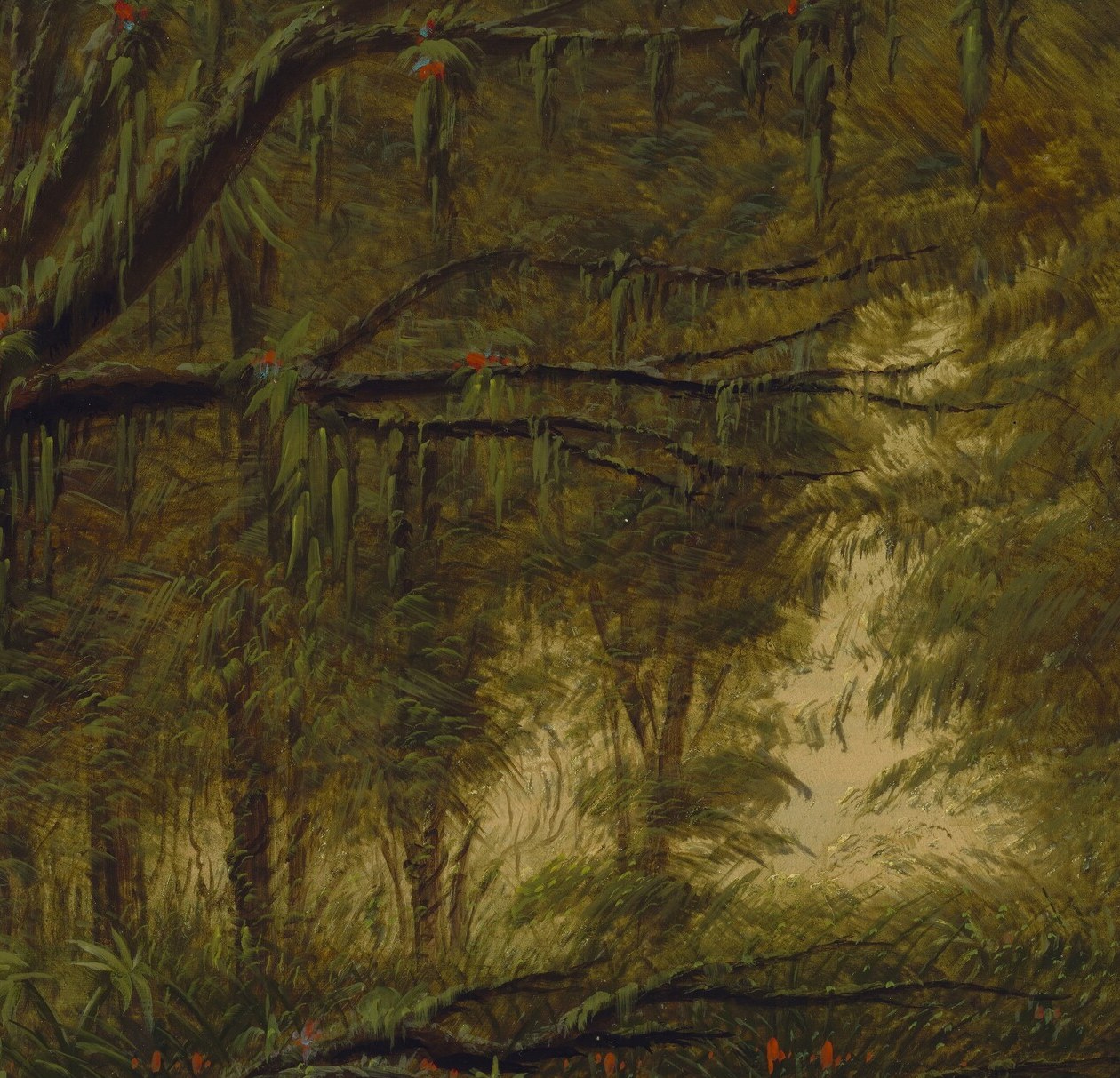
Here, he masterfully renders a cypress swamp, typical of the American South. The massive trees and trailing moss create an almost cathedral-like atmosphere, yet the true marvel lies in the subtle details of its inhabitants. Notice the still, dark water where an alligator, camouflaged as a fallen log, waits silently.
The painting's title element, the "nest," is a mound of decaying plant matter, a clever biological marvel. Alligators build these to harness natural heat for incubating their eggs, a detail Catlin faithfully records, showcasing his naturalist's eye. This work highlights Catlin's dedication to documenting all facets of the American frontier.
It's a reminder that beauty and danger often coexist in nature, demanding a closer look. What other creatures might be hidden in plain sight?
Details
Transcript
This painter recorded American wildlife in careful detail. He captures the massive cypress swamps of the Deep South. Look closely at the water at the bottom. Alligators lie perfectly still, mimicking fallen logs. This mound of rotting plants is the titular alligator's nest. The decaying vegetation generates heat for the eggs inside.