The Apparition of the Virgin by Girolamo da Carpi
Girolamo da Carpi's "The Apparition of the Virgin," painted between 1530 and 1540, is a dramatic oil on panel artwork held in a private collection. It captures a moment of divine visitation, a popular theme in Italian Mannerist painting.
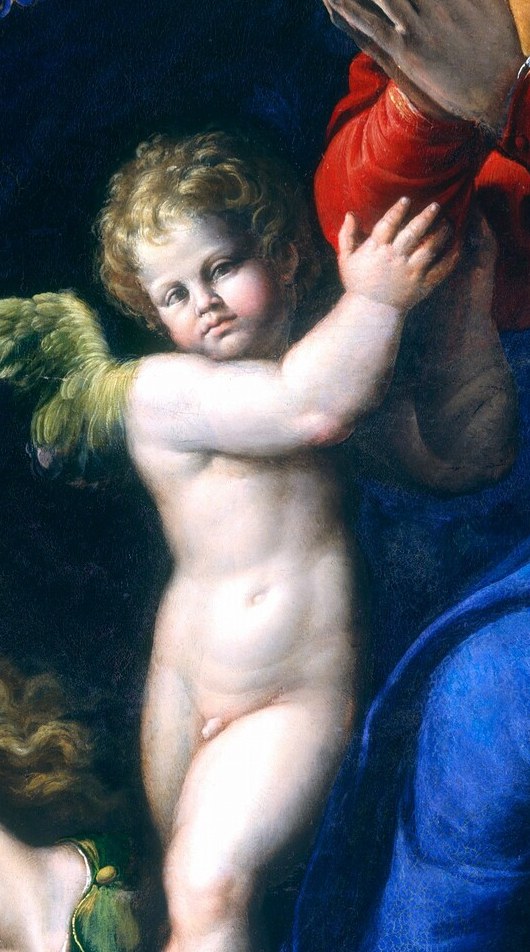
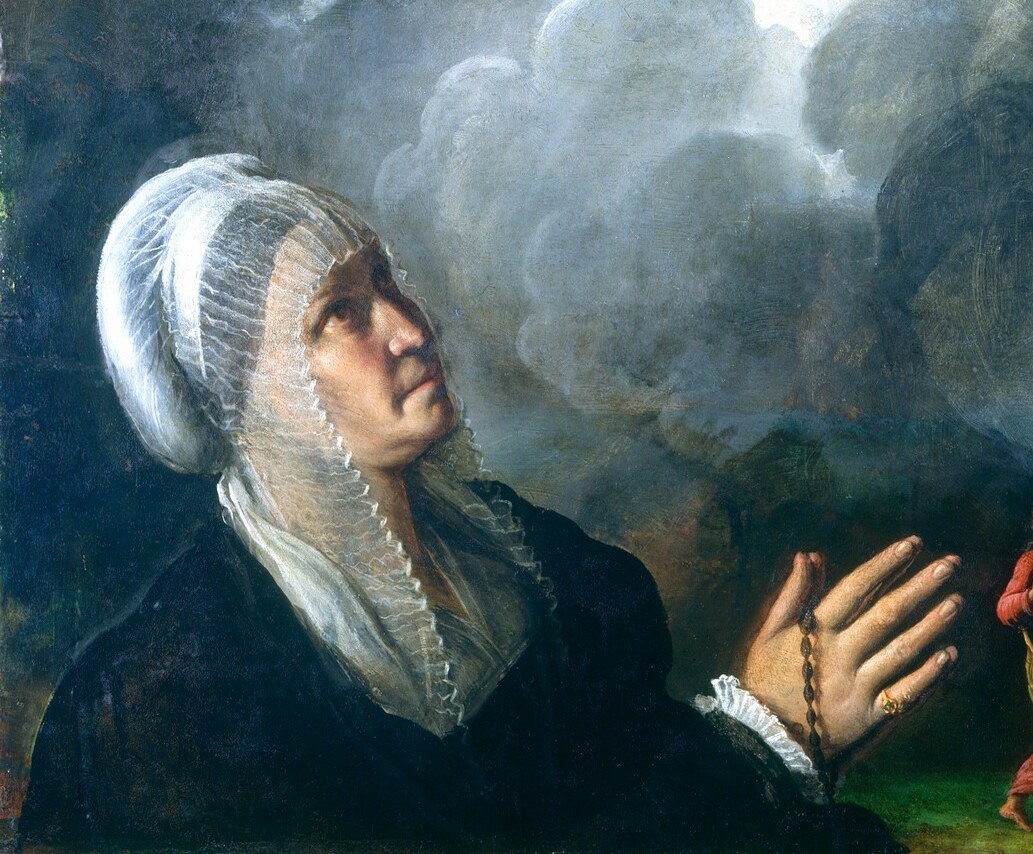
The painting shows the Virgin Mary emerging from a burst of clouds and light, surrounded by adoring angels and cherubs. Below, a solitary woman kneels in fervent prayer, her rosary beads clasped in devotion, acting as our witness to this extraordinary event.
Da Carpi, a key figure in the Bolognese School, was known for his elegant and often theatrical compositions. He spent much of his career under the patronage of the Este family in Ferrara, contributing to both religious and decorative projects.
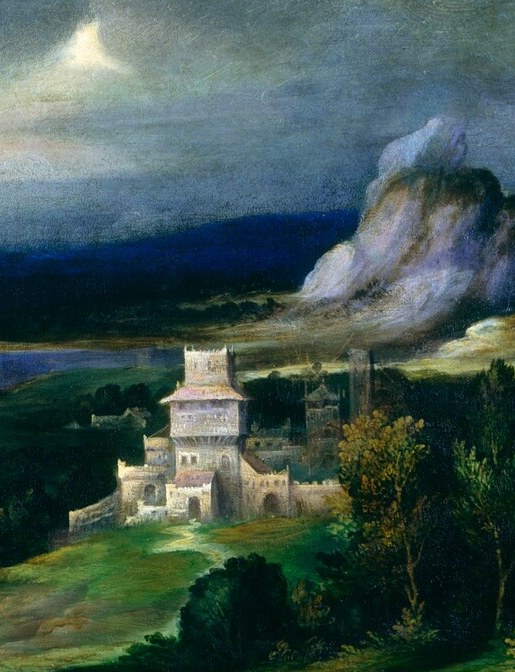
The contrast between the celestial vision and the earthly setting invites contemplation on faith and miraculous encounters. What do you notice first in this blend of the divine and the human?
Details
Transcript
This painting, from 1535, shows a miraculous event. The Virgin Mary appears in a swirl of clouds and light. Around her, cherubs and angels witness the divine vision. Below, a lone woman kneels, experiencing the apparition. Her hands clasp a rosary, a common devotion of the era. The dramatic sky emphasizes the miracle's power. Girolamo da Carpi, the artist, worked for the powerful Este family.