Steamboats in the Port of Rouen by Camille Pissarro
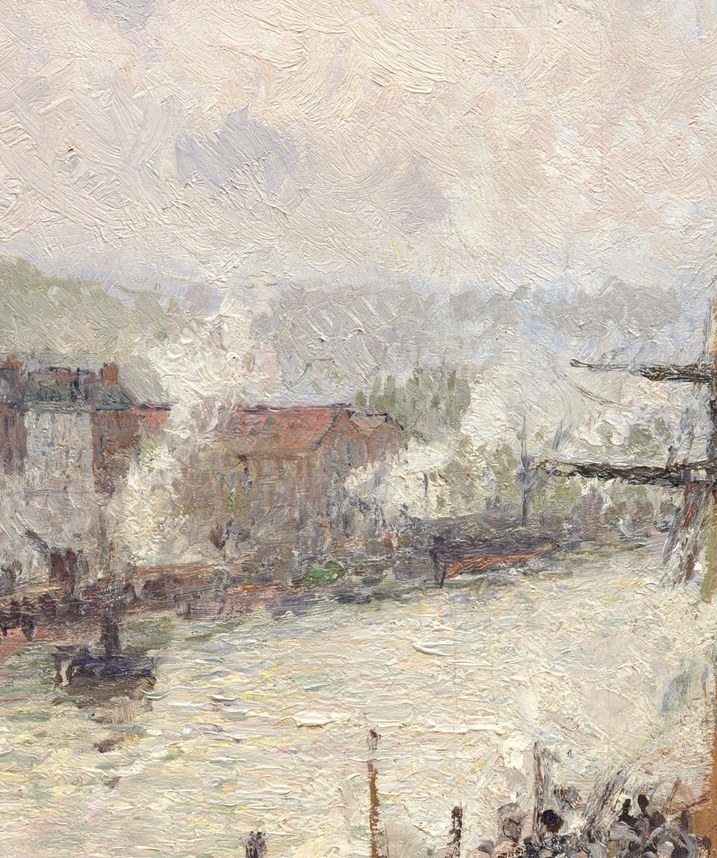
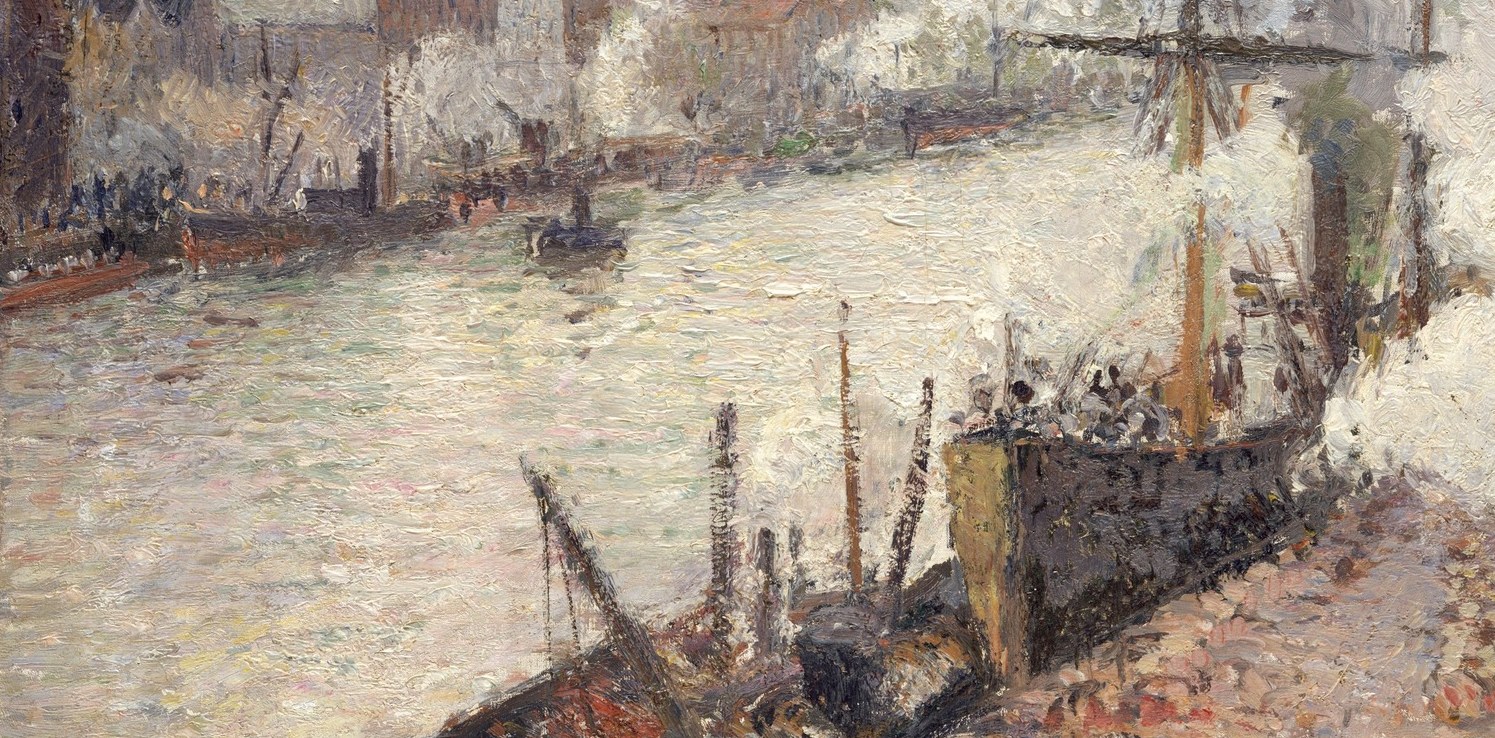
Camille Pissarro painted Steamboats in the Port of Rouen from a room in the Hôtel de Paris in 1896, looking down onto the city's working quays. It now hangs in the Metropolitan Museum of Art. The painting's real subject is not the boats or the river but the air itself, a pale, luminous overcast sky that dissolves every hard edge beneath it.
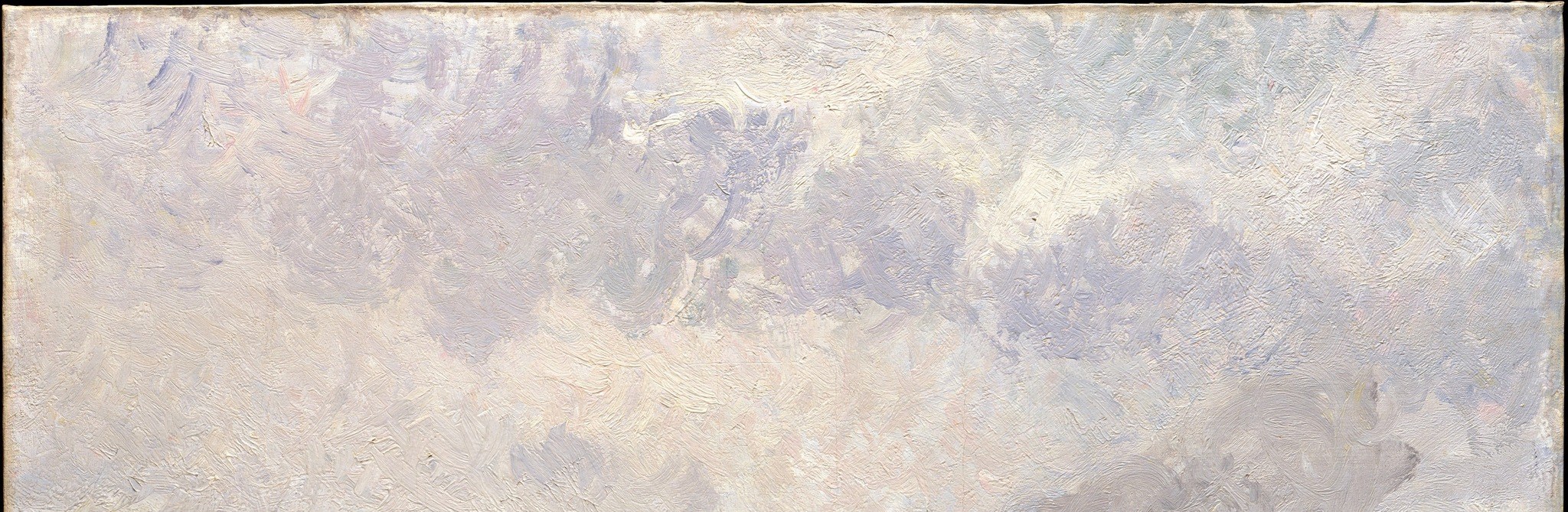
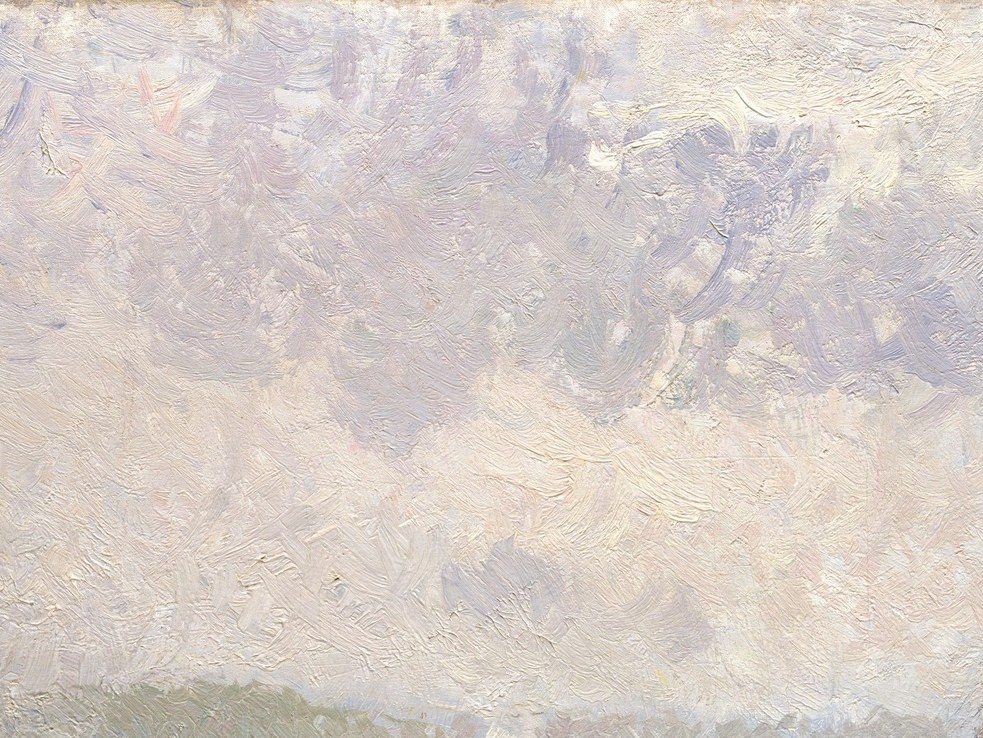
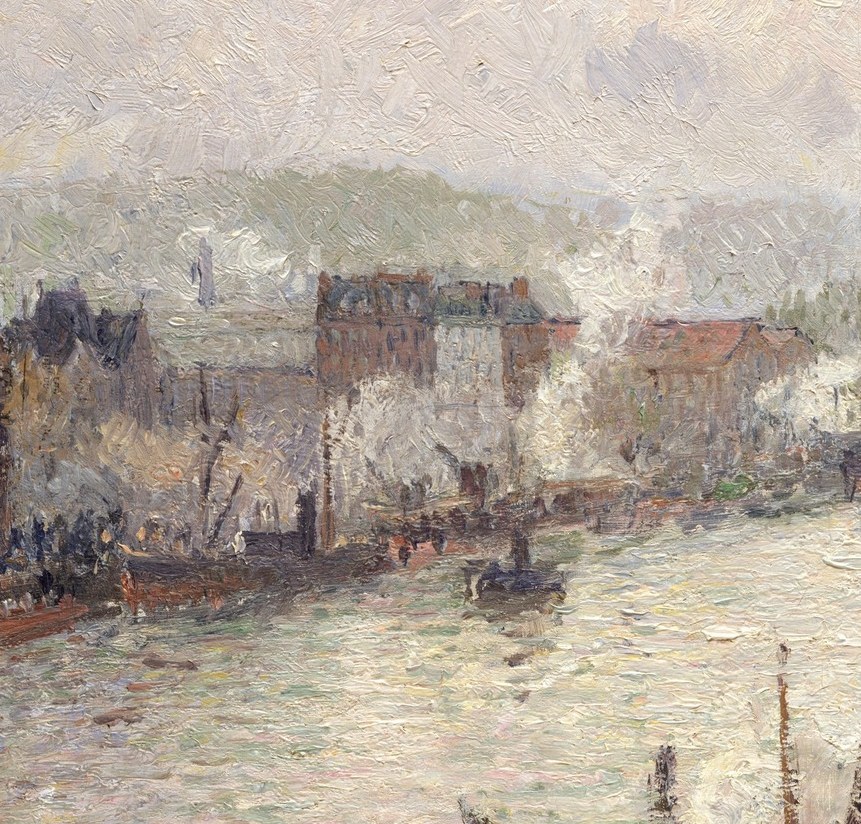
Look first at the smoke rising from the twin steamboats. Pissarro did not draw a solid white column; he built the plumes from the same short, broken brushstrokes he used for the clouds above. The smoke and the sky share the same palette of blue-grey and off-white, the same hand. Find the exact point where the funnel ends and the atmosphere begins, it does not exist. The boundary has been erased by technique alone.
This was one of a series of Rouen views Pissarro made late in life, when he had already moved through Impressionism and into something denser and more deliberate. He would set up in hotel rooms overlooking bridges and ports, painting the same scene under different light for weeks. Here the city of Rouen itself is barely more than a ghost along the far bank, a soft silhouette that might be medieval spires or might be factory chimneys. The age of steam and the age of sail share the frame, their masts rigged faintly behind the smoke.
The technique is blunt and visible up close: thick impasto, rapid marks. Pissarro wanted you to see the paint first and the world second, and then to notice you cannot separate them. He gives you a port where the heaviest industrial smoke becomes indistinguishable from weather, and asks what exactly you are looking at.
Details
Transcript
Rouen, 1896. Seen from a hotel window above the quay. Two steamboats push their smoke into a flat, overcast sky. That sky is not empty haze. It is built from hundreds of short, broken strokes. The smoke uses almost the same marks, the same white and blue-grey. Pissarro painted from this window for months, chasing exactly this trick. Where does the industry end and the air begin? He refuses to answer.