The Knife-Grinder's Family by Gerard ter Borch
Gerard ter Borch's 'The Knife-Grinder's Family,' painted in 1653, offers an intimate look into a modest Dutch household, now housed in the Gemäldegalerie Berlin.
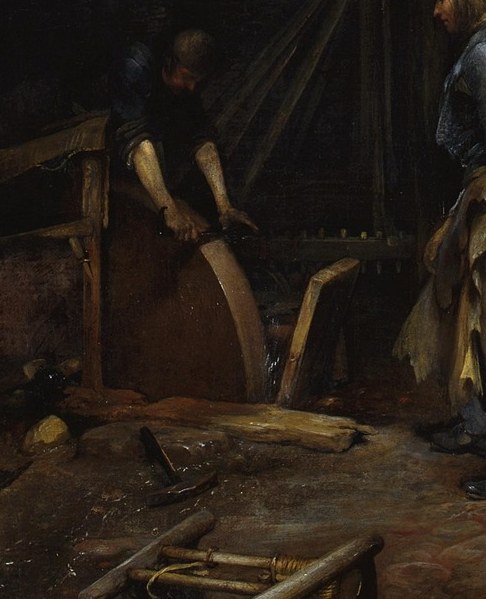
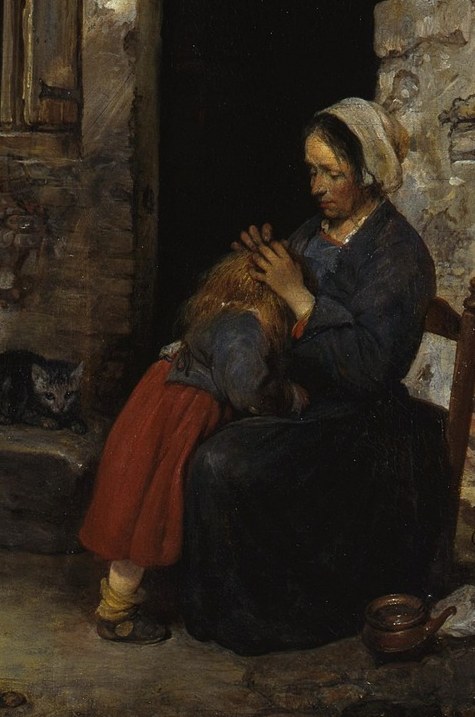
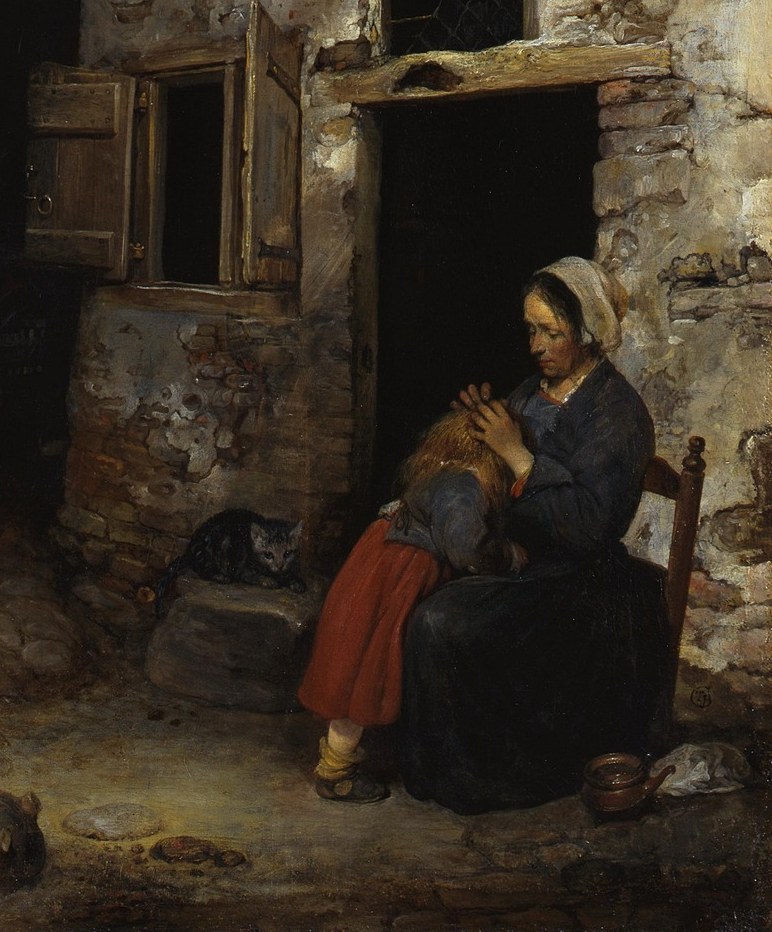
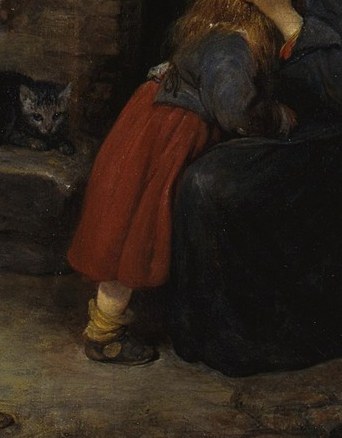
Observe the focused concentration of the man at the grinding wheel, contrasted with the serene, tender interaction between the mother and child in the foreground. The rough textures of the stone walls and scattered tools speak to their working environment, while the child's bright red skirt adds a touch of warmth.
Ter Borch, a master of Dutch Golden Age genre painting, was celebrated for capturing the quiet psychology and inner lives of his figures, moving beyond mere representation of daily tasks. His work influenced contemporaries like Johannes Vermeer, shaping how domestic scenes were depicted.
This painting invites us to reflect on the dignity of ordinary life and the enduring connections within families, even amidst their struggles.
Details
Transcript
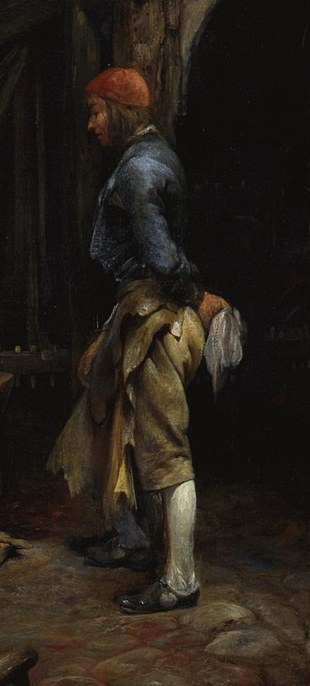
This painter was known for glimpses into family life. A man grinds tools to earn his family's living. His wife and child wait, surrounded by the rough workshop. She cradles the child, a moment of tender domesticity. This was a common scene for Dutch families in 1653. The painter showed their inner lives, not just their labor.