The Mass of Saint Gregory by http://www.wikidata.org/.well-known/genid/d5435daf6c0d5c7ba8d86d67f4feee9c
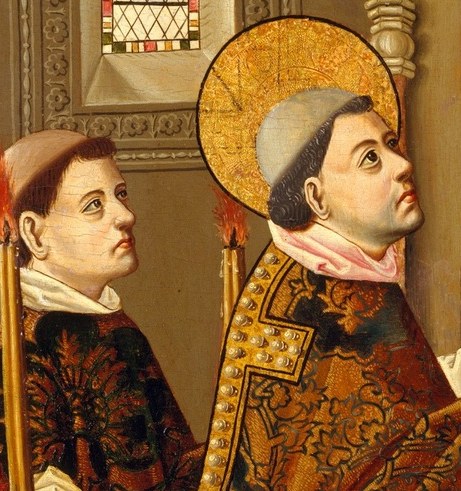
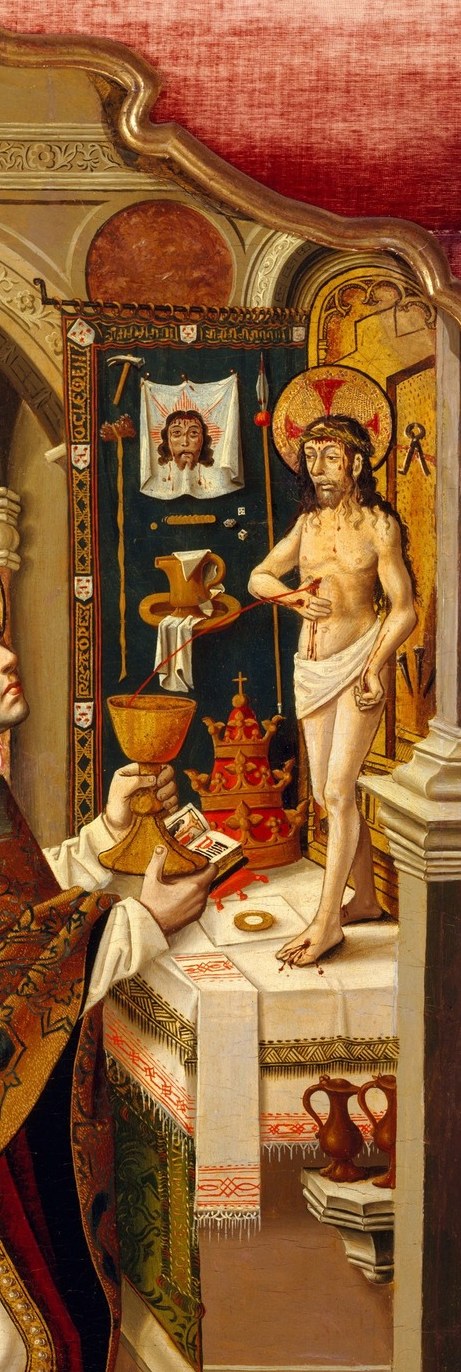
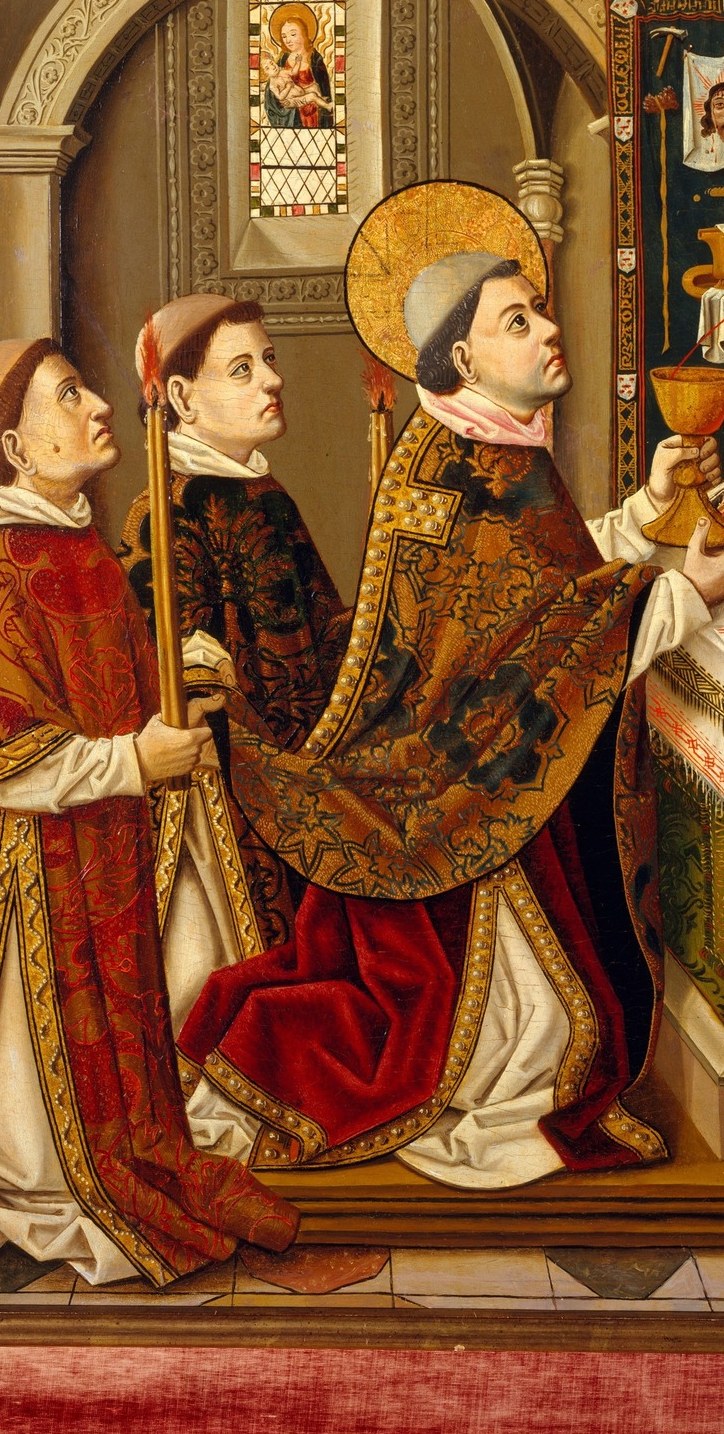
This is The Mass of Saint Gregory, painted around 1490 by an unknown South German master, now in the collection of the Cleveland Museum of Art. It shows a miracle. While Pope Gregory I celebrated Mass, Christ himself appeared on the altar to confirm that the bread and wine truly become his body and blood.
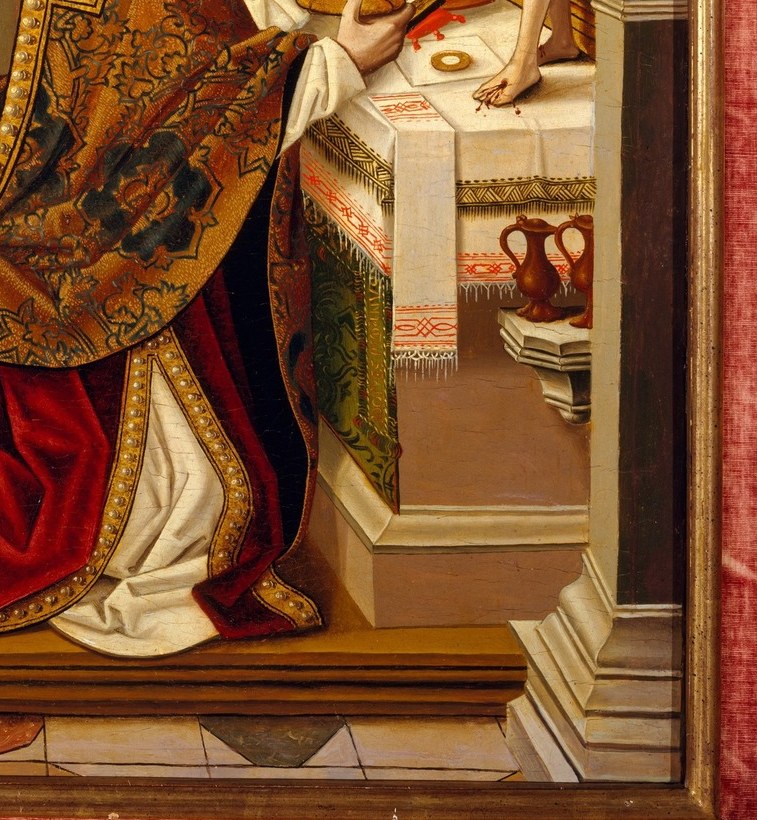
Move your eye to the chalice. That is the fulcrum. The legend says that Christ appeared in direct answer to a doubter in the congregation. Gregory prays, and the wafer manifests as the living Christ. The painter makes this theology legible: look at the altar. Christ stands on it, not floating above it as a vision. His feet touch the cloth. He is the altar, and he is on it.
The painting belongs to a wave of Gregory Mass images that circulated in late medieval Germany. They were prized because praying before one could earn an indulgence, a remission of time in purgatory. This painting was not just a story; it was a spiritual tool. The owner would kneel before it the way Gregory kneels before the altar, collapsing the distance between the viewer and the miracle.
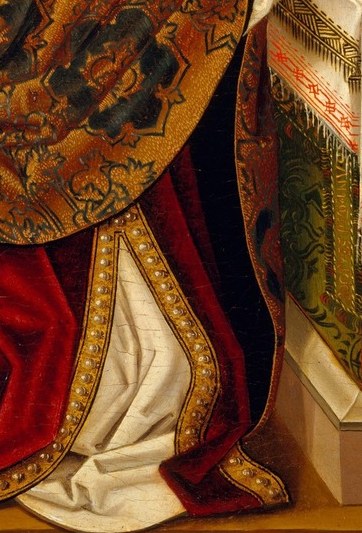
The red drapery, the gold embroidered cope, the crimson vestments: these are not decoration. They are the cost of devotion, the wealth of the patron made sacred. Every thread is an argument that the material world can carry the divine. The whole picture asks one question: if paint can make Christ present, might not bread?
Details
Transcript
A man in gold kneels at an altar. This is Gregory the Great. A pope and a saint. Now look at the chalice on the altar. A legend says that as he lifted this cup, Christ appeared. The figure of Christ stands on the altar itself. Not a ghost. A body. The physical presence of the divine. The whole painting argues that the bread truly becomes flesh.