Camanchee Chief, His Wife, and a Warrior by Catlin, George
George Catlin's "Camanchee Chief, His Wife, and a Warrior," painted in 1861, is part of a monumental, yet controversial, project to document Native American life. This oil on card, mounted on paperboard, is housed in a prominent collection dedicated to American art. Catlin, originally a lawyer, embarked on five expeditions to the American West in the 1830s, creating an extensive visual record of Plains Indians.
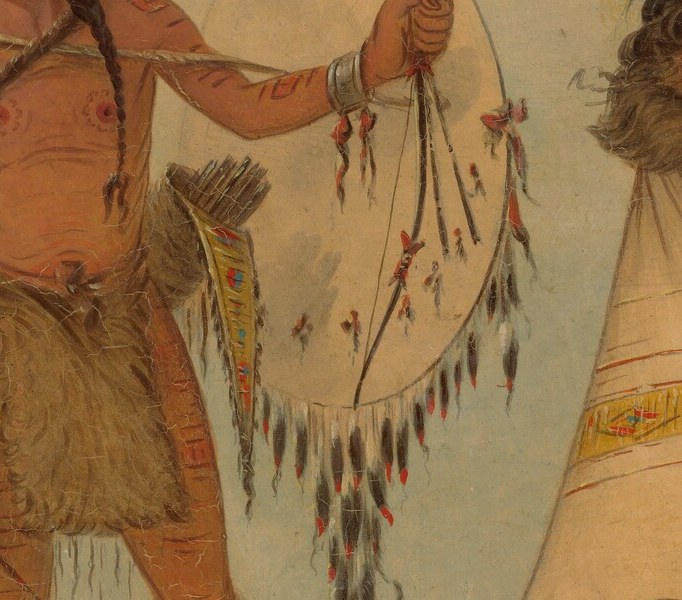
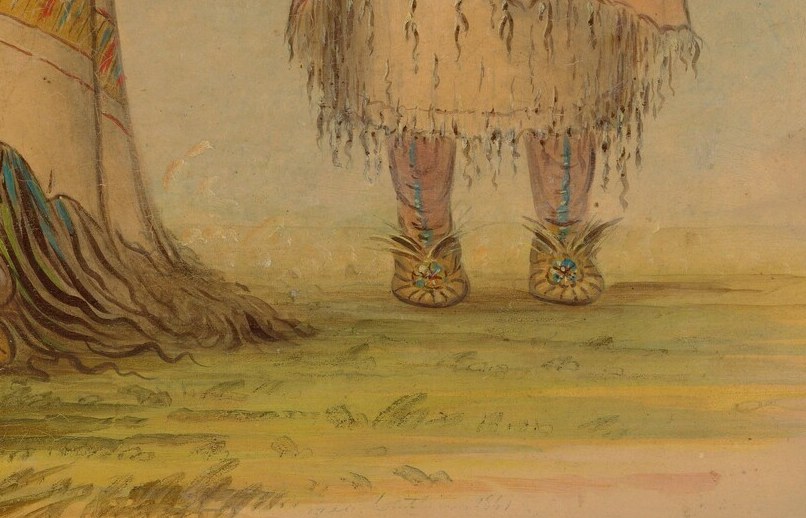
In this painting, observe the intricate details, such as the chief’s feathered headdress and beaded necklace, as well as the warrior’s decorated shield and spear. Catlin's direct, observational style, aligning with American folk art, prioritized clear depiction over academic conventions.
Catlin's dedication to documenting Indigenous cultures before what he perceived as their inevitable transformation was groundbreaking. However, his work also sparked debate regarding representation and cultural interpretation. This piece stands as a significant, if complex, historical document.
What aspects of this painting resonate with you most strongly?
Details
Transcript
This painter documented Native American life across five expeditions. He sought to record their cultures before they underwent significant change. Look at the intricate beadwork on the chief’s necklace and robe. The warrior’s shield and spear are also depicted with detail. Despite his efforts, Catlin faced criticism for his portrayals. But his work remains a visual record of 19th-century Indigenous cultures.