Roundel with Adoration of the Kings by http://www.wikidata.org/.well-known/genid/035561ad920ea85a4006b853ff3d628f
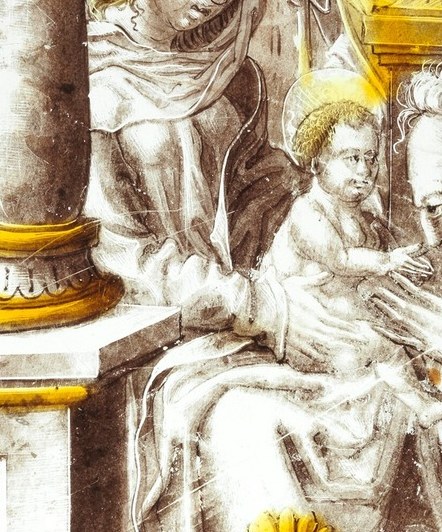
This striking "Roundel with Adoration of the Kings" by Jörg Breu the Elder, painted around 1515, is held at the Metropolitan Museum of Art. It depicts the biblical scene with a subtle but rich layer of symbolism.
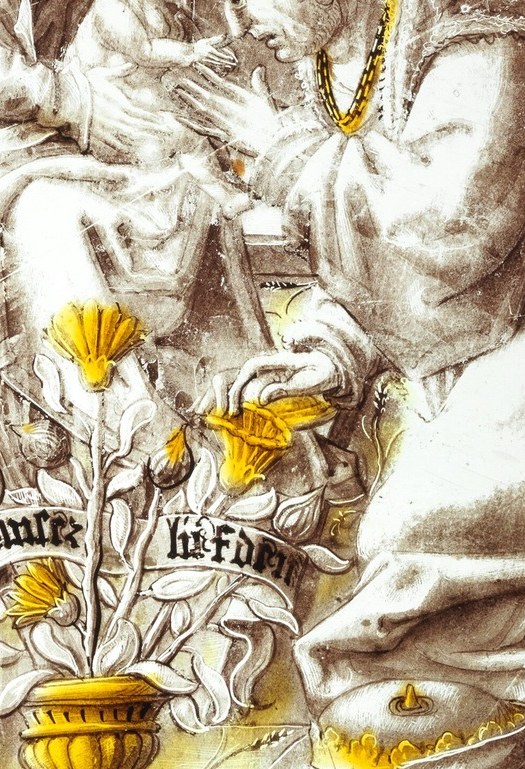
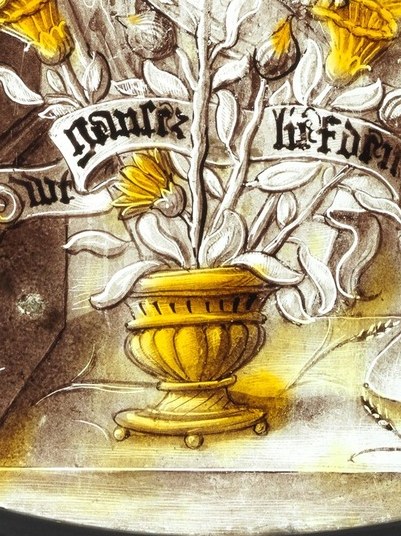
Notice the gifts presented: a golden casket, and a vase filled with bright yellow flowers. In the early 16th century, yellow often symbolized purity and divine light, adding a deeper meaning to the king's offering. The artist used strong contrasts of light and shadow, known as chiaroscuro, to make the central figures glow, emphasizing the sacred moment.
Breu the Elder was a German painter known for his dramatic compositions and detailed narratives. His work often reflects the intense religious fervor of the time. The inscription 'Gottes hifd' on the banner further reinforces the theme of divine intervention, tying all these elements together.
What other hidden meanings might you find in the details of this painting?
Details
Transcript
This painting tells a familiar story. Three kings bring gifts to the infant Jesus. One king offers a golden casket. Another offers a vase of vibrant yellow flowers. Yellow symbolized purity and divine light in this period. A banner above reads 'Gottes hifd', meaning God's help. All the elements symbolize divine intervention and purity.