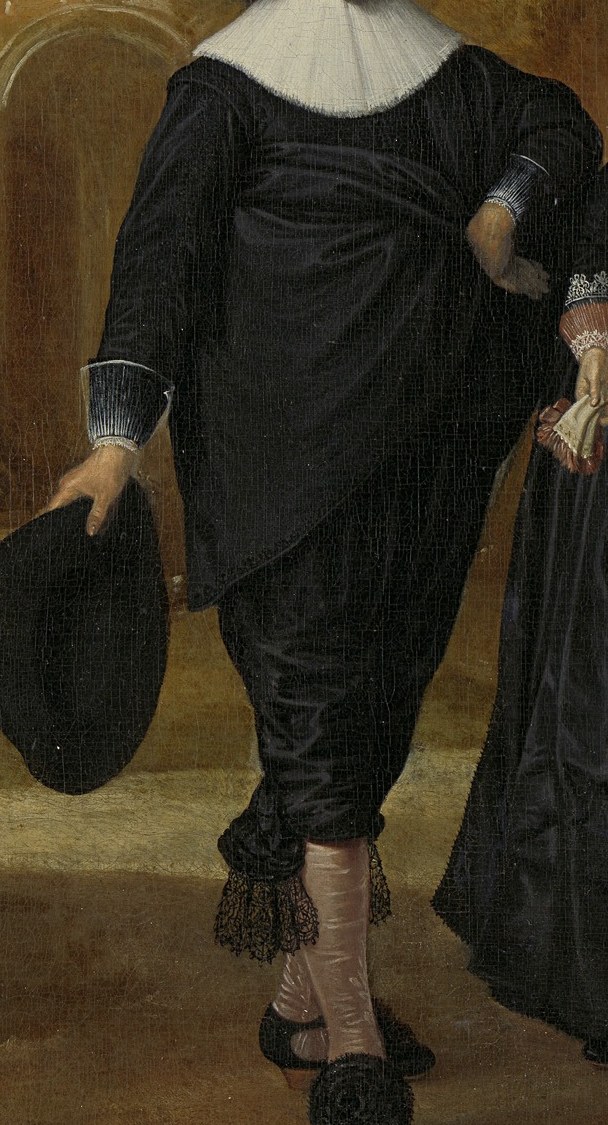
Portrait of a couple with their child in a landscape by Herman Doncker
Herman Doncker's "Portrait of a couple with their child in a landscape," painted around 1650 and held at the Rijksmuseum, holds a poignant hidden detail that speaks volumes about the era. What appears to be a formal family portrait subtly acknowledges the harsh realities of 17th-century life.
While the parents' rich attire and the child's ornate gown highlight their social standing, a closer look at the child's hand reveals a small, wilting flower. This wasn't merely decorative; it was a widely recognized symbol of innocence, purity, and the fleeting nature of life, particularly childhood.
Doncker, a Dutch Golden Age painter known for his portraits, expertly wove this quiet message into the composition. The inclusion of classical ruins in the background further reinforces themes of transience and the passage of time, common in Dutch portraiture of the period. It's a reminder of how art can embed profound meaning in the smallest details.
What other hidden symbols do you think might be in older portraits?
Details
Transcript
This Dutch family portrait from 1650 looks quite traditional. The painter, Herman Doncker, captured status and sobriety. Notice the family’s wealth in their elaborate collars and gowns. But look closely at the child’s hand. She holds a tiny, wilting flower. A common symbol then for innocence and fleeting life. It was a quiet acknowledgment of childhood mortality.