Lions and Tigers in Peony and Bamboo by Yamaguchi Sekkei
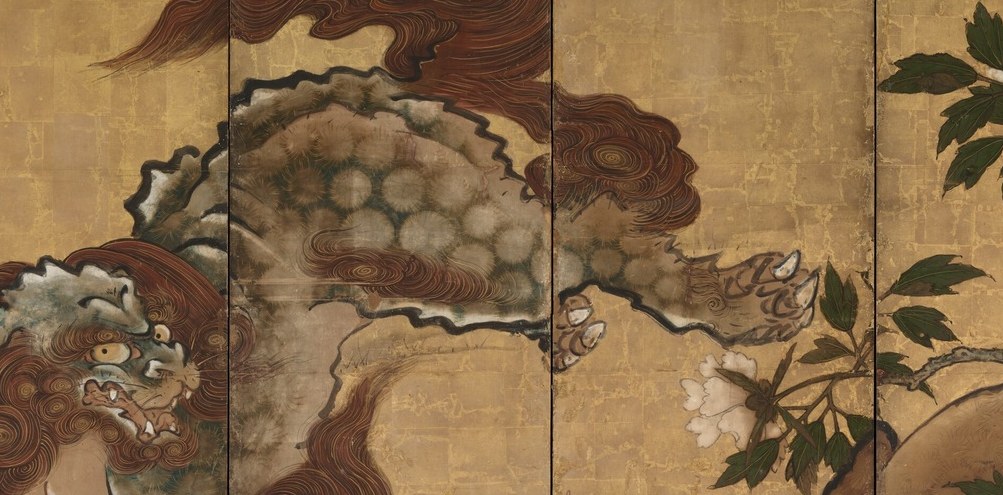
This is a lion and a tiger, painted in Japan in 1668 by Yamaguchi Sekkei. The folding screen lives at the Cleveland Museum of Art, and it hides one of the quietest experiments in Edo-period painting.
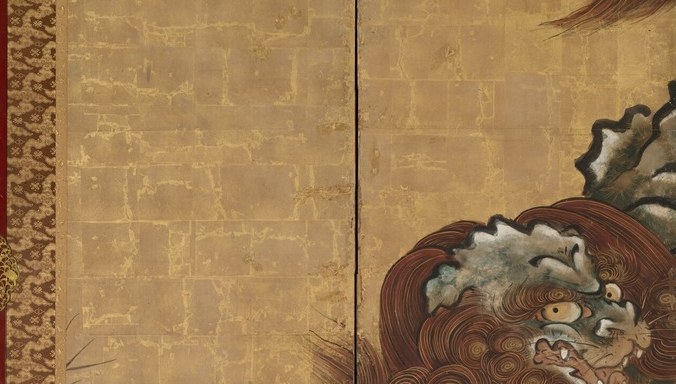
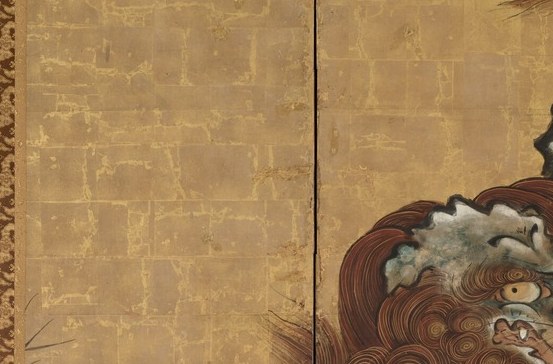
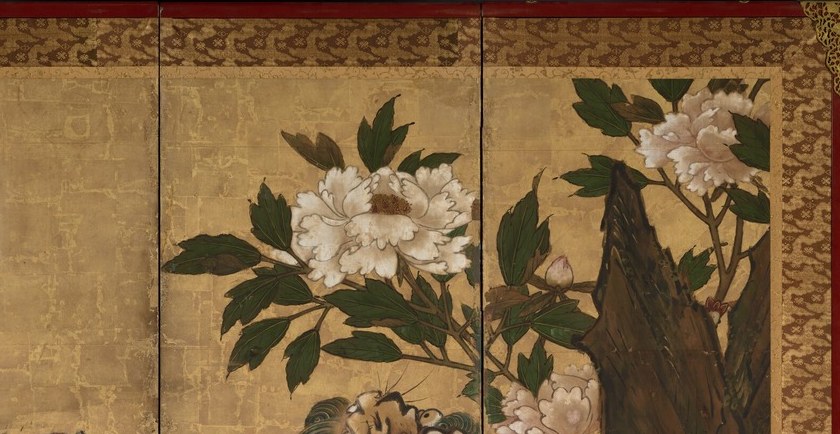
The animals snarl across a gold-leaf ground, surrounded by peonies and bamboo, classic symbols of nobility and strength. But the real action is in the fur. Look closely at the lion's shoulder: tight, dark ink strokes define the shape, exactly as a Japanese ink painter would build a form.
Then Sekkei does something unexpected. He washes soft gray shadow right over those strokes, fusing Western volumetric modeling, yoga, onto a Japanese brushwork skeleton. Yoga had arrived in Japan through Dutch trade, but most painters used it for flat scientific illustration. Sekkei blended it into a high-court decorative screen, on gold.
The result is fur that feels dense, warm, almost graspable. A technique with no exact parallel in either tradition, hidden in plain sight on a lion's shoulder.
Details

Transcript
A lion and a tiger, locked in a stare. Painted in Japan, 1668. The middle of the Edo period. The artist was Yamaguchi Sekkei. He worked in a style called yoga. Yoga means Western-style painting. This is the result. Look at the shoulder. Ink brushstrokes carry the form, as in Japanese tradition. Then, gray wash builds shadow over the ink. Volume, from the West. No other painter was layering exactly like this. A genuine hybrid, on gold.