A Nurse and a Child in an Elegant Foyer by Ochtervelt, Jacob
Jacob Ochtervelt's 1663 oil painting, "A Nurse and a Child in an Elegant Foyer," captures a tender, quiet moment from daily life in a wealthy Dutch household. Now at the Rijksmuseum, it's a window into the past.
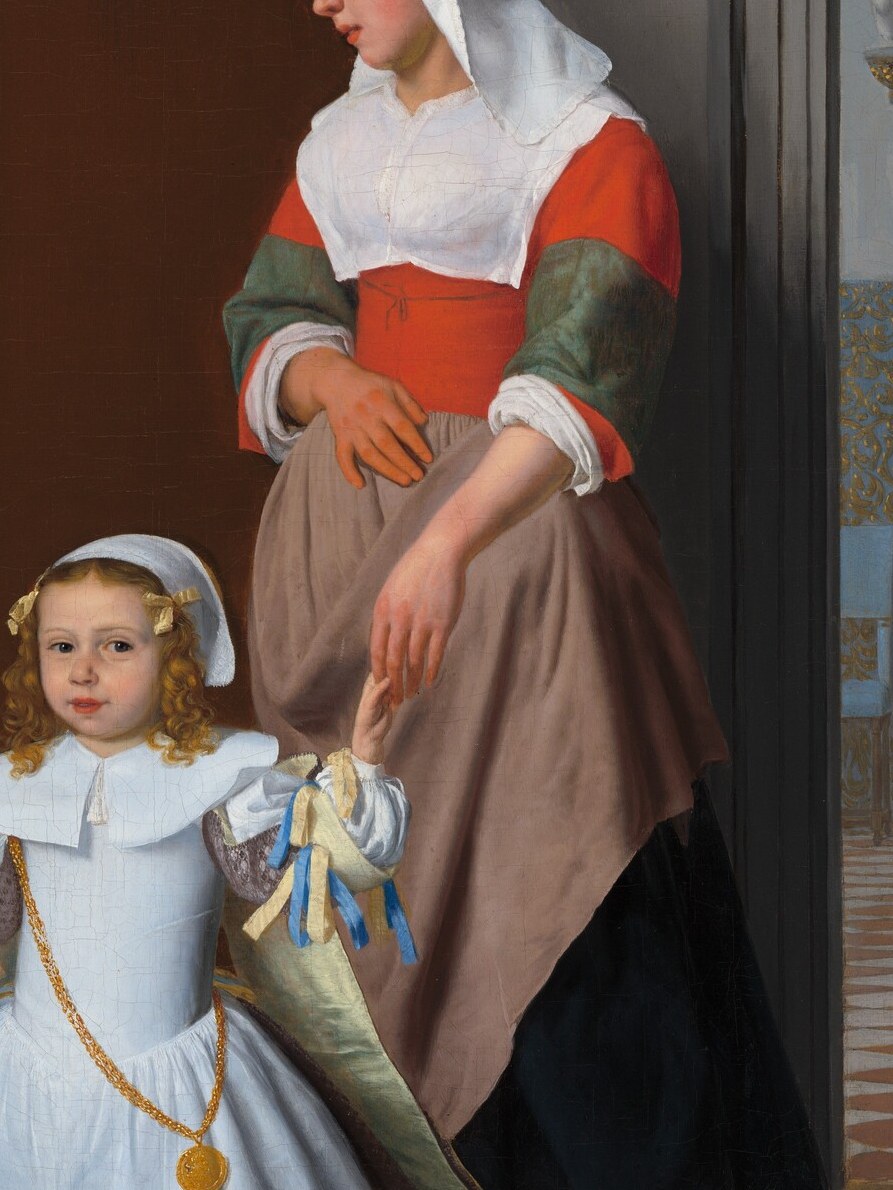
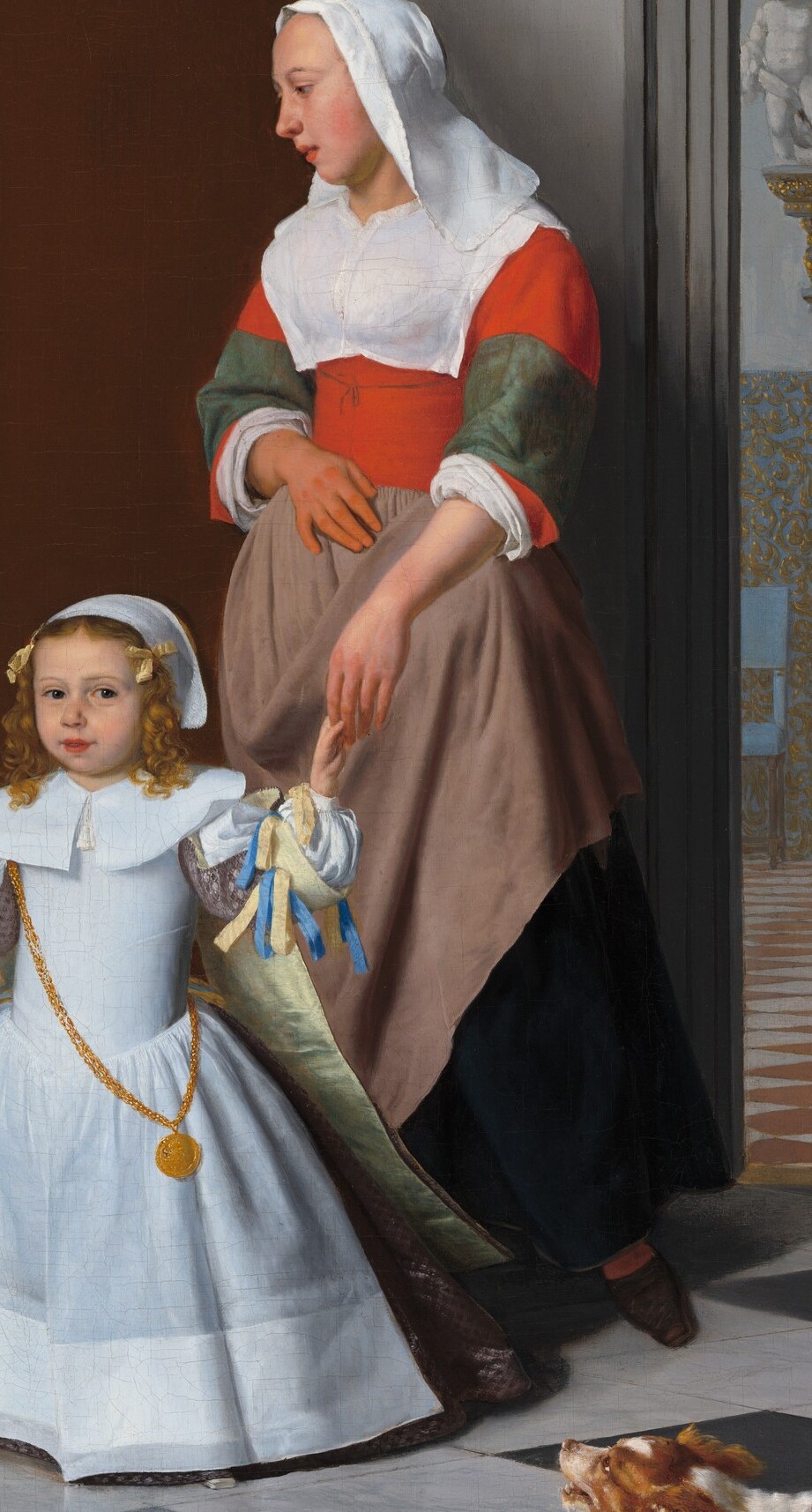
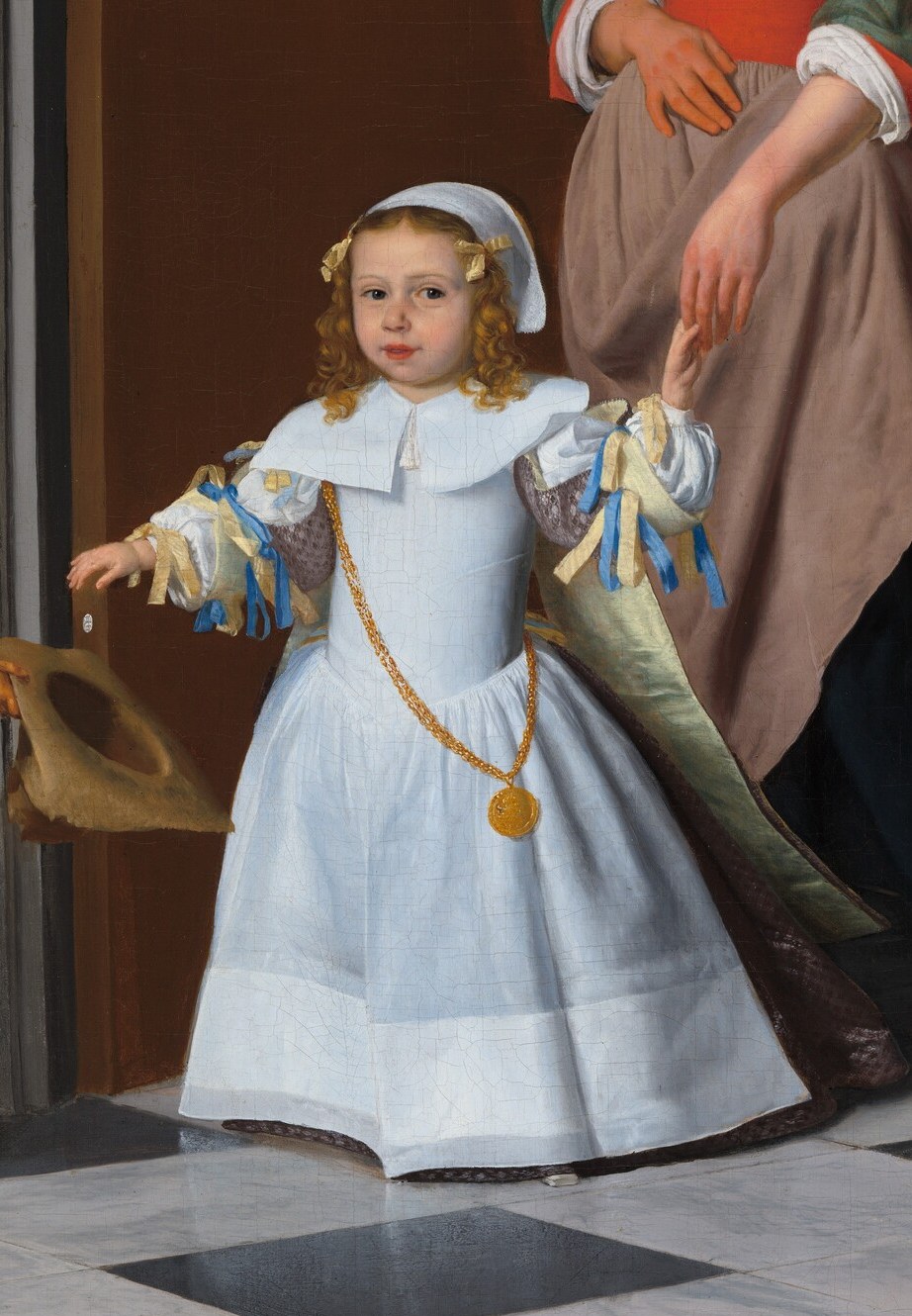
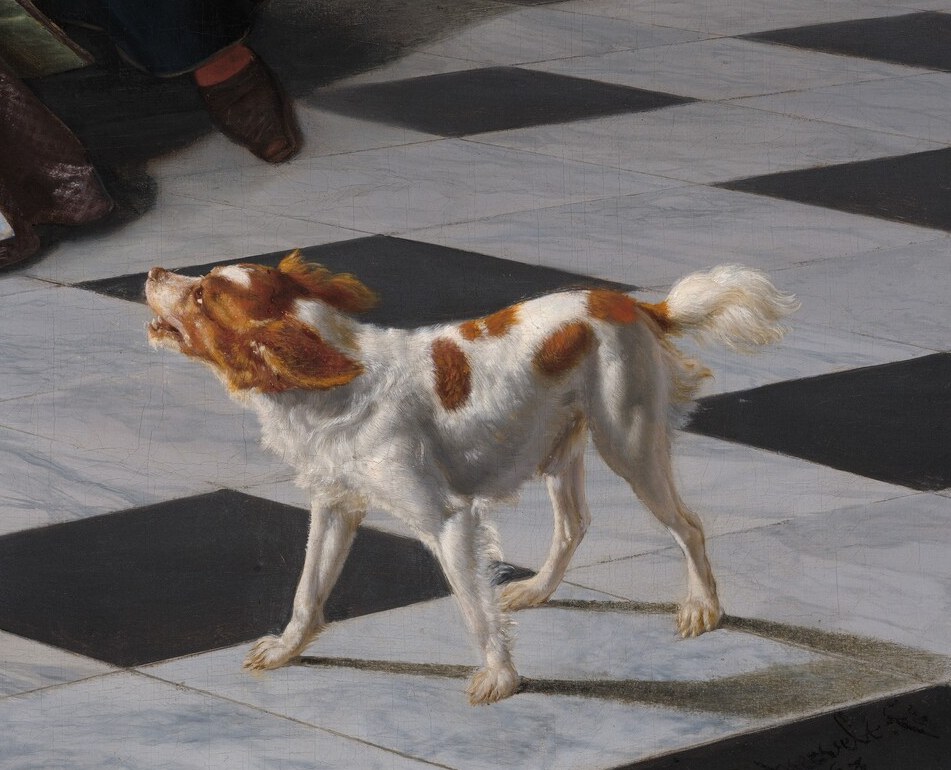
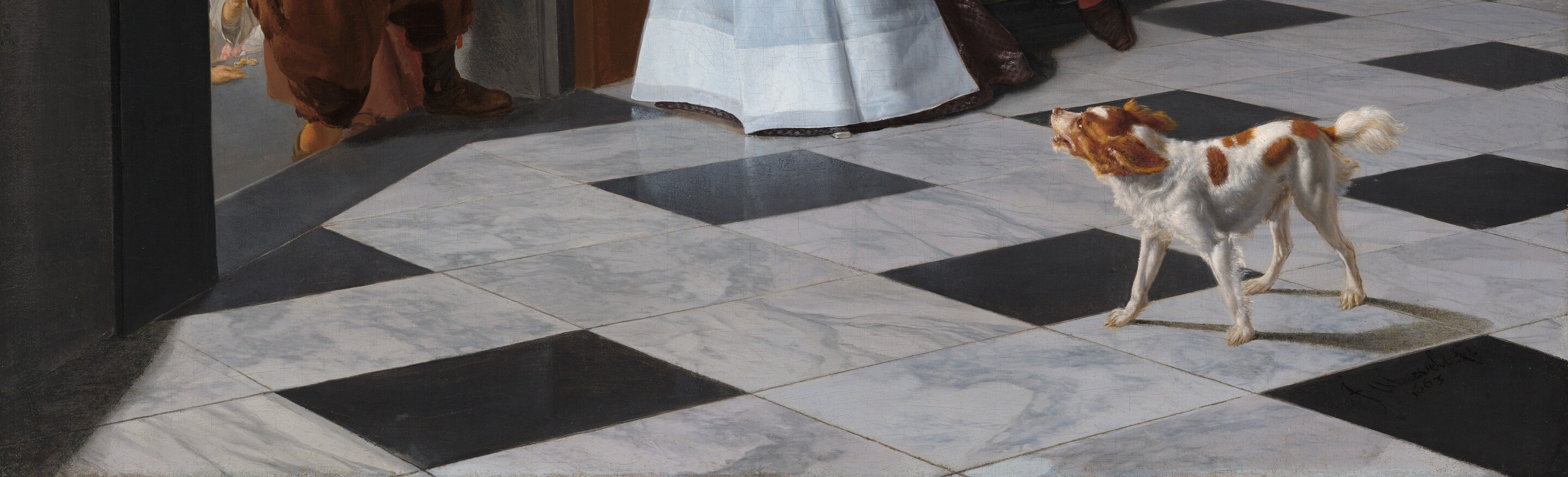
Observe the subtle details: the nurse, identifiable by her white cap and red apron, gently supports the child's hand. The child, dressed in a luxurious white gown, reaches out with innocent curiosity for a hat, while a lively dog barks in the foreground.
Ochtervelt was known for his ability to infuse his genre scenes with a sense of quiet dignity and detailed realism. This work exemplifies his mastery in depicting not just a scene, but a human connection within a meticulously rendered domestic space.
What small gestures of care do you notice in everyday life that often go unseen?
Details
Transcript
In a grand foyer, a nurse tends to a child. This painting, from 1663, shows a moment of everyday life. The nurse's red apron signals her role in this wealthy household. Look at how gently she holds the child's small hand. The child, in an elaborate white dress, reaches for a hat. A tender, fleeting moment of care, preserved across centuries.