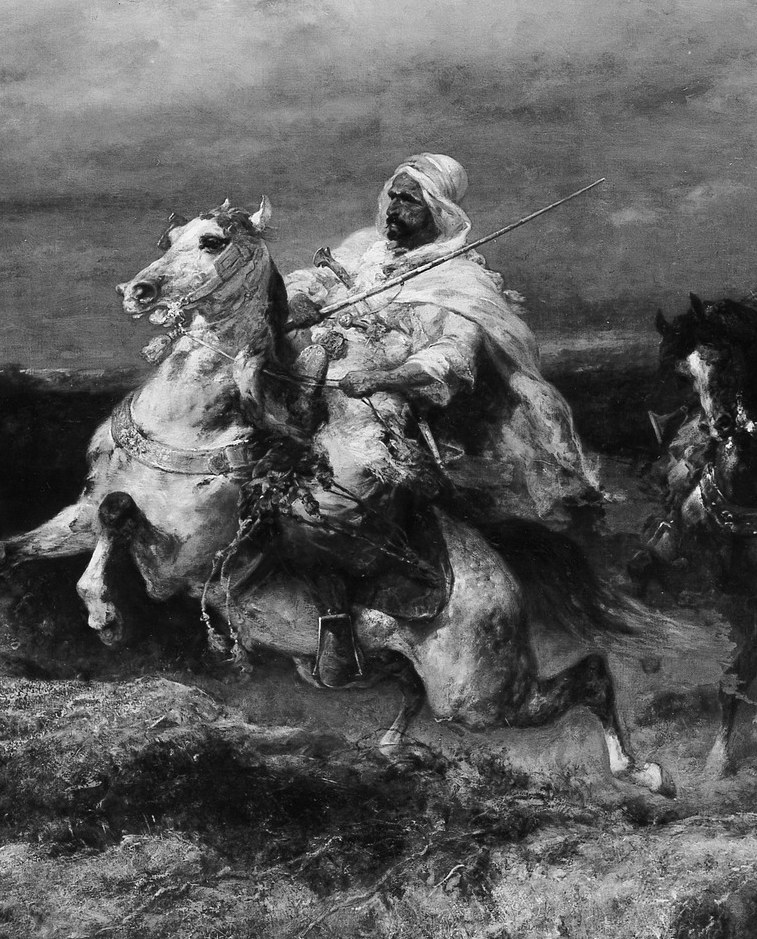
Battle Scene: Arabs Making a Detour by Adolf Schreyer
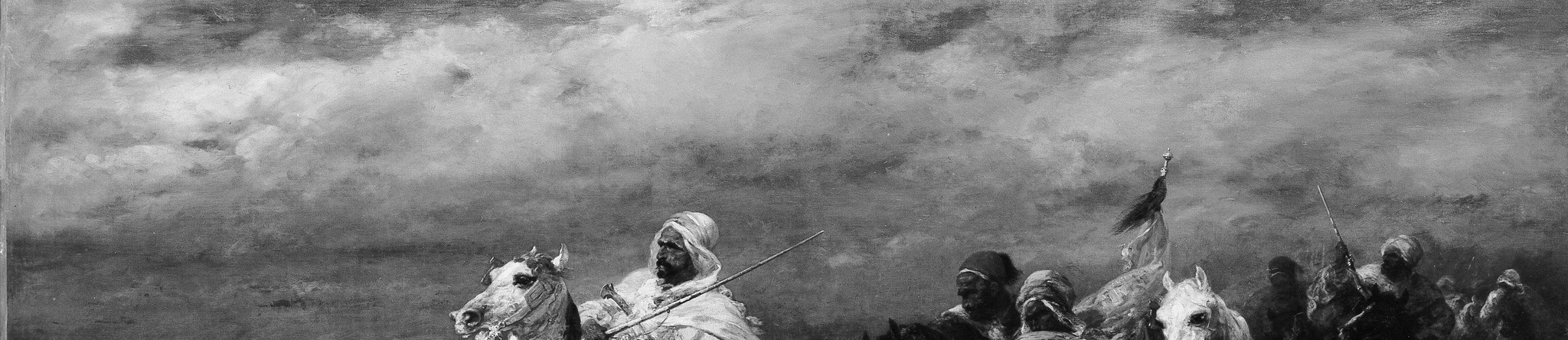
Battle Scene: Arabs Making a Detour by Adolf Schreyer is an 1873 Orientalist painting held at The Metropolitan Museum of Art. In his lifetime, Schreyer was among the highest-paid living artists. American collectors like William Henry Vanderbilt competed for his canvases, driving prices into the tens of thousands of dollars at a time when that sum bought a mansion.
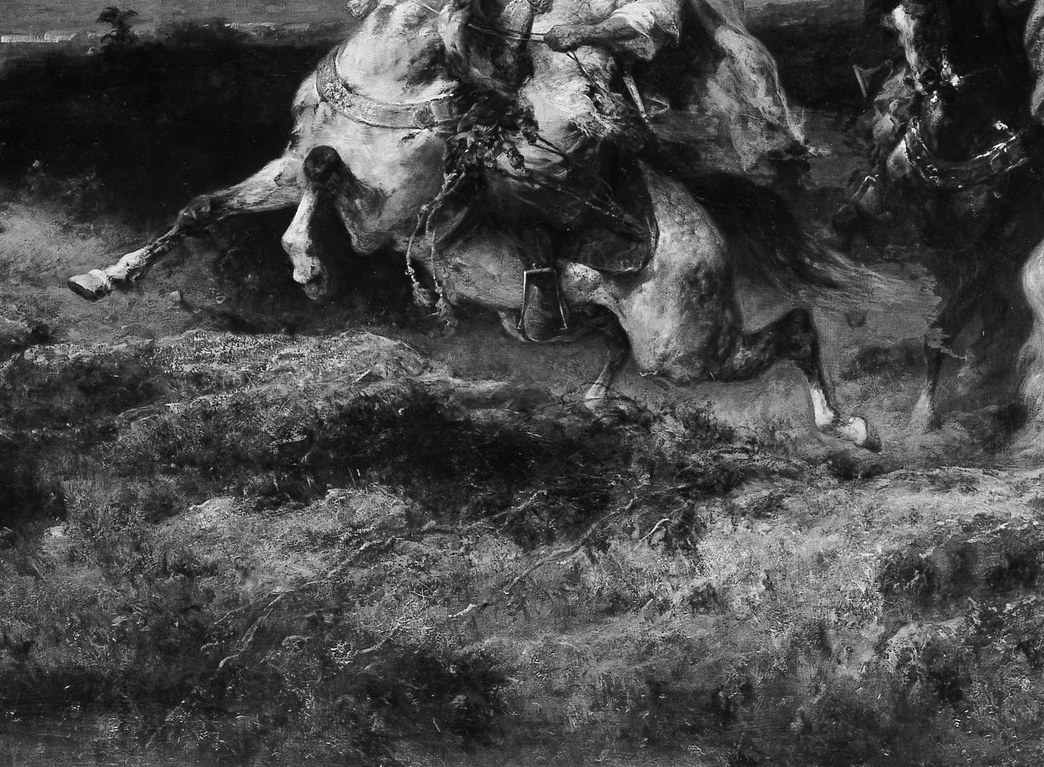
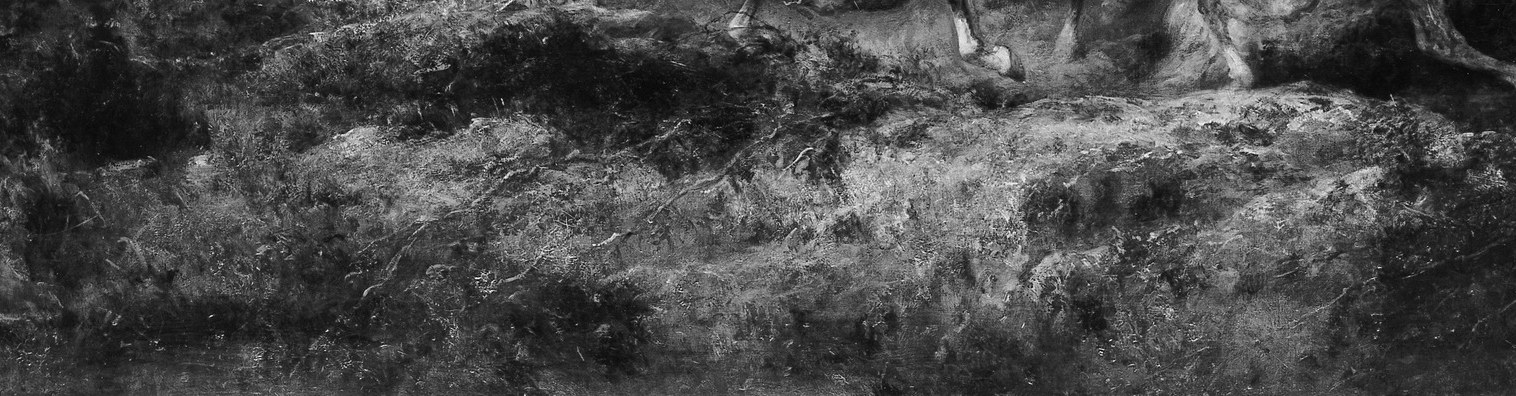
Watch the dust beneath the lead horse. Schreyer dissolves legs and hooves into loose, gestural strokes of tan and ochre. This passage, more than anything, sealed his reputation. Contemporary critics held up his dustwork as the proof that he stood alone among painters of Arab horsemen. The straining forelegs and muscled haunches of the lead horse are worth a second look too; Schreyer's anatomy was unusually accurate for a pre-Muybridge painter.
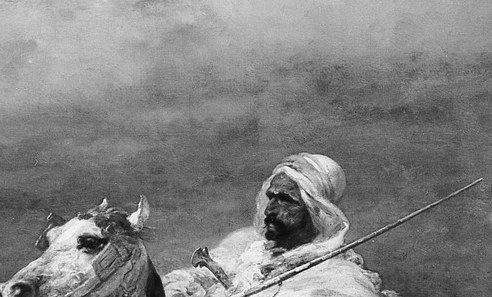
The scene is a tactical wheeling maneuver: a detour. The riders in wind-caught burnooses charge left across a featureless desert plain under a storm-lit sky. A flag or lance slants up from the foreground, giving the composition a kinetic thrust. The riders' faces are nearly lost in the motion, but the lead rider's turned head registers the alert urgency of a command unit in flight.
Schreyer painted horses almost exclusively. He was born in Frankfurt, studied in Düsseldorf and Paris, and traveled to North Africa and the Middle East to gather material. Then he returned to Germany and painted horses for the rest of his life. His patrons never asked for anything else.
Details
Transcript
By the 1870s, one painter's horses were selling for a fortune. German artist Adolf Schreyer. His patrons were American railroad tycoons. Look at the dust dissolving the horses' legs. Critics called this dustwork the proof of his superiority over every other Orientalist. He charged the highest prices of any living artist in his Berlin gallery. His secret: he never painted anything else.