Portrait of a Woman with a Balance by Thomas de Keyser
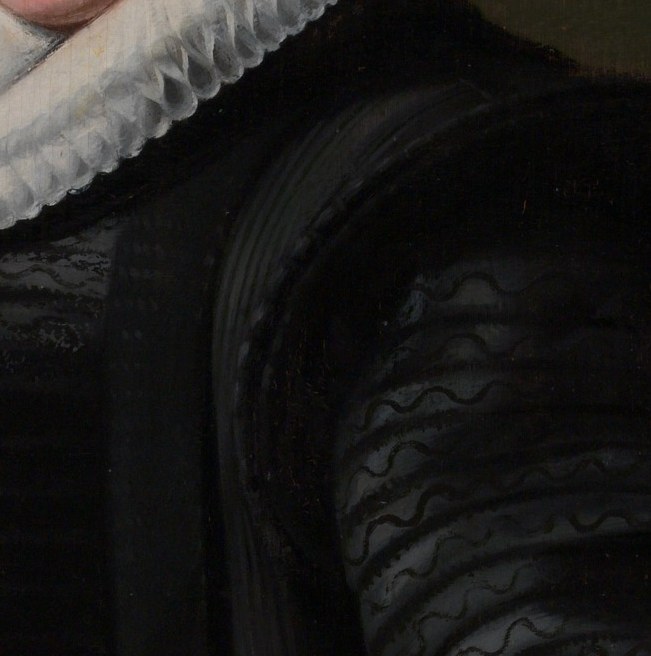
This is Thomas de Keyser's "Portrait of a Woman with a Balance," painted in 1625 and now in the collection of The Metropolitan Museum of Art. For much of the early Dutch Golden Age, de Keyser was the most sought-after portraitist in Amsterdam. His work was so admired that, decades later, many of his paintings were falsely attributed to his more famous successor, Rembrandt.
Look at the balance scale she holds. It's a tiny, functional object, not an abstract prop. De Keyser gives it a glint of light on the pan, a reward for the close viewer. The scale is the central mystery of the painting: it can be read as an attribute of Justice, Prudence, or a vanitas symbol weighing earthly goods. The directness of her gaze suggests she is doing the weighing herself.
De Keyser was not only a painter but also a dealer in Belgian bluestone. He dominated the Amsterdam portrait market until the 1630s, when his star was eclipsed by the young Rembrandt van Rijn, who had studied his compositions closely. The rest is a bitter footnote in art history: de Keyser's own paintings were later re-signed with Rembrandt's name to increase their value.
She stares out from a featureless black ground, removed from time and place, holding a tool of measurement. A woman whose identity we have lost looks through the centuries, weighing something we can no longer name.
Details




Transcript
Amsterdam, 1625. The city's busiest portraitist. She doesn't look away from you. In her hand: a small, perfectly functional scale. Some call it Judgment. Prudence. Or the weighing of earthly goods. The painter's virtuosity is all in the hands. Thomas de Keyser painted this. For twenty years, he was the name. Then his student, Rembrandt, began to surpass him. De Keyser's work was so good, many were later signed with Rembrandt's name.