Still life with a herring by Gerret Willemsz. Heda
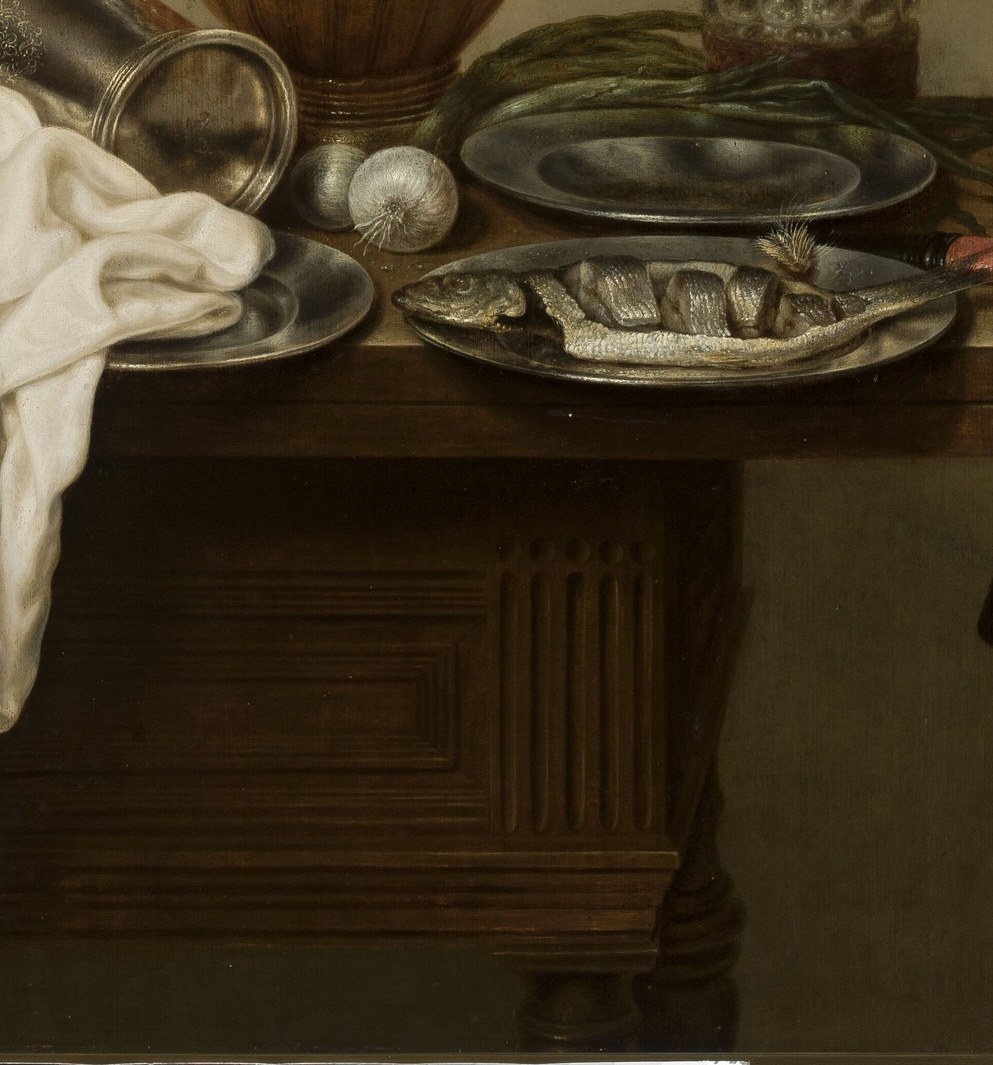
Gerret Willemsz. Heda's Still life with a herring (1644) is a masterclass in rendering everyday objects with stunning realism. The painting showcases the artist's exceptional ability to capture varied textures and the play of light on different surfaces, making oil paint seem almost indistinguishable from reality.
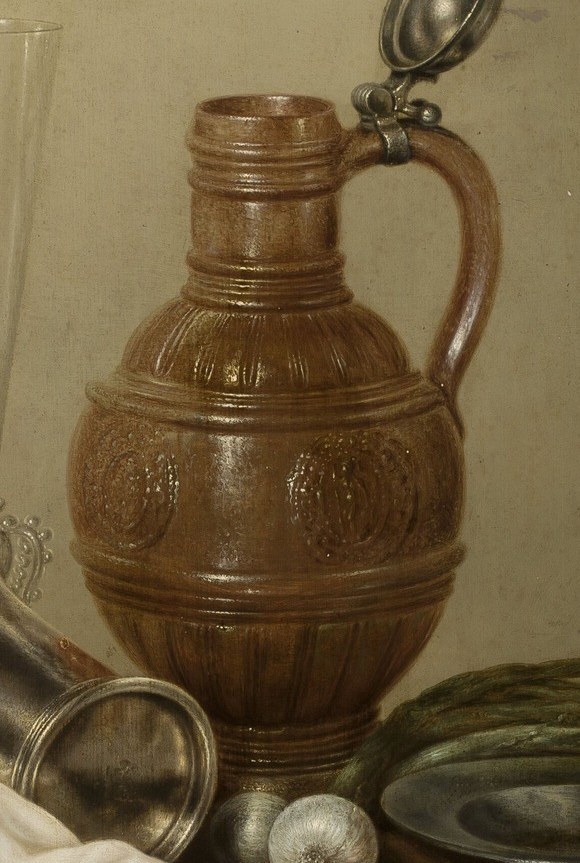
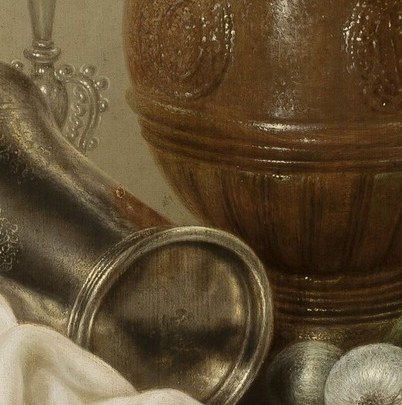
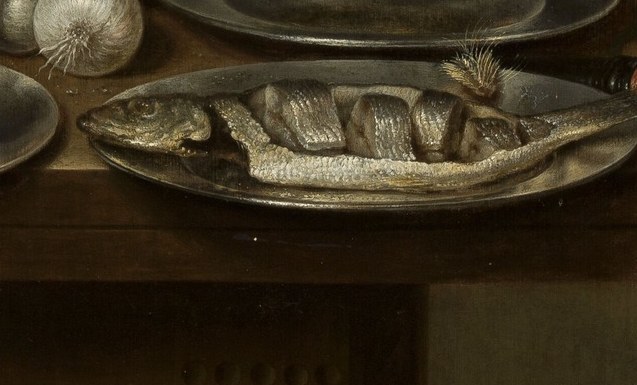
Look closely at the crumpled white cloth; its folds and shadows create a convincing sense of volume and softness. Notice the detailed texture of the stoneware pitcher and the way light catches its surface. The artist's skill is also evident in the highly reflective silver goblet and the glistening scales of the herring, each element meticulously rendered to enhance the illusion of three-dimensionality and tactility.
Painted in 1644 during the Dutch Golden Age, this work exemplifies the genre's fascination with elevating the mundane. Gerret Willemsz. Heda, son and pupil of the renowned still life painter Willem Claesz. Heda, captures a humble meal with remarkable detail. The arrangement suggests a recently concluded or soon-to-be-enjoyed repast, a common theme in Dutch domestic still life.
Heda's trompe-l'oeil technique transforms simple elements into a captivating visual experience. How did he achieve such lifelike textures using only paint?
Details
Transcript
Look at this crumpled white cloth. The folds seem soft enough to touch. See how light plays on the stoneware pitcher. The artist painted its textured surface. He made this silver goblet gleam. This painting was made in 1644. Observe the detail on the herring scales. Heda made paint look like real life.