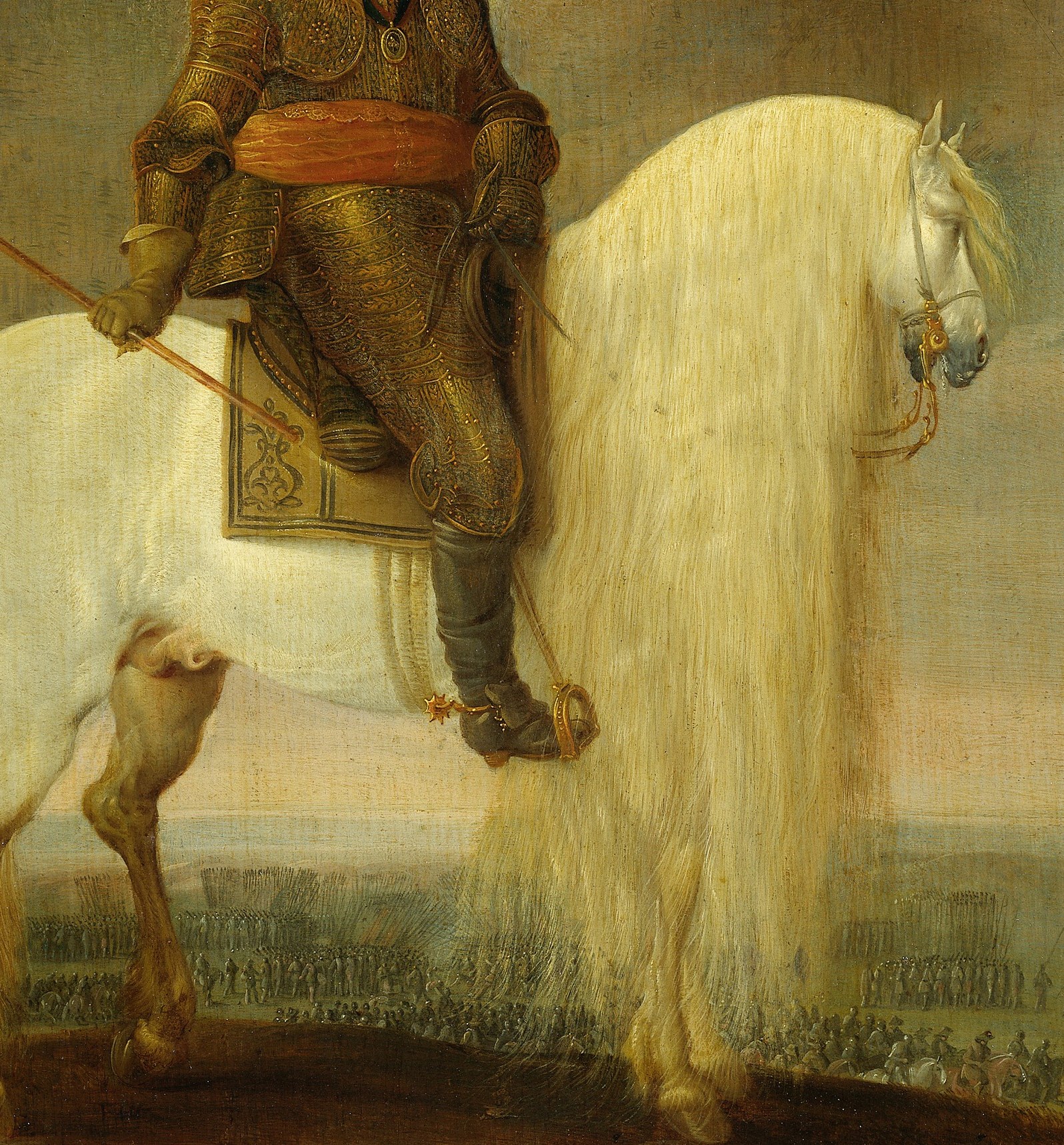
Prince Maurits astride the white warhorse presented to him after his victory at Nieuwpoort by Paulus van Hillegaert (I)
Prince Maurits at Nieuwpoort by Paulus van Hillegaert, circa 1633, held in the Rijksmuseum. The painting captures a victory that was already three decades old when the canvas was stretched.
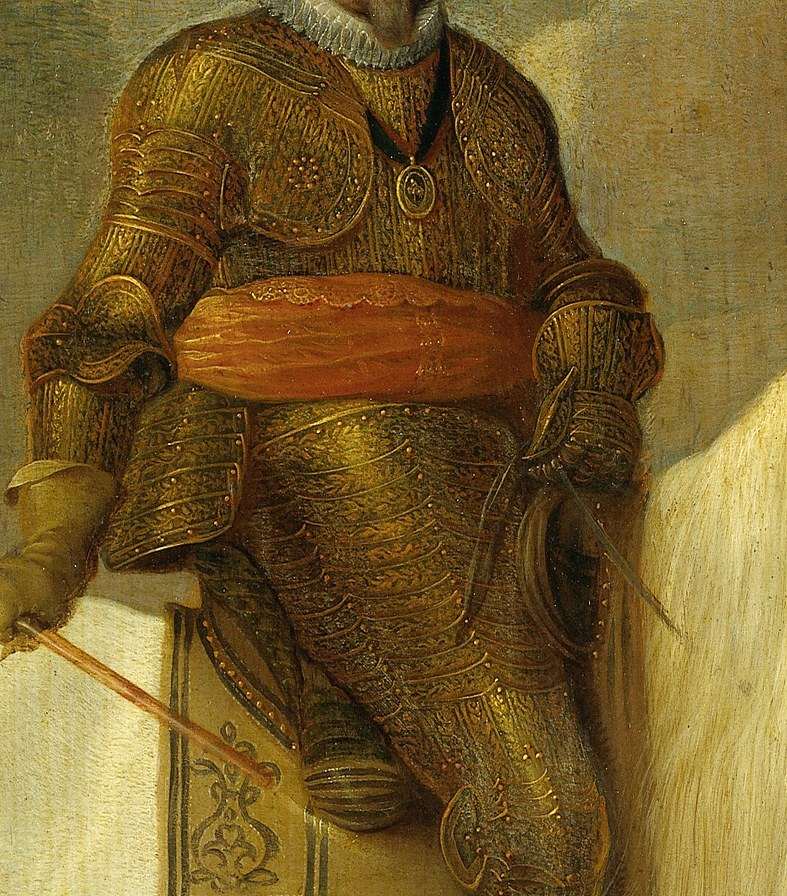
The white warhorse dominates the frame. It was the actual gift presented to Prince Maurits after the battle. Note the gilded armor, the red sash, and the gloved hand resting lightly on the reins. Behind him, a line of soldiers fades into the hazy distance.
The Battle of Nieuwpoort in 1600 was a turning point in the Eighty Years' War. Maurits emerged as a national hero. The painting was commissioned decades later, in 1633, as a commemorative work. Van Hillegaert was a specialist in military scenes and equestrian portraits; his approach here is restrained and documentary.
A victory preserved in oil, 33 years after the fact. What does a painter capture when the event is already history?
Details
Transcript
In 1600, the Dutch won a decisive battle at Nieuwpoort. Prince Maurits received this white warhorse as his reward. Here he is, gilded armor, red sash, steady gaze. His hand on the reins: control without force. The battle was 1600. This canvas was painted 33 years later.