Santa Maria della Salute by Francesco Guardi
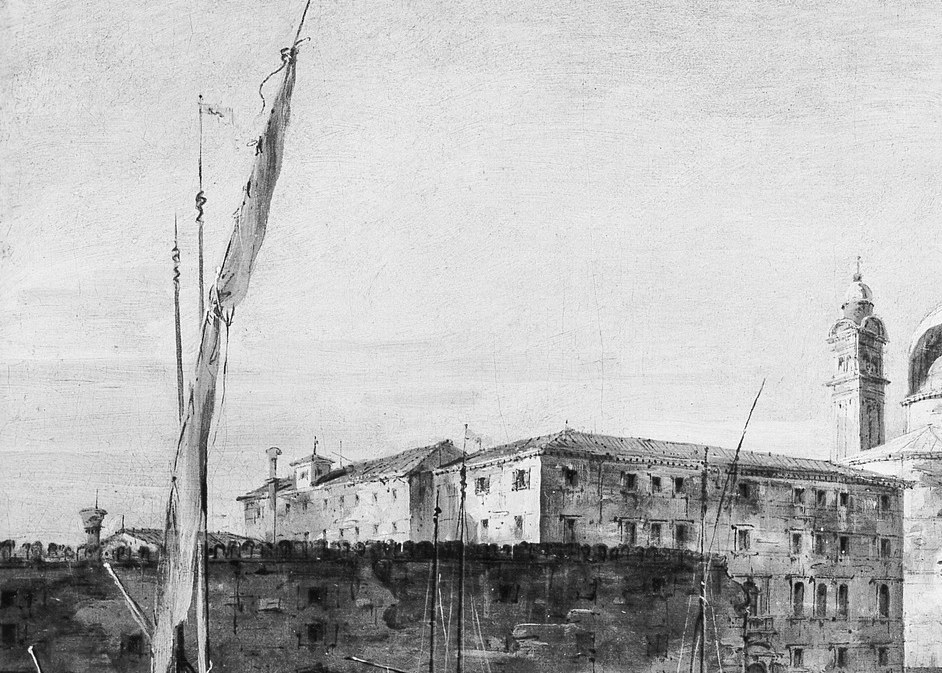
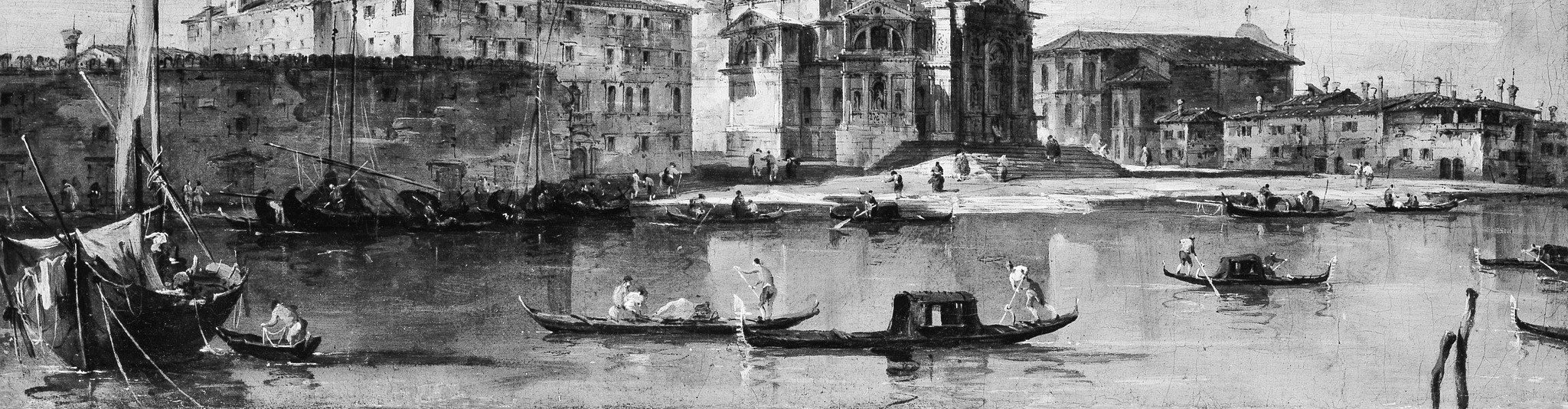
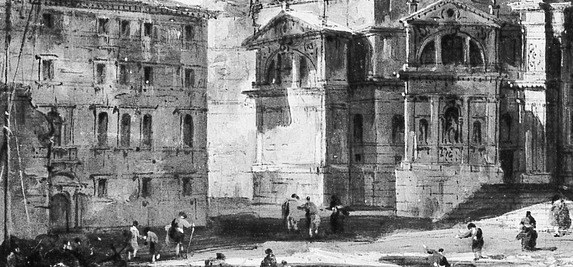
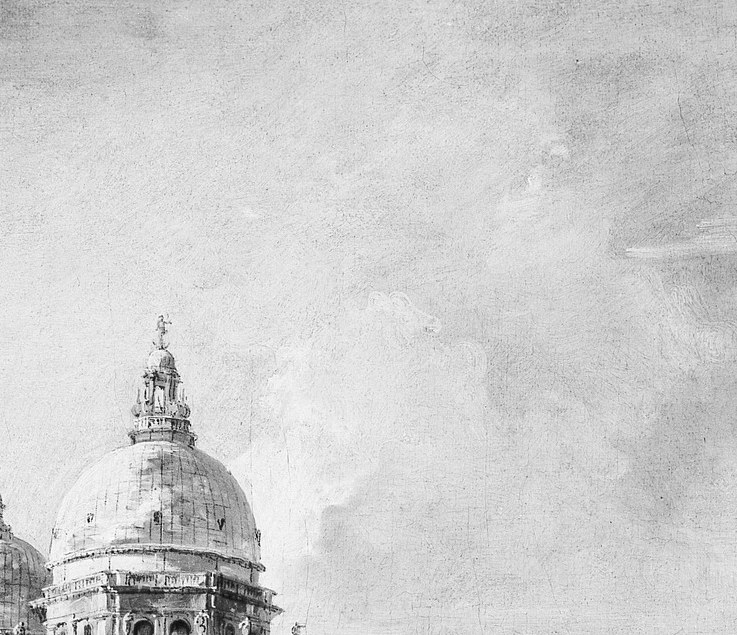
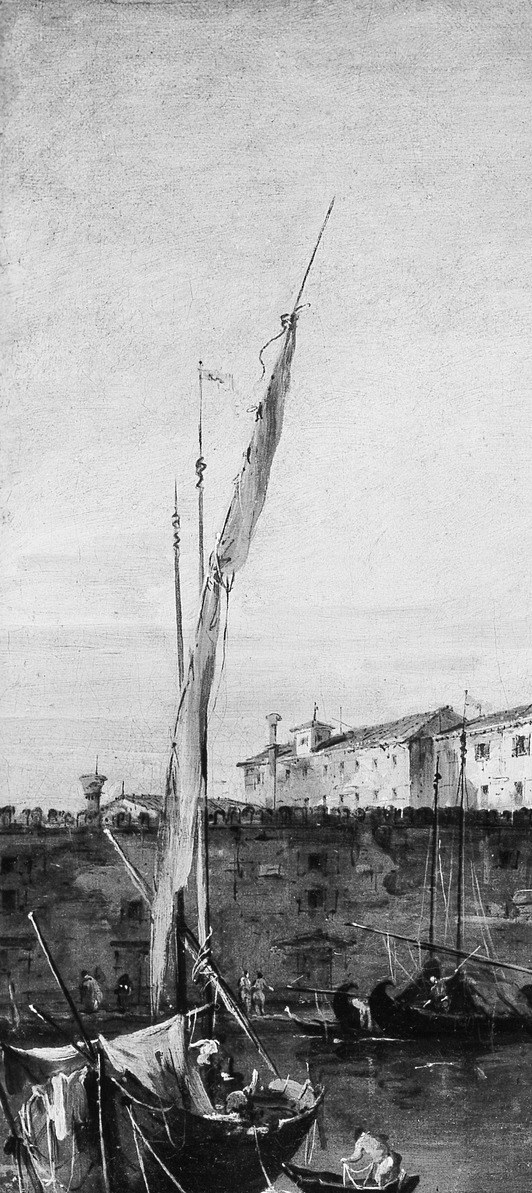
This is Francesco Guardi's *Santa Maria della Salute*, painted around 1760 and now in The Metropolitan Museum of Art. For most of his career, Guardi worked in the shadow of Canaletto, the Venetian view-painter whose razor-sharp cityscapes were bought up by English aristocrats on the Grand Tour. Canaletto's pictures looked like architectural documents: every window, every cornice, every reflection precisely accounted for.
Look at Guardi's water in the foreground. He builds it with rapid, broken touches of the brush, dashes of white and pale blue that suggest glittering light rather than describing it. The gondola and its standing oarsman are rendered with the same loose economy. To an 18th-century collector trained on Canaletto's hard precision, this looked incomplete.
That looseness turned out to be the painting's shield. When Napoleon's forces occupied Venice in 1797, his agents systematically stripped churches, palaces, and collections of Old Masters for shipment to the Louvre. Canaletto's vedute were considered high-value trophies. Guardi's sketchier works were often passed over, dismissed as the lesser efforts of a late style. The very quality that once hurt his market saved his paintings for Venice.
What do you see in the water: unfinished haste, or a painter learning that light is more important than edges?
Details
Transcript
For a century, Venice's top view-painter was Canaletto. His pictures were precise, architectural, and prized by English collectors. This painter worked differently. Look at the water. Broken touches of paint that shimmer rather than describe. When Napoleon's agents swept through Venice, they took the Canalettos. They left this one. Its sketchy brushwork looked unfinished to them.