Basket of Flowers by Eugène Delacroix
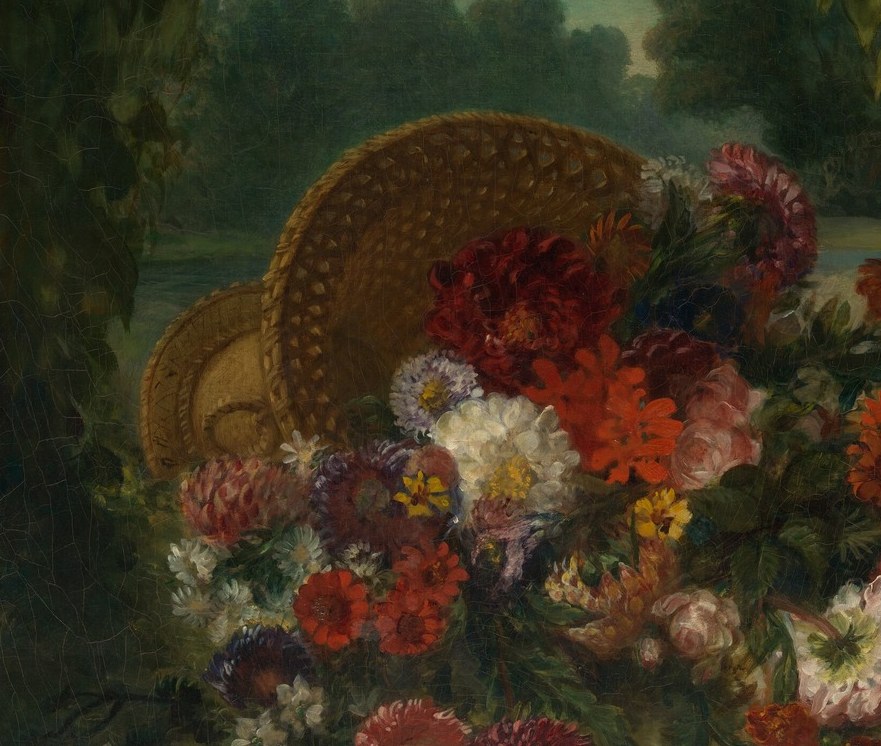
This is Eugène Delacroix's 'Basket of Flowers,' painted in 1848 and held at The Metropolitan Museum of Art. It looks like a simple garden still life, but it was made during one of the most violent chapters in French history, the June Days uprising, when Paris was in open revolt and thousands died in the streets.
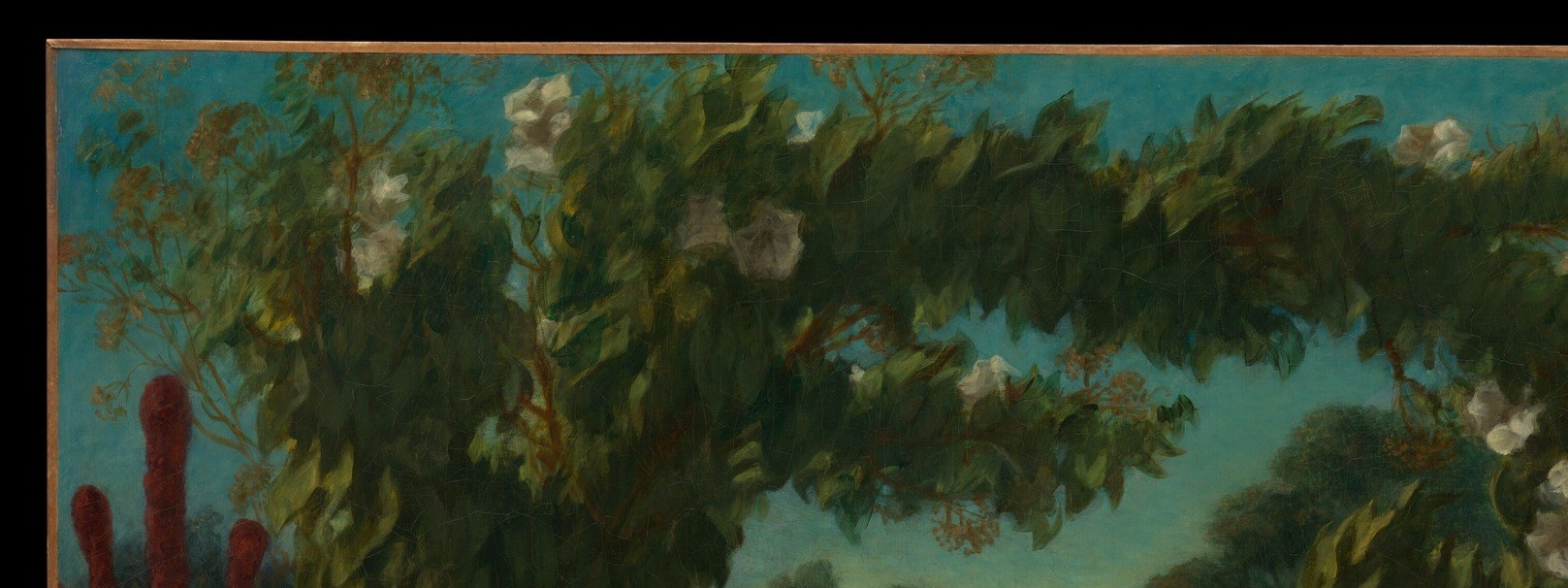
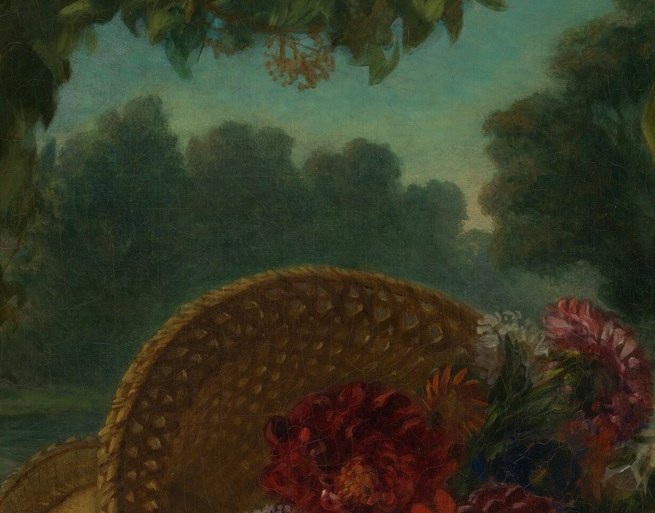
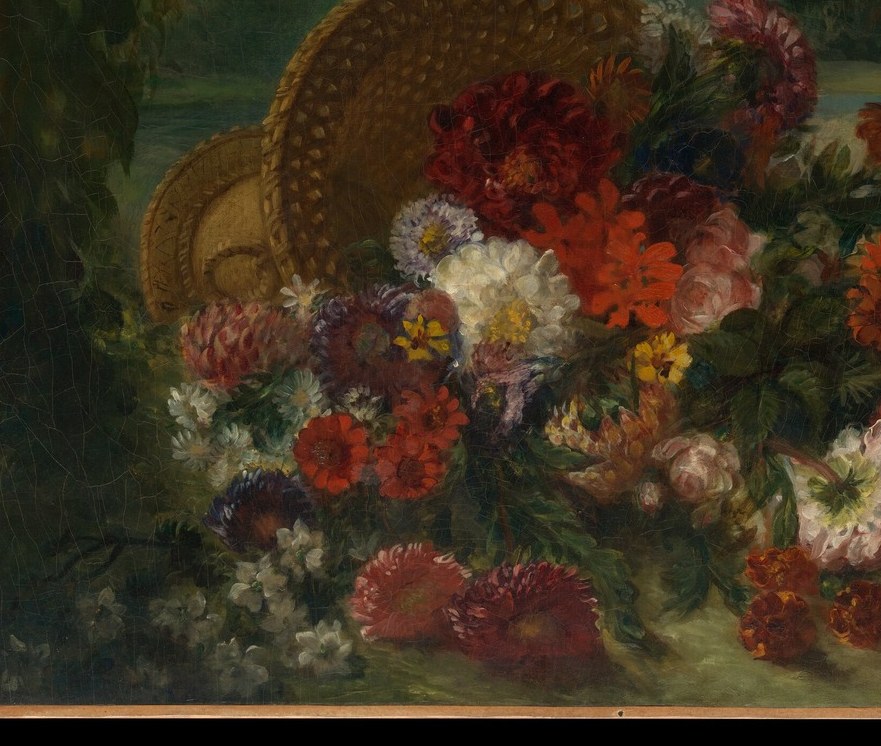
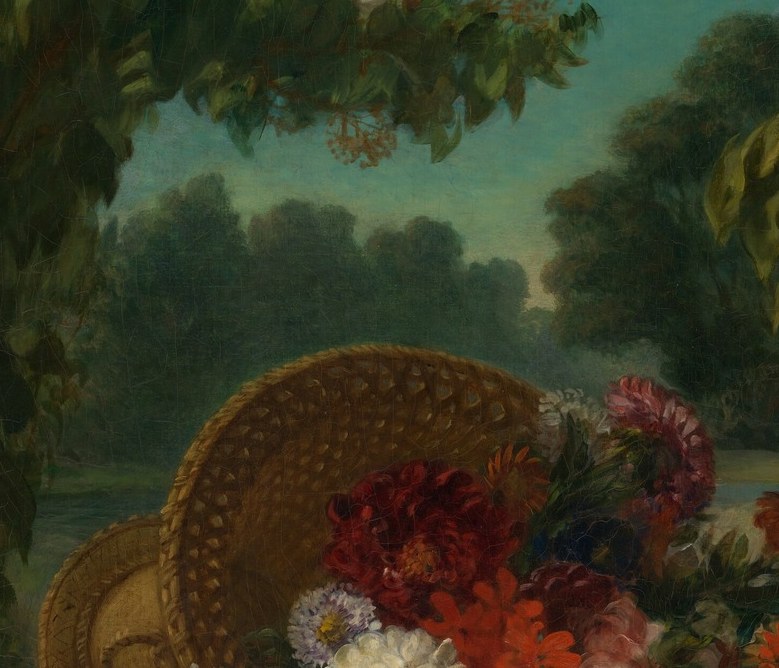
Delacroix fled the city for his country retreat at Champrosay. He wrote to a patron confessing he felt listless and detached from the chaos. His solution was to paint exactly what Paris could not offer: stillness, abundance, and a riot of pure color that was entirely under his control. Look at the red dahlias in the foreground, the loose brushwork at center where individual petals become gestures of paint, and the dark tree canopy arching overhead like a theater curtain, the composition itself is an enclosure, a sanctuary.
This is more than just a political escape. The heavy shadow on the ground and the scattered fallen petals carry a quiet vanitas note, beauty that is already beginning to drop. But the real surprise is in the facture. Those dissolving petals, the visible strokes, the color built in layers of complement, Delacroix pushed so far from academic finish here that later painters took direct instruction from this canvas. It is a direct ancestor of Impressionism, painted a quarter century before Monet and Renoir took up the same logic.
A revolution outside. A revolution on the canvas. Which one mattered more for the future of painting?
Details
Transcript
Paris, 1848. Barricades in the streets. A revolution. While the city fought, Delacroix retreated to his country house. He wrote: 'I must get back to painting flowers.' So he built this dense, almost theatrical refuge of color. He sent it to a friend with a note: 'Distraction from the real world.' Look at how the petals dissolve, gesture over precision. This single basket of flowers predicted Impressionism.