Fantastic Landscape by Francesco Guardi
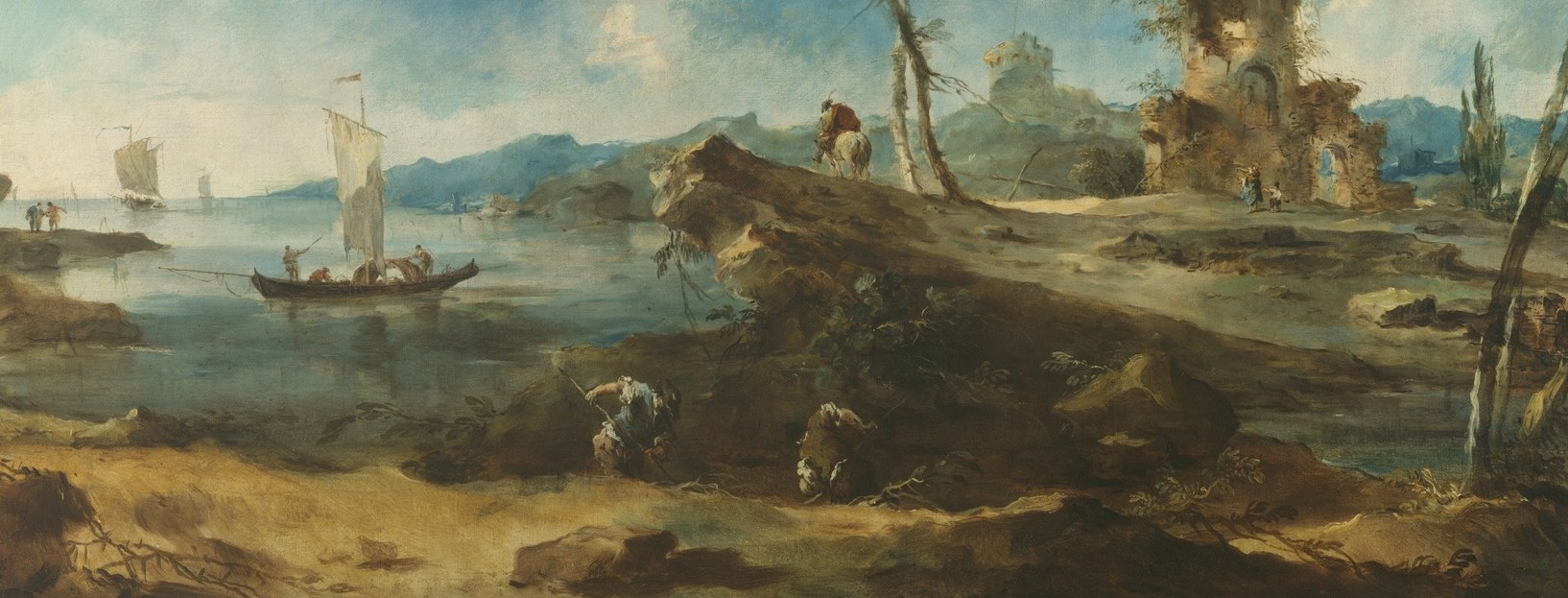
Francesco Guardi, a Venetian nobleman, shifted his artistic focus dramatically after 1760, moving from religious paintings to imaginary landscapes. "Fantastic Landscape," painted in 1765, is a prime example of this change, showcasing his unique approach to what were known as vedute, or landscape views.
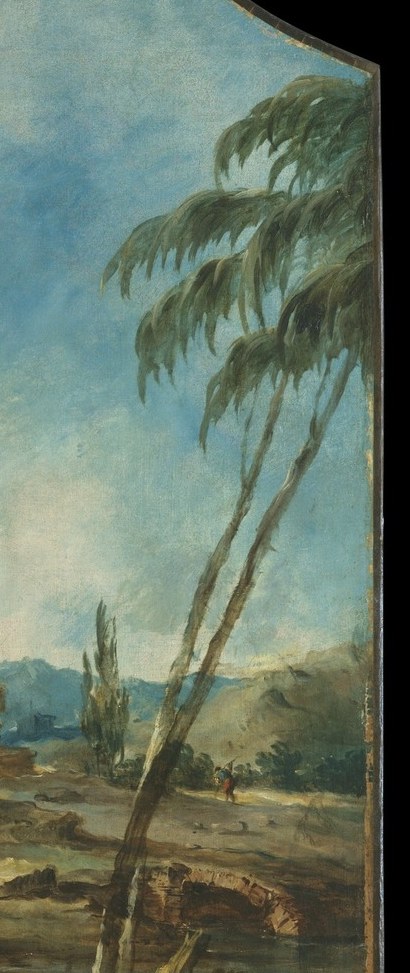
Look closely at the expressive brushwork, particularly in the ruined archway and the dramatic palm trees. Guardi's style was less precise than his contemporary Canaletto, favoring a looser, more atmospheric technique that gives his scenes a dreamlike quality.
This painting captures a serene, idealized shoreline, blending reality with imagination to create a 'fantastic' composite vista. It's a testament to Guardi's evolving artistic vision, moving away from specific locations to create a world of his own invention.
What details in this invented landscape draw your eye the most?
Details
Transcript
This painter was a Venetian nobleman, known for religious art. But after 1760, he started painting imaginary landscapes like this one. Notice the ruined archway, a common feature in his invented views. He was influenced by Canaletto, but with a much looser brushwork. This gives his 'fantastic' scenes a dreamlike, ethereal quality. See the expressive strokes on these tall palm trees.