Sketch of a Cottage Yard by Homer, Winslow
Winslow Homer's "Sketch of a Cottage Yard," painted around 1876, offers a candid glimpse into rural American life. This oil on academy board, now in a private collection, exemplifies Homer's dedication to capturing authentic moments rather than idealized scenes.
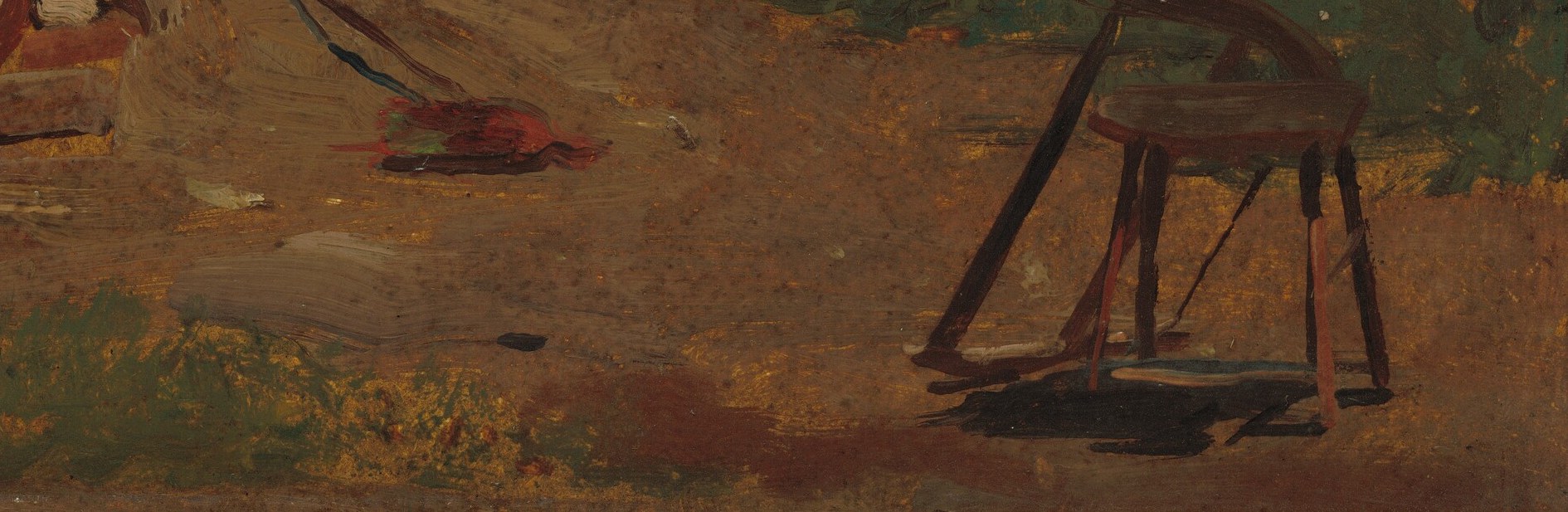
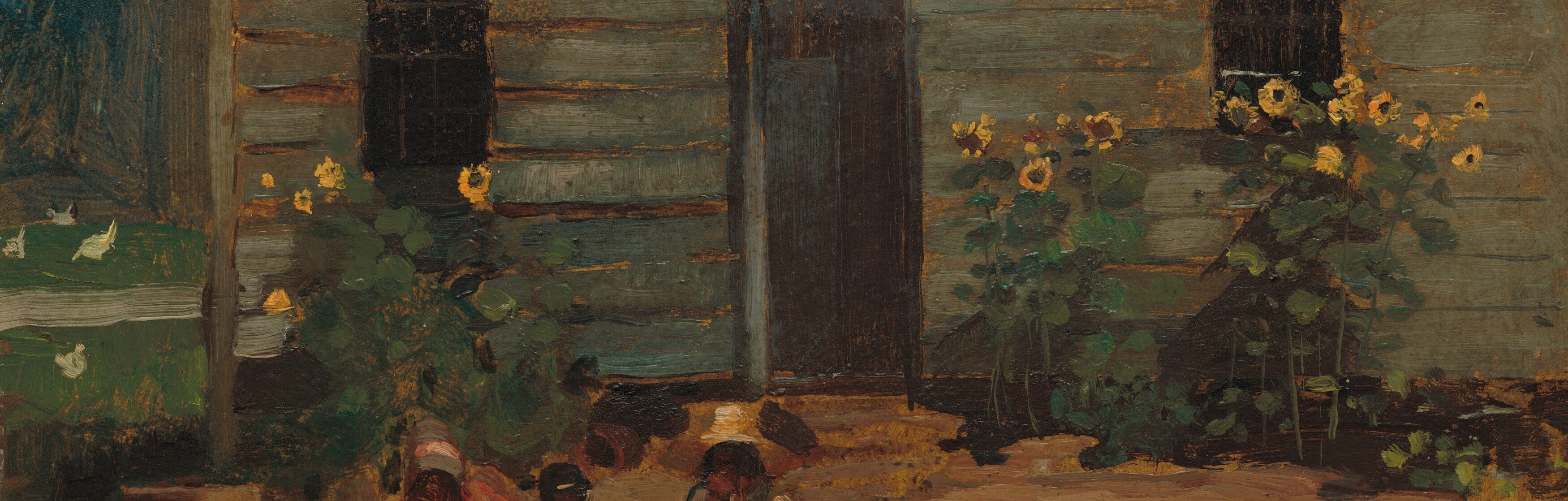
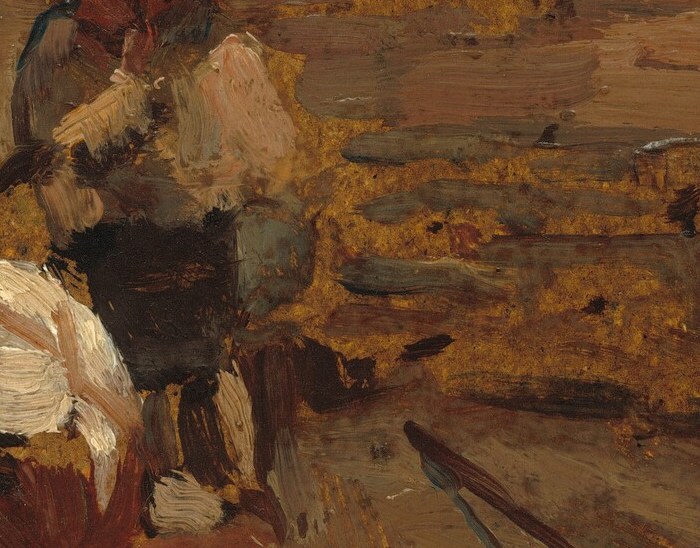
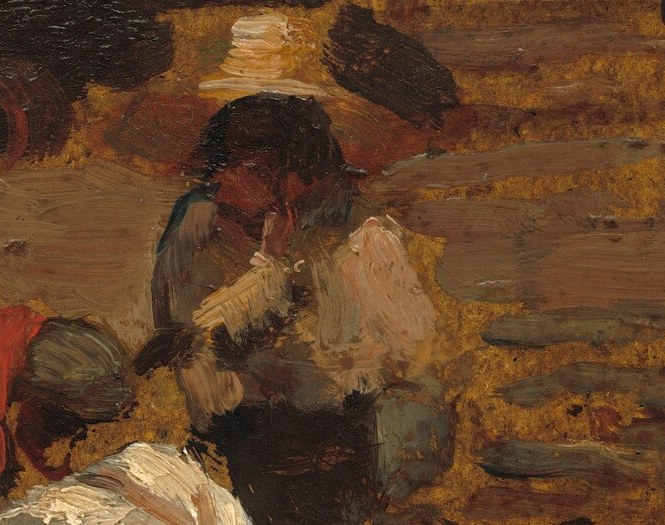
Observe the energetic, visible brushstrokes in the foreground, particularly around the ground and the weathered cottage wall. The woman in the vibrant red dress and the peacefully resting baby on a blanket are central to this domestic tableau, grounding the painting in everyday human experience.
During the mid-1870s, Homer shifted his focus from dramatic marine subjects to the quiet dignity of rural life. He aimed to document the unvarnished realities of ordinary people, using a loose, observational style often associated with Impressionism. This work, though modest in scale, reflects his belief that true art lay in capturing life as it truly was, rough edges and all.
What details in this sketch make it feel particularly real to you?
Details

Transcript
Winslow Homer painted real life, not staged scenes. His brushstrokes were bold, quick, and visible. He preferred humble, rural moments. This woman in red adds a vivid touch of life. A baby rests nearby, part of this quiet scene. Homer moved from grand marine scenes to these domestic ones. He sought to show ordinary people, unposed and true.