Roundel with Killing of the Ox (December) by http://www.wikidata.org/.well-known/genid/0f4d573ebca2a6dfe82f173e240c50c0
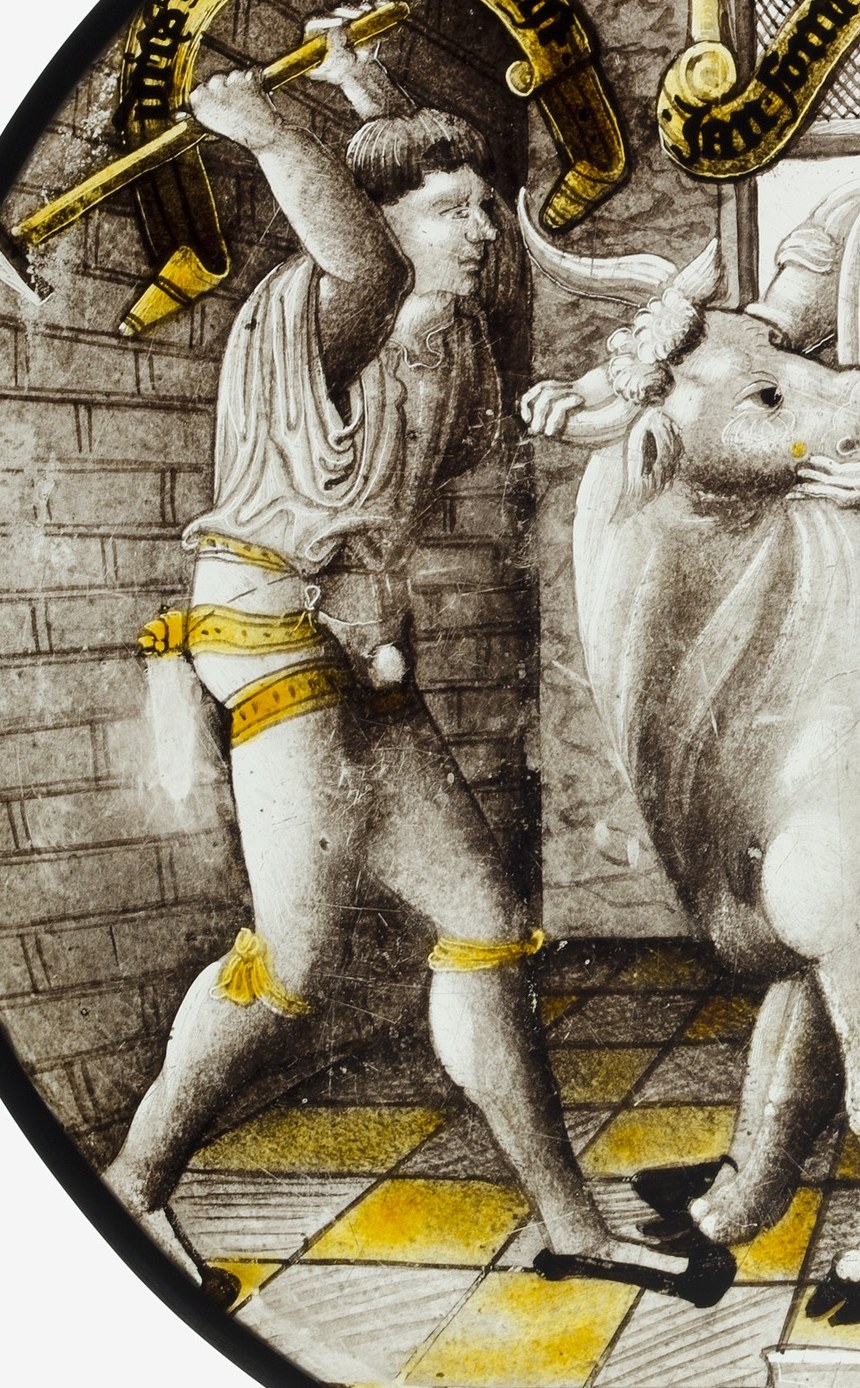
This intriguing circular painting, "Roundel with Killing of the Ox (December)" by a German Master around 1550, depicts a crucial winter task. It's more than just a scene of preparing for the cold months; it's a window into the symbolic calendar of the time.
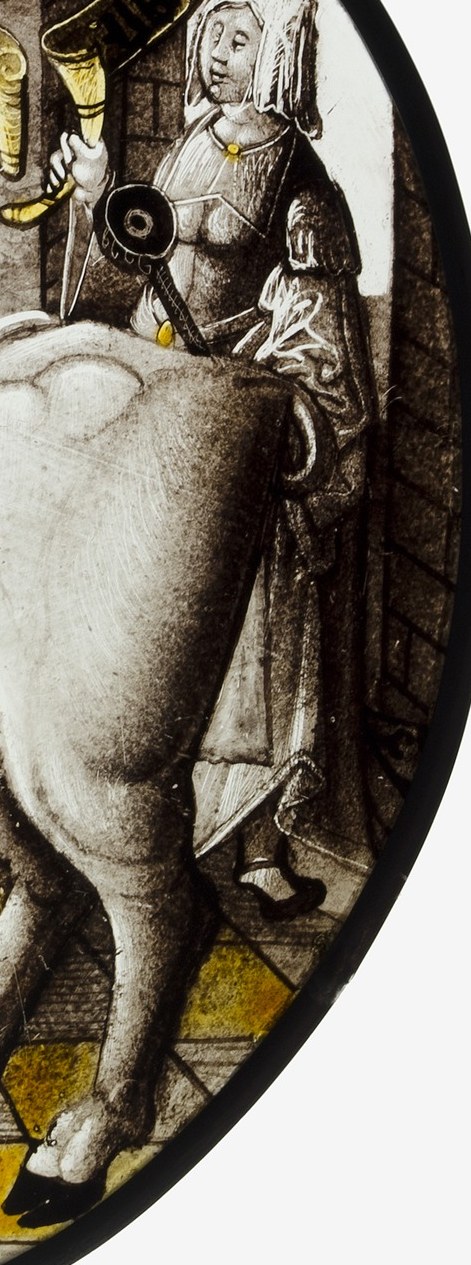
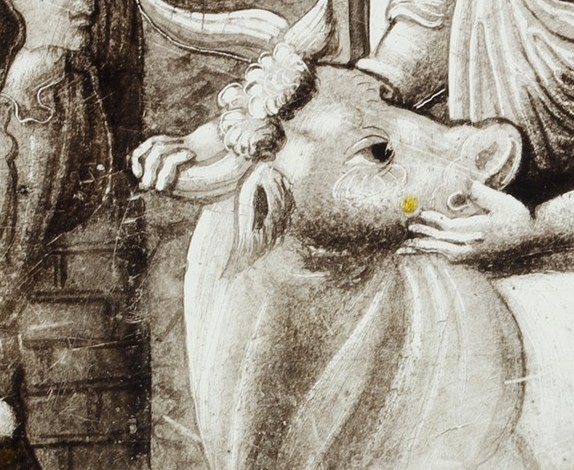
Observe the figures: a man poised with an axe, an ox awaiting its fate, and a woman holding a horn. Her presence, and the horn, suggest a ceremonial aspect to the act, transforming it from a simple chore into a ritual.
The most curious detail lies in the curving banners at the top. While the text is no longer legible, these inscriptions originally provided a richer narrative, likely linking this scene to a broader religious or seasonal meaning, a common practice in art representing monthly labors.
This small detail reminds us that even seemingly straightforward depictions can hold layers of forgotten stories.
Details


Transcript
This painting shows a winter task: the killing of an ox. The man with the axe is ready, but notice the woman. She holds a horn, perhaps to signal the ritual's start. Now look closer at the curved banners above. These inscriptions, now illegible, added a deeper context. They would have told a story beyond just a winter meal.