The Outer Harbor of Brest by Henri-Joseph Van Blarenberghe
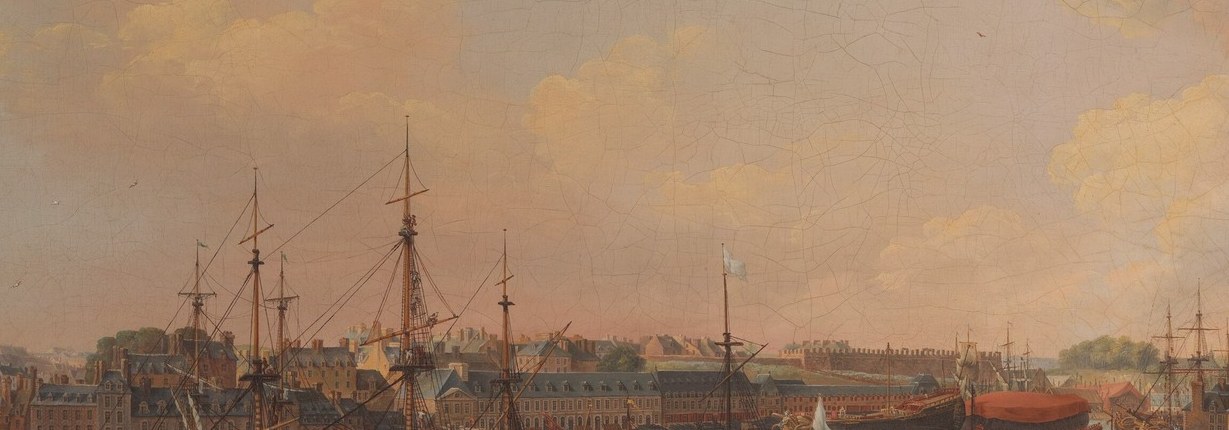
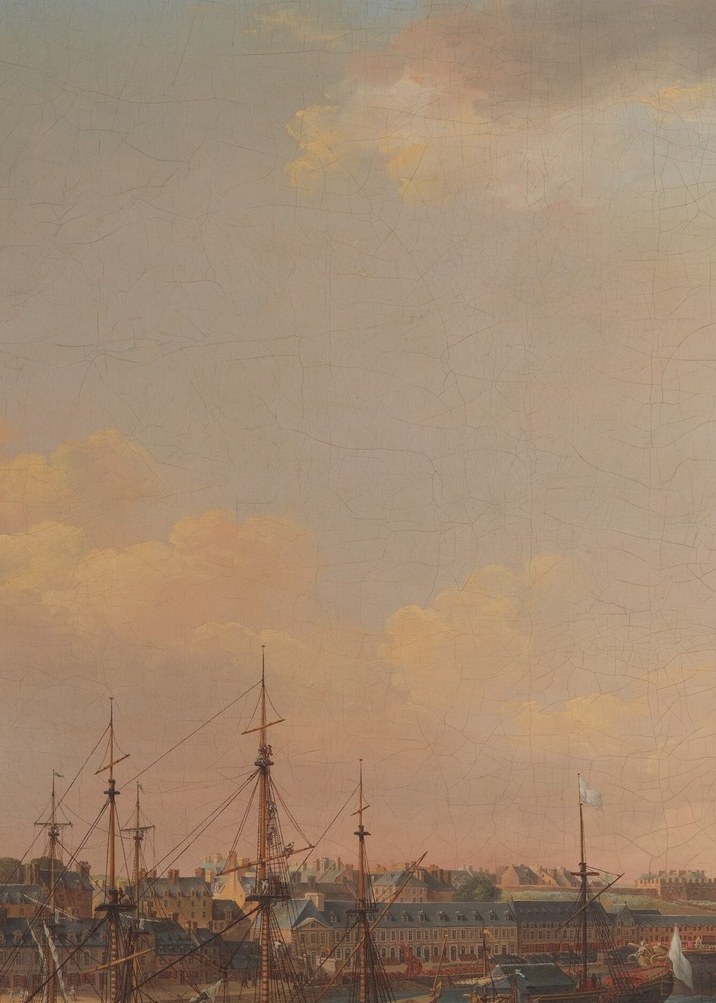
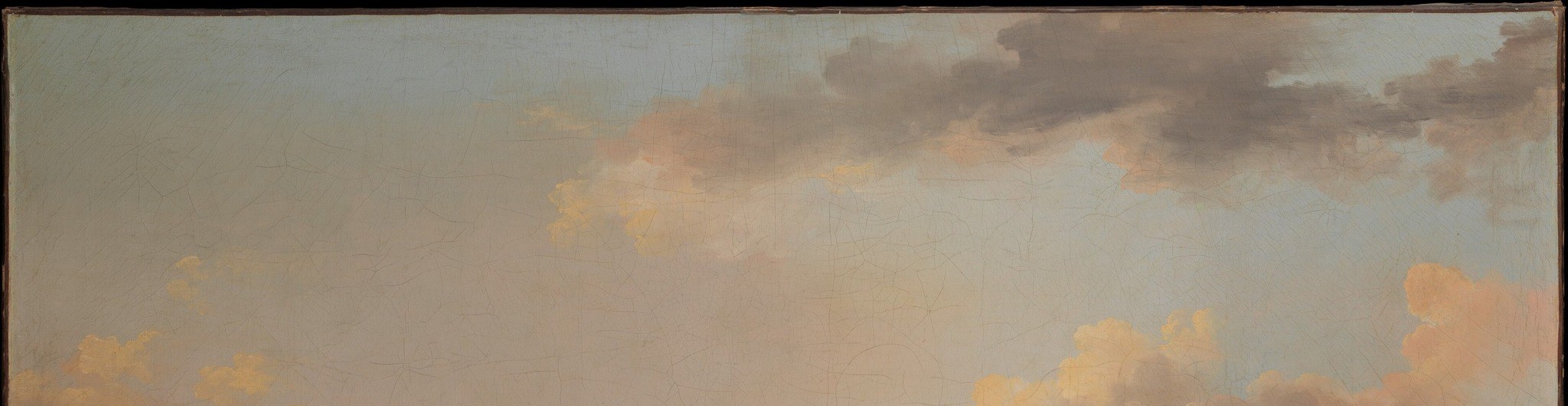
The Outer Harbor of Brest, painted in 1773 by Henri-Joseph Van Blarenberghe, is on the surface a grand panorama of French naval power. But it was made by a man whose day job was painting tiny scenes on snuff boxes for aristocrats. The French government commissioned this, one of six port scenes, to document its strategic Atlantic fleet. The scale is public and political, but the hand is impossibly fine.
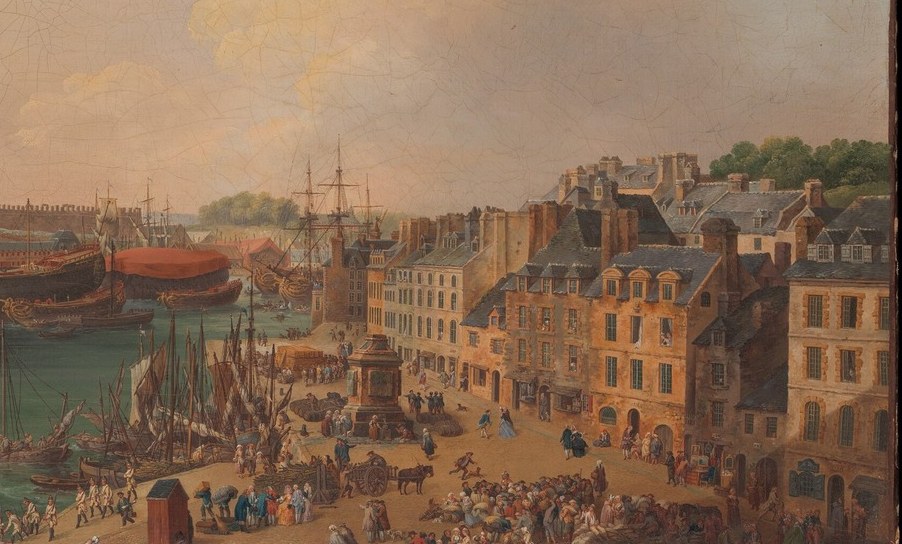
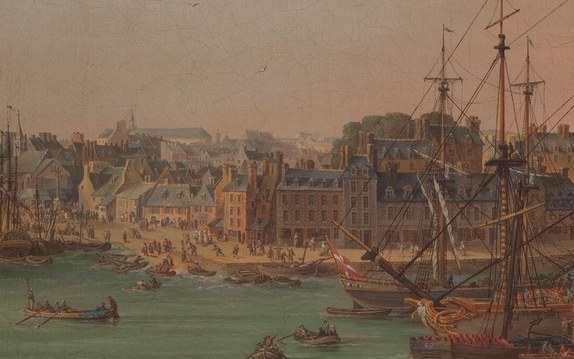
To see what that means, look at the water. The sunset reflects in a golden sheen that is not a smooth wash of paint. Van Blarenberghe laid warm yellow and orange strokes over a cool green base, building the shimmer as a separate, delicate lattice. The same precision is everywhere: the tiny figures on the quay are distinct, the rigging on the central warship is legible, and even the distant fleet is a careful record of hulls, not a blur of suggestion.
Van Blarenberghe came from a famous Flemish family of miniaturists in Lille. Their training taught them jewel-like control at the smallest scale. Here he scaled that control up to a wide canvas without losing any of its intensity. The result is a historical document of Brest before later bombardments, an architectural record of the waterfront, a political statement of naval reach, and a quiet technical masterclass, all at once.
It rewards getting as close as the screen will let you. Every inch was made to be examined.
Details
Transcript
Look at the water. Look closely at the light. It's not a wash. It's a lattice of separate, tiny brushstrokes. Gold laid over cool green. He built the shimmer inch by inch. Van Blarenberghe was a miniaturist by training. His family painted tiny scenes on snuff boxes for French aristocrats. But this is one of six large canvases ordered by the government. He painted a fleet you can measure power against. And a harbor you can nearly touch.