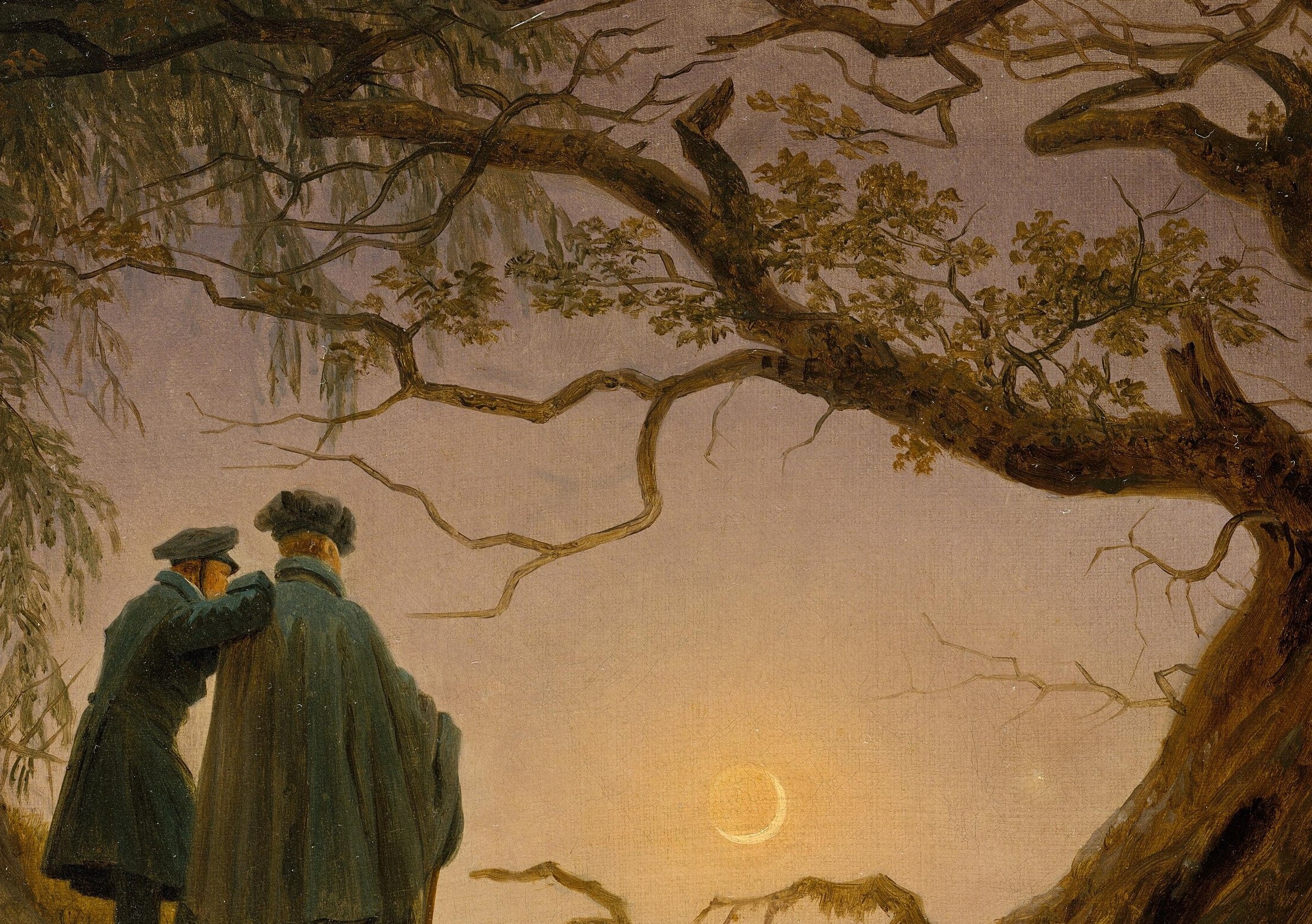
Two men contemplating the Moon by Caspar David Friedrich
View the artwork: Two men contemplating the Moon →
This is one of the most recognized paintings of German Romanticism, and it is also an act of political resistance. Caspar David Friedrich painted "Two Men Contemplating the Moon" around 1825, and it now hangs in the Metropolitan Museum of Art. The two figures are Friedrich himself and his friend and disciple August Heinrich.
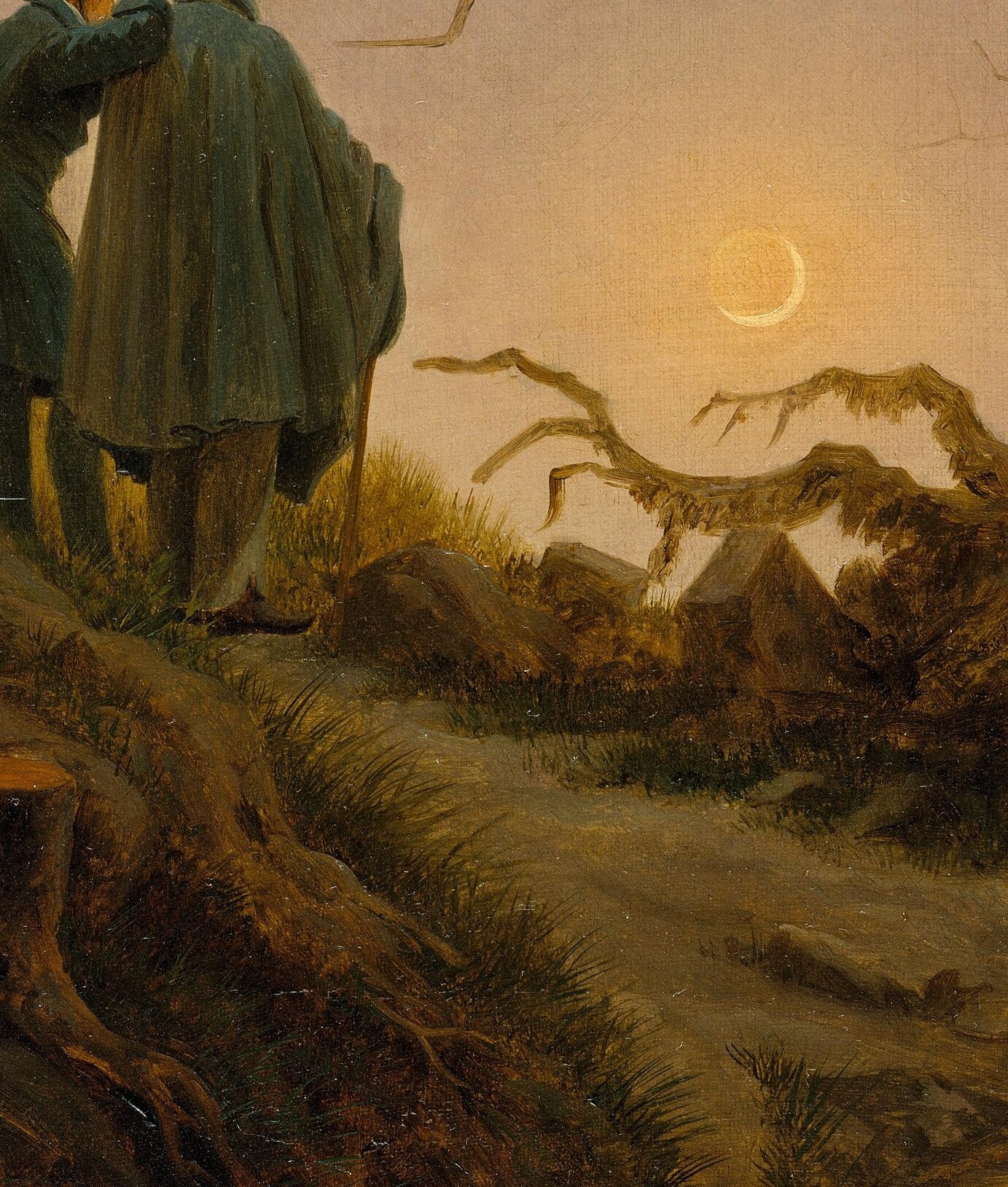
Look at their hats and clothing. This is Old German dress, a style adopted by liberal student groups in 1815 as a symbol of opposition to the conservative crackdown that followed the Napoleonic Wars. In 1819, the year Friedrich first conceived this composition, a royal decree banned the attire outright. Friedrich kept painting it anyway.
The painting remained with the descendants of its original owners for roughly 170 years, passing from generation to generation in private homes. The Met acquired it only in 2000, through the Wrightsman Fund. For nearly two centuries, this quiet act of defiance was hidden from public view.
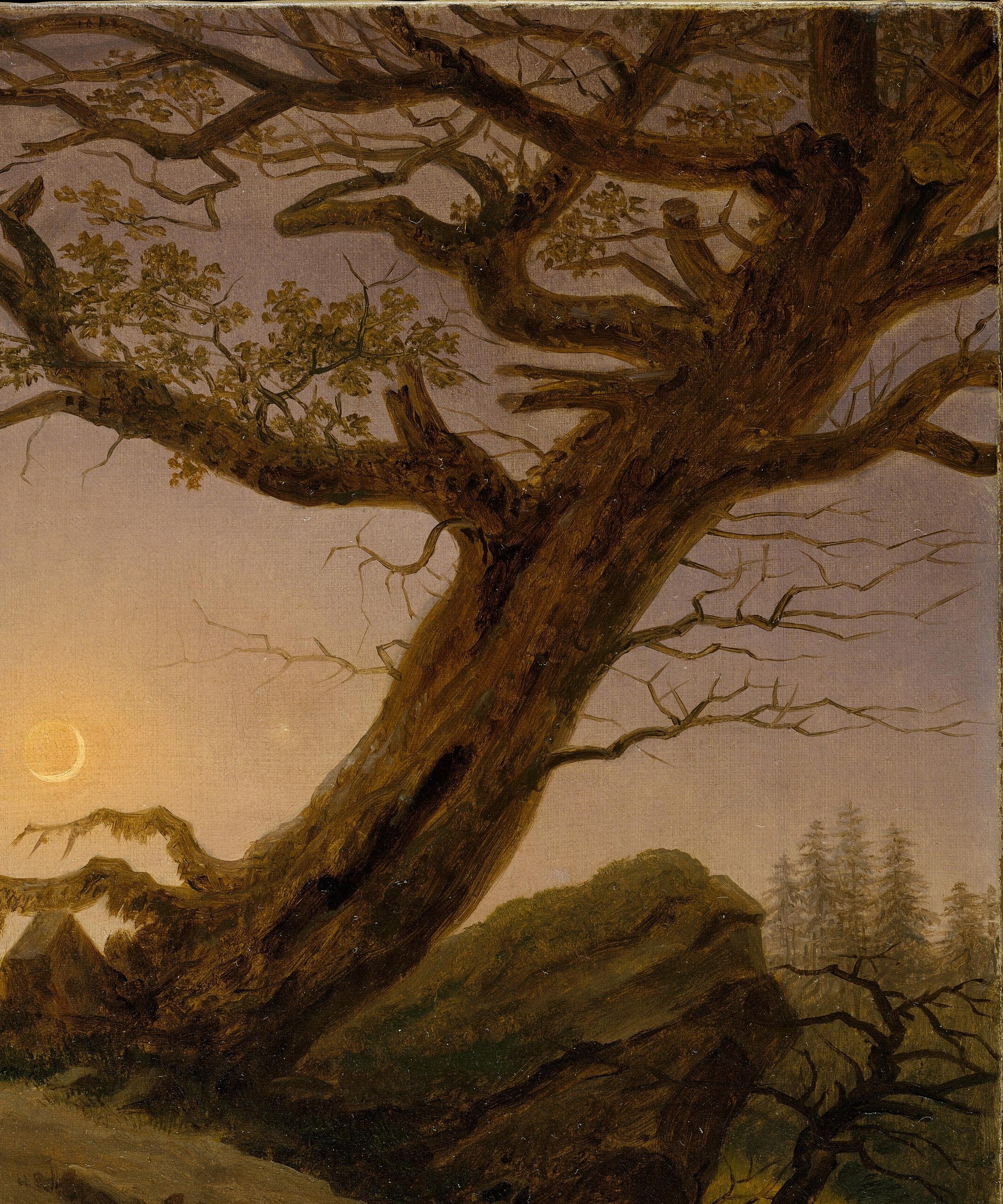
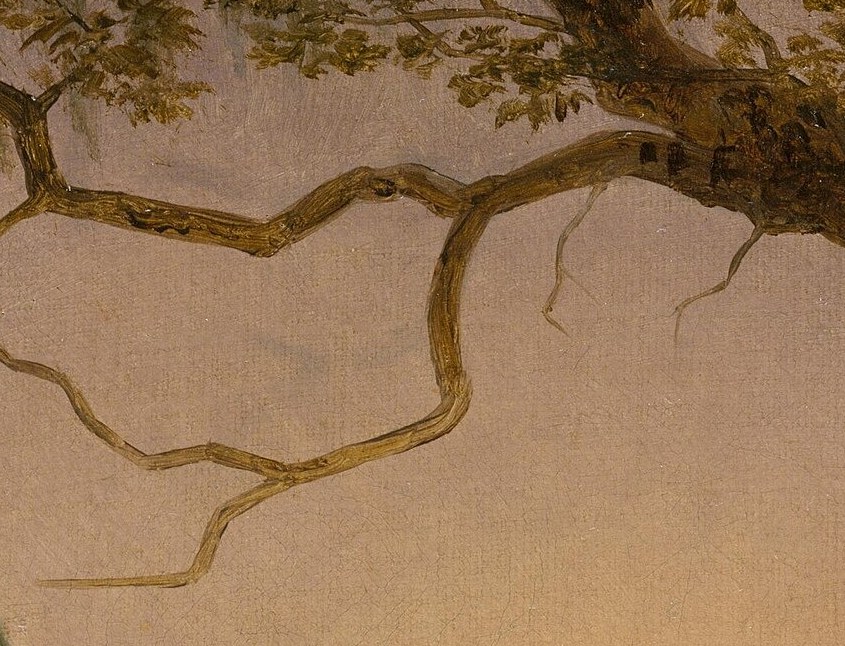
Everything in the composition points toward the moon: the leaning figures, the sweeping dead branch of the oak, the drooping tree on the far left. The oak itself was the supreme symbol of German national identity. A political argument, wrapped in a meditation on the infinite.
#arthistory #romanticism #caspardavidfriedrich
Details
Transcript
In 1819, a royal decree banned these hats. Wearing them was an act of political defiance. The taller man is the painter, Caspar David Friedrich. He places us right behind his shoulder. The oak tree was the symbol of a unified Germany. Its dead branch frames the only light in the sky. This painting stayed in one family until the year 2000.