Artwork
Two men contemplating the Moon
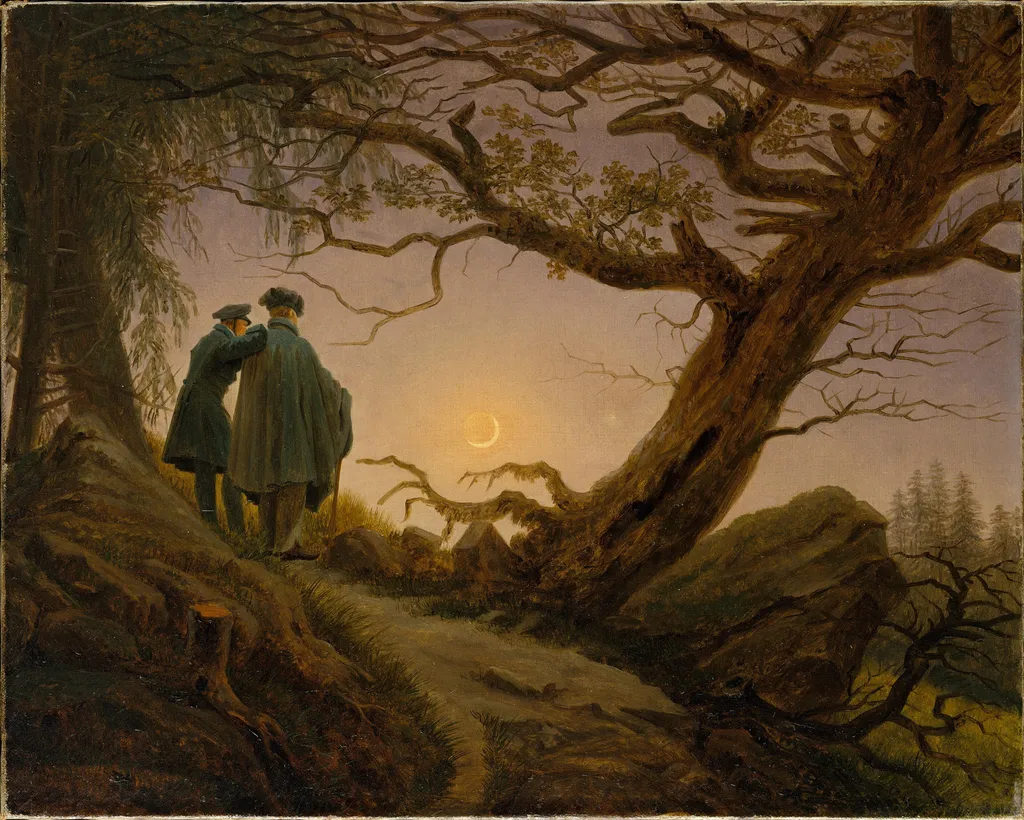
Two men contemplating the Moon is an oil painting by the German Romanticist artist Caspar David Friedrich. It dates from 1820 and is held in the collection of the Metropolitan Museum of Art.
About this work
The figure at right is Caspar David Friedrich himself, at left his young colleague August Heinrich, seen from behind.
On a wooded rise at dusk, two men in Old German dress stop to watch a sinking moon. The figure at right is Caspar David Friedrich himself, at left his young colleague August Heinrich, seen from behind. Painted around 1825 to 1830, this small oil is the third and last version of one of his most repeated compositions. The Met acquired it in 2000, after 170 years with the original owners' descendants.
Subject & Meaning
The painting depicts two men silhouetted against a night sky, their gazes directed toward a crescent moon. The contre-jour lighting emphasizes the moon as the sole light source, while the rocky foreground and trees frame the scene. Belonging to the Romantic movement, the work employs this nocturnal, contemplative subject to evoke themes of the sublime and humanity's smallness before nature.
The figures' shared gaze invites reflection on the infinite and the mysteries of the cosmos, a hallmark of Friedrich's symbolic landscapes.
Technique & Style
Painted in oil on canvas, the work is a small-format Romantic landscape measuring 34.9 by 43.8 cm. The scene employs a contre-jour effect, with the bright disk of the moon providing an intense, backlit light source against which the silhouettes of two men, a tree, and rocks are sharply defined. The handling emphasizes broad tonal contrasts rather than fine detail, characteristic of Friedrich's evocation of spiritual contemplation under moonlight. The earthy palette of dark browns and muted greens is punctuated by the luminous white-and-gold glow of the moon and the sky, lending the composition a hushed, sublime atmosphere.
The paint surface appears smooth, with little visible impasto, and the overall condition is undocumented in the available records.
History & Provenance
Dated to 1820, this oil-on-canvas painting is the third version of a composition by Caspar David Friedrich. Its recorded provenance includes ownership by Eugene Thaw and the art dealership Artemis S.A. before entering the collection of the Metropolitan Museum of Art, where it currently resides. No commission details or earlier ownership chain are documented in the provided sources.
Overview
This small oil on canvas, painted by Caspar David Friedrich around 1825–30, depicts two men, the artist himself and his friend August Heinrich, gazing at a moonlit landscape. Seen from behind, their figures invite the viewer to participate in their quiet contemplation. This work is the third iteration of a composition Friedrich first explored in 1819, becoming one of his most recognized and repeated themes.
Context
The Old German dress worn by the figures carried significant political undertones. This style was adopted by liberal student groups around 1815 as a symbol of resistance against the conservative political climate following the Napoleonic Wars. Despite a royal decree in 1819 that prohibited such attire, Friedrich continued to feature it in his art, subtly aligning his work with sentiments of national identity and dissent against established authority.
Own this work as a print
Artist & collection
Artist
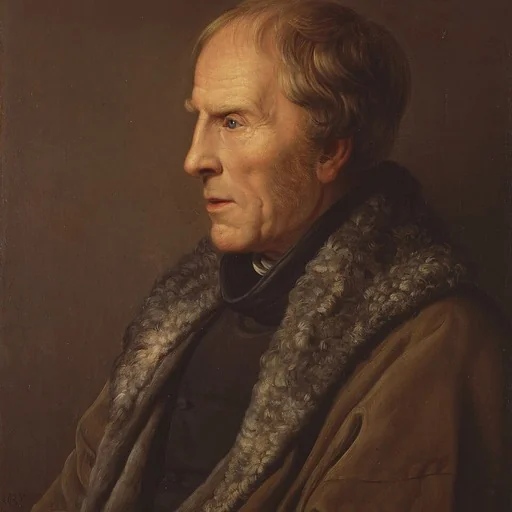
Caspar David Friedrich (German:; 5 September 1774 – 7 May 1840) was a German Romantic landscape painter, generally considered the most important German artist of his generation, whose often symbolic, and anti-classical…

 Moonrise over the Sea
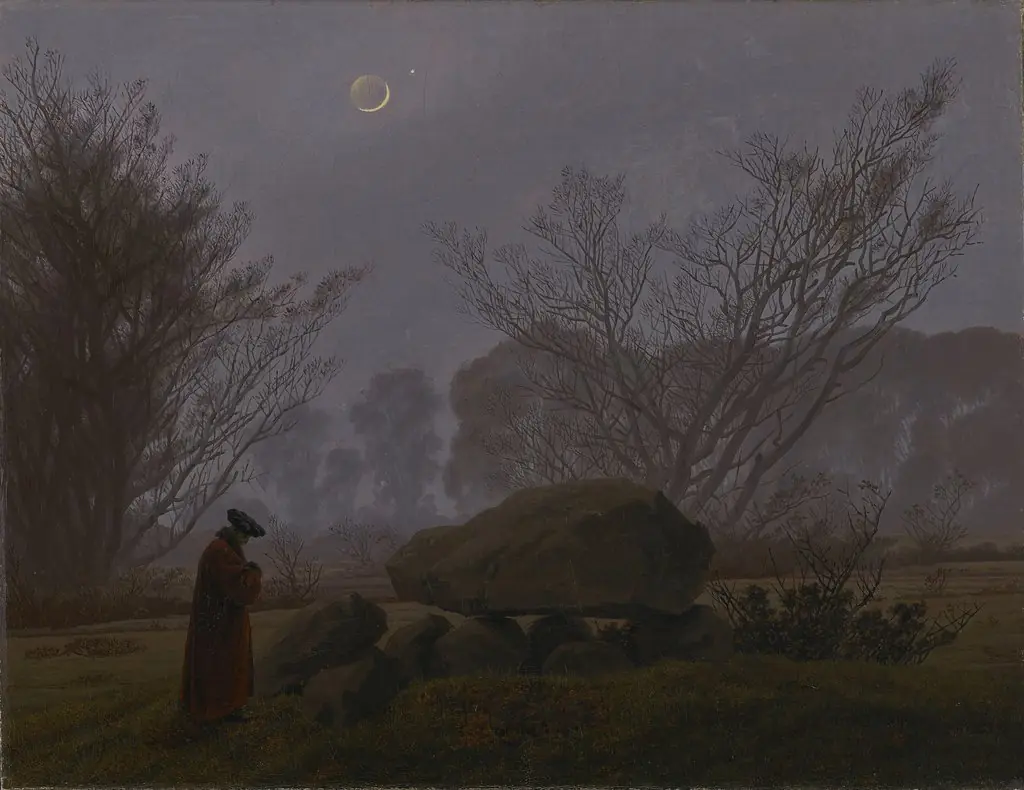 Walk at Dusk
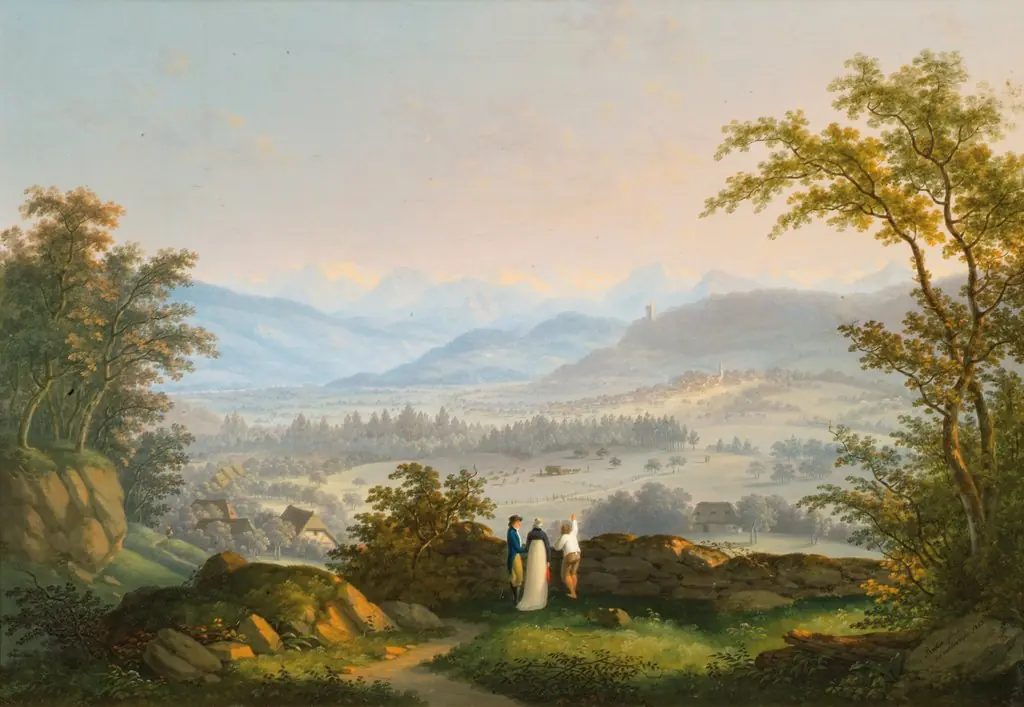 Surroundings of the Habsburg Ruin
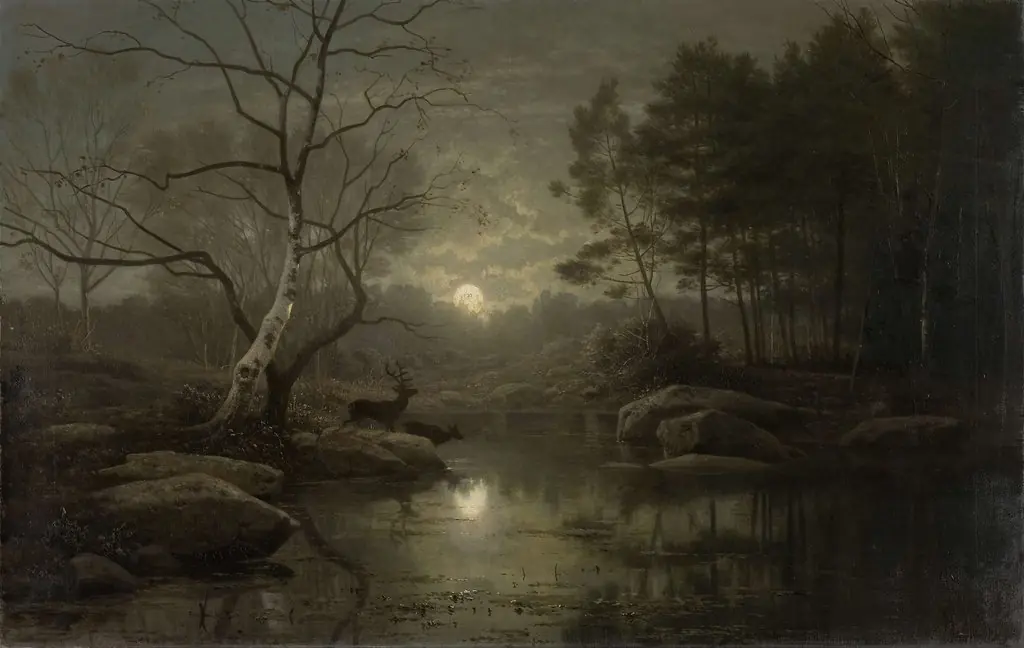 Forest Landscape in the Moonlight
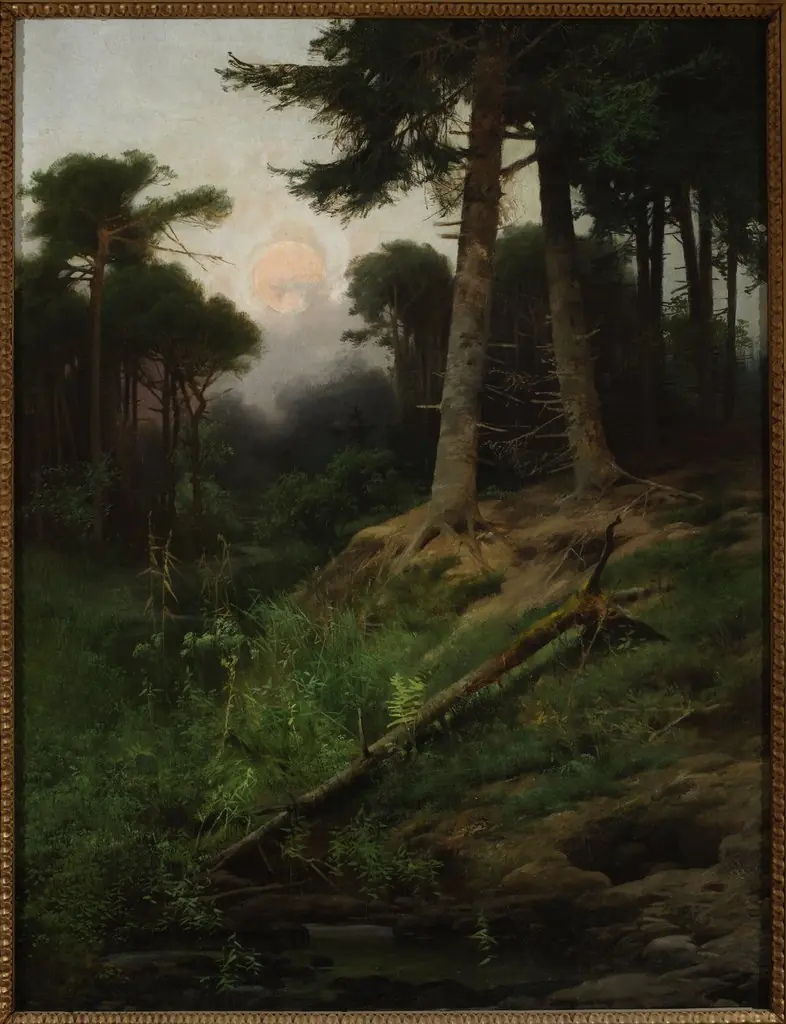 Forest landscape at sunrise
 Sunset
 Dovedale by Moonlight
 Forest Landscape in the Moonlight
 Moonlit Night (1958)
 Departure for the Hunt in the Pontine Marshes
 Rocks "Panieńskie Skały"
- Two Men before a Waterfall at Sunset