A Plow Horse in a Field by Lépine, Stanislas
Stanislas Lépine, a French Realist painter, is best known for his atmospheric depictions of the Seine. However, in "A Plow Horse in a Field" (c. 1870-1874), Lépine turns his attention to the quiet power of rural labor, a subject he depicted with profound respect. It is now in a private collection.
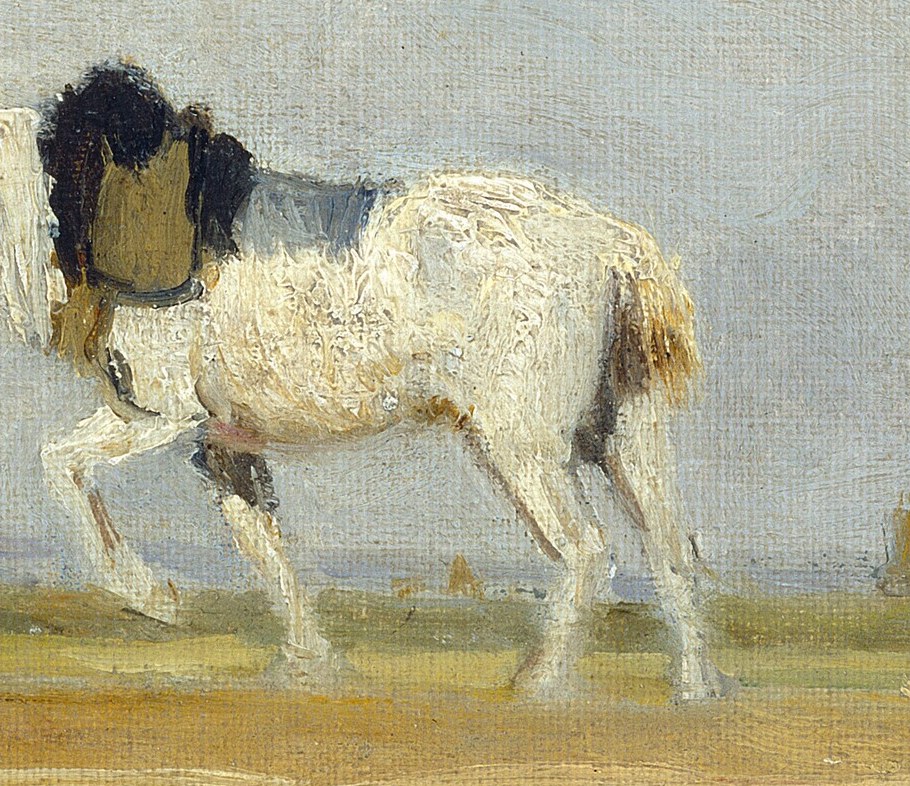
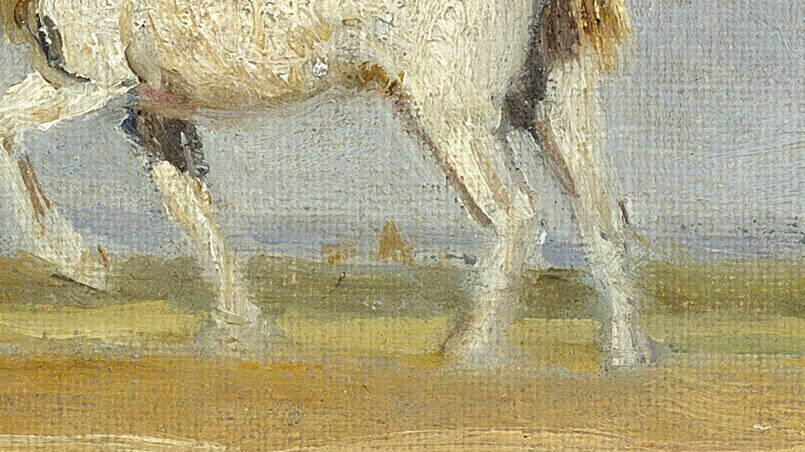
Look closely at the magnificent white horse. Lépine captures its straining posture and powerful musculature with a muted palette and soft brushwork, emphasizing the physical effort required for agricultural work. The textured field and pale sky further underscore the arduous, yet essential, nature of this everyday scene.
This painting reflects the Realist movement's commitment to portraying life truthfully, without idealization. Lépine doesn't just show a horse; he reveals the dignity inherent in the labor that sustains life, a testament to the artist's keen observation and empathy.
What details in the painting speak to you about the hard work involved?
Details
Transcript
This painter was known for Paris river scenes. But sometimes, he turned to the quiet countryside. He painted what he saw: the reality of daily work. Notice the powerful musculature, the straining posture. Every brushstroke shows the immense effort of labor. A quiet tribute to the unsung dignity of work.