Portrait of a Woman by Titian
This striking "Portrait of a Woman" by Titian, painted around 1560, is a masterclass in rendering light and texture through oil paint. Housed at the Museo del Prado in Madrid, it showcases the Venetian master's innovative techniques.
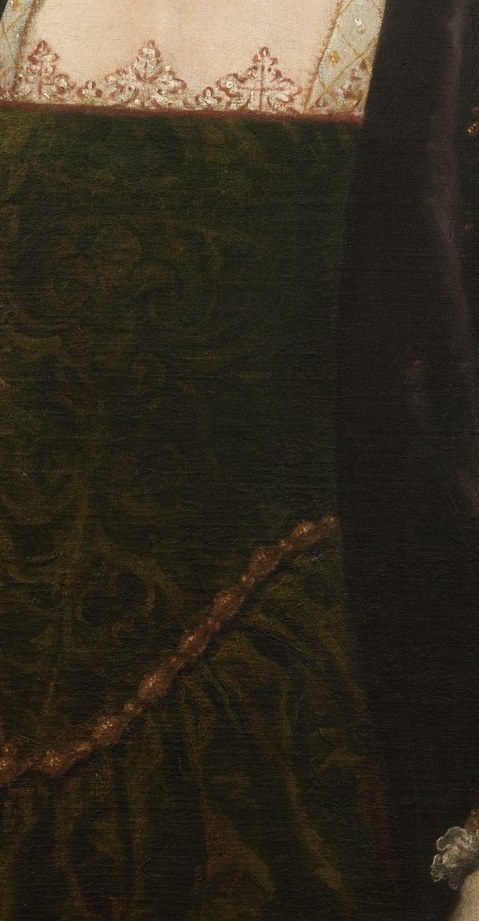
Observe the luxurious dark green fabric of her dress. Titian achieved this deep, rich color by applying multiple thin, transparent layers of glaze. This method allowed light to penetrate and reflect, creating an incredible illusion of depth and luminosity.
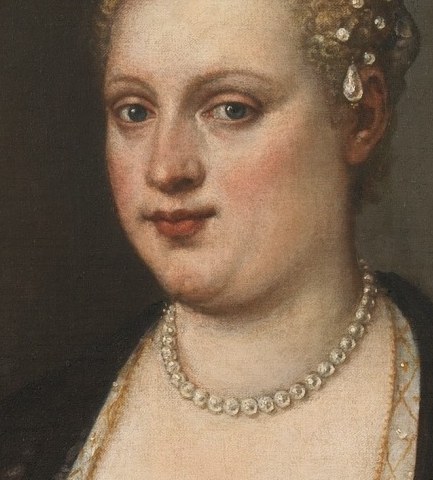
Then, turn your eye to the pearls in her necklace and the delicate beaded hair ornament. Titian used tiny, precise dabs of light-colored paint to capture their reflective quality, making them appear to shimmer with an inner glow. This attention to detail elevates the woman's status and the opulence of her attire.
Titian, one of the most influential painters of the High Renaissance, profoundly impacted later artists with his pioneering use of color and light. What other details can you spot that reveal his genius?
Details
Transcript
This woman, painted in 1560, is known only by her portrait. The painter was Titian, master of light and texture. Look at the dark green fabric of her dress. He built its deep color by layering transparent glazes. Now, see the luminous pearls of her necklace. He painted them with tiny, brilliant dabs of light. The result is a convincing illusion of richness and depth.