Christ and the Virgin in the House at Nazareth by Francisco de Zurbarán
What looks like a quiet domestic scene is actually a complete theological program hidden in plain sight. Zurbarán's Christ and the Virgin in the House at Nazareth (1630, Cleveland Museum of Art) encodes the entire Passion and the doctrine of the Immaculate Conception inside a single room.
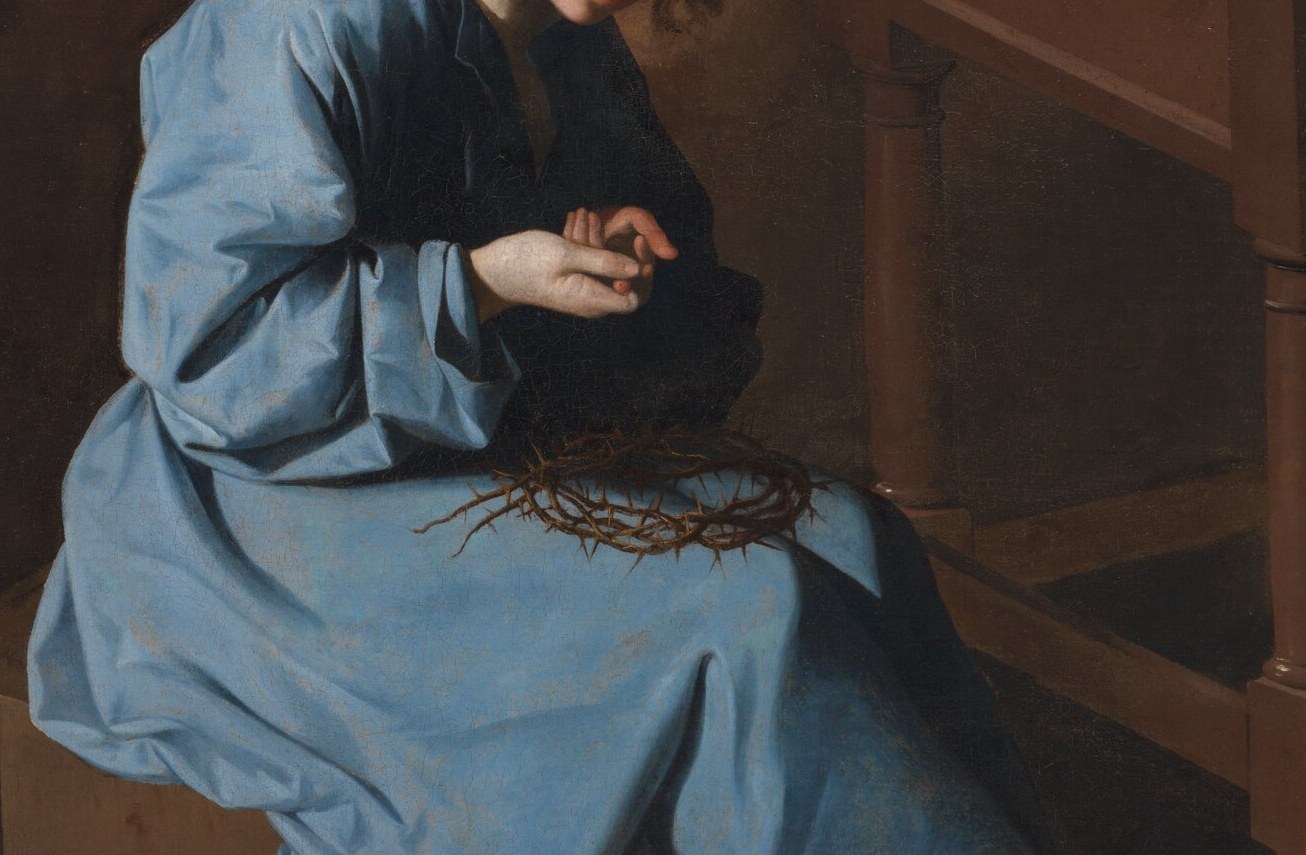
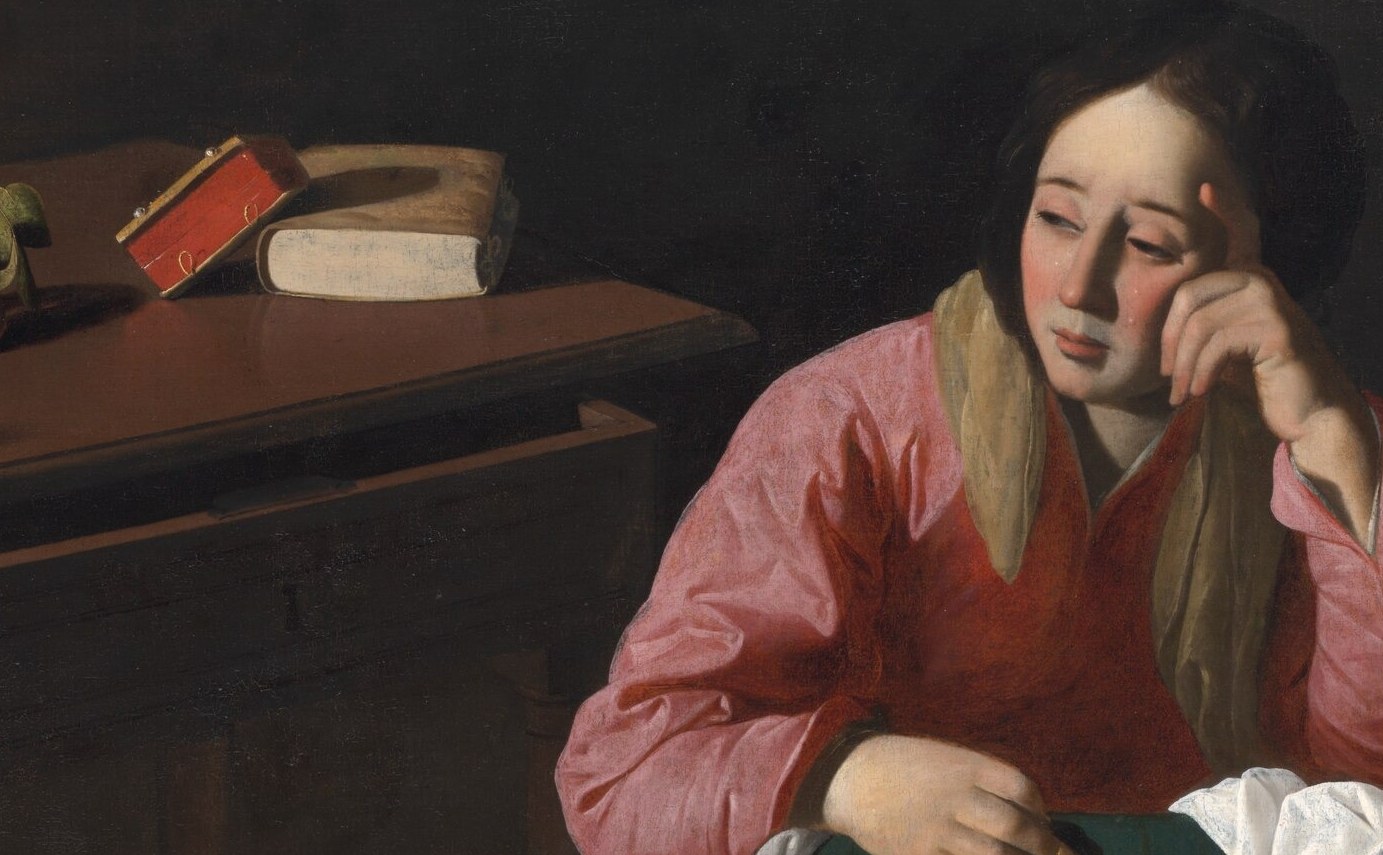
The young Christ weaves a crown of thorns, the instrument of his execution, and has already pricked his finger, drawing the first drop of blood. Mary does not intervene. Her hands rest still on her lap; her face is already sorrowful, already the Mater Dolorosa, even before the story demands it.
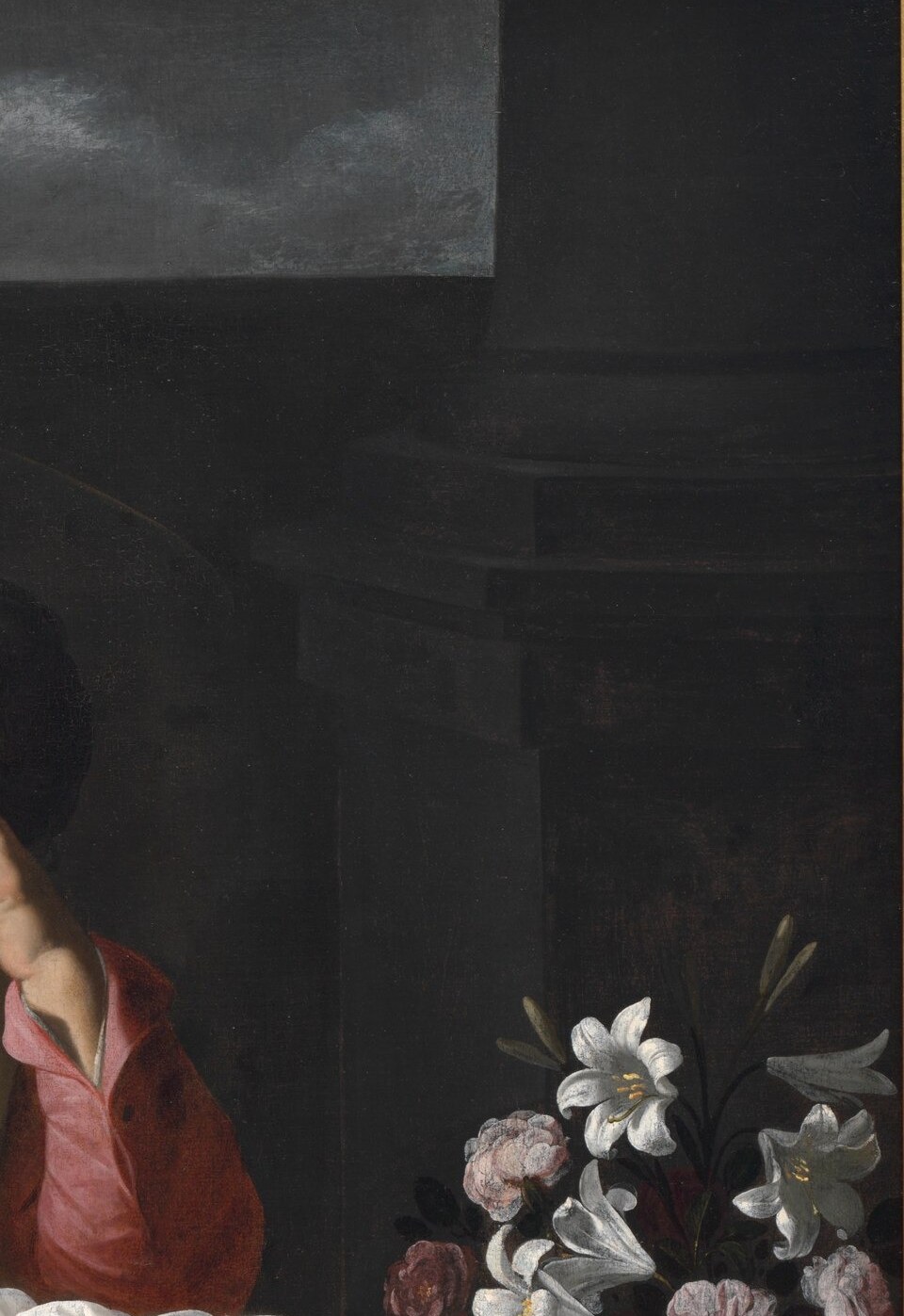
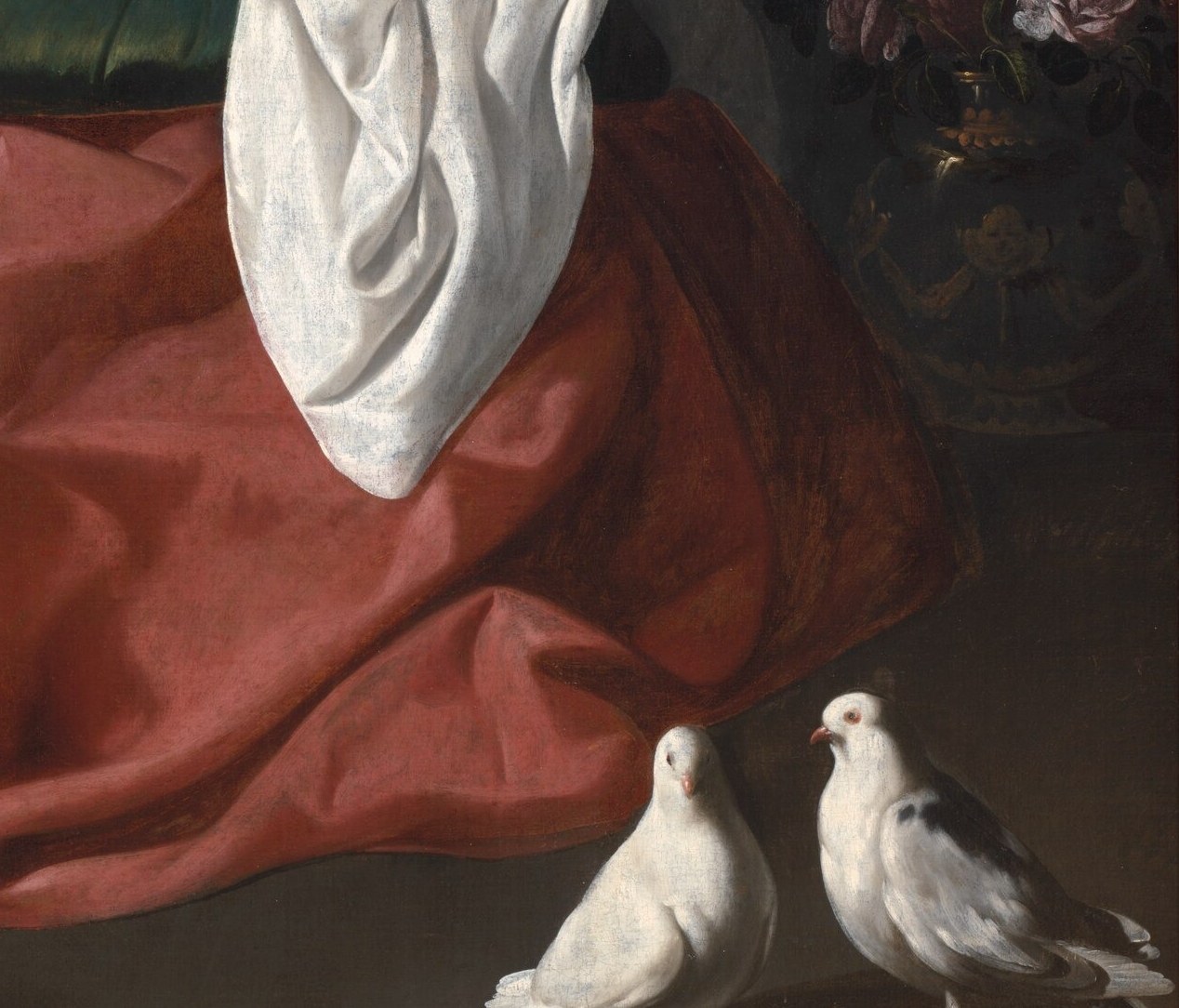
Every object on the table carries meaning: open Hebrew Scriptures pointing to prophecy, lilies and roses asserting the Virgin's purity, pears signifying Christ's love for humanity. The doves on the floor represent the human soul awaiting resurrection, and the water pot at Christ's feet alludes to Baptism. Heaven itself appears only as a burst of cherubic light in the upper corner, watching, but not intervening.
Zurbarán was called the Spanish Caravaggio for his tenebrism, but his restraint is his real power. He gives a sacred event the gravity of stillness, not spectacle. Next time you see a still-life detail in a religious painting, ask yourself: is that just decoration, or is it doing serious theological work?
Details
Transcript
They look like a mother and son on an ordinary afternoon. But he is weaving a crown of thorns. One thorn has already pricked his finger. The books on the table are the Hebrew Scriptures, open to prophecy. White lilies and roses: the signature of the Immaculate Conception. The doves on the floor represent the human soul, whose resurrection all this will secure. And Mary's hands do not reach for the child. She already knows what this boy will become.