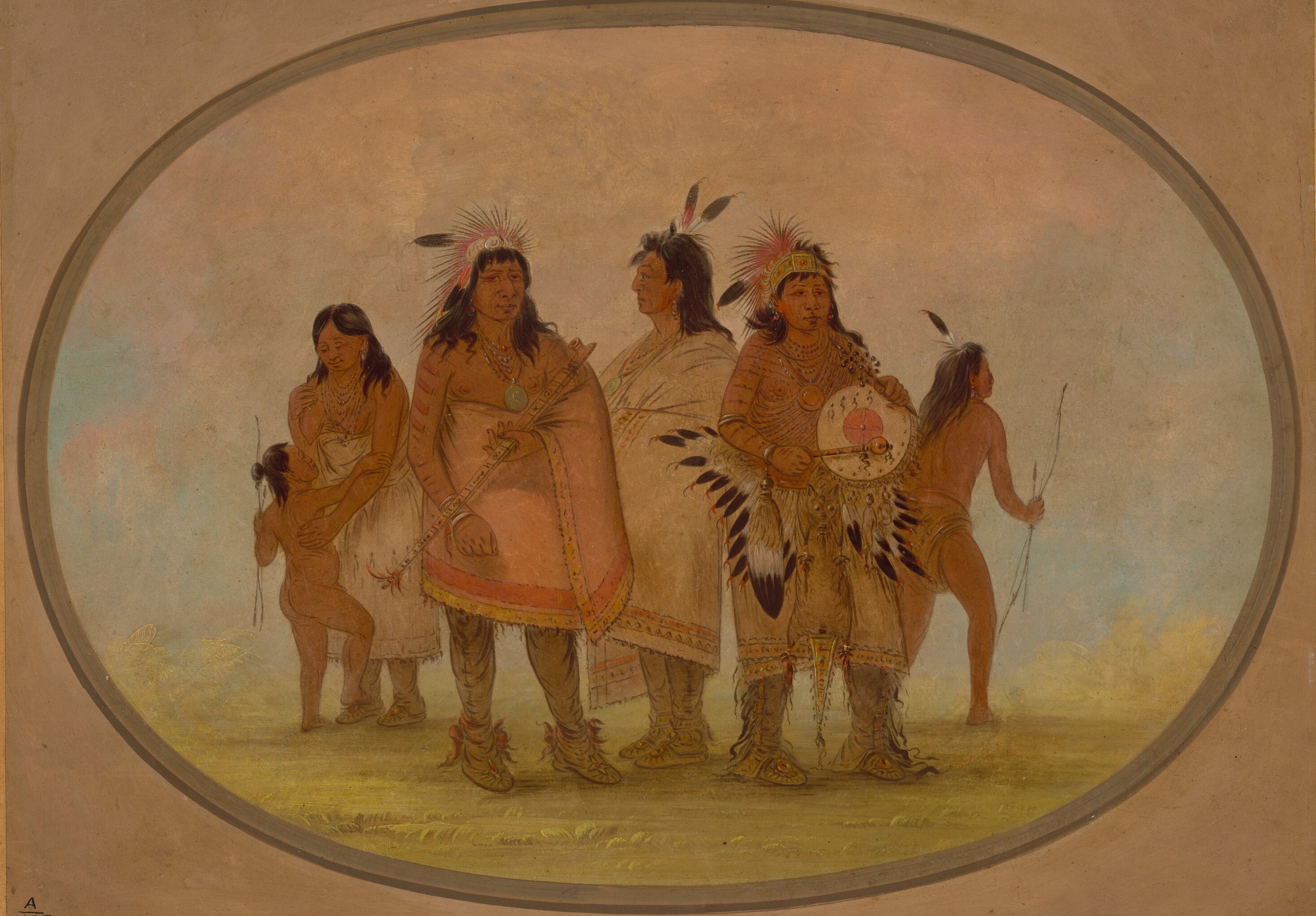
Two Sioux Chiefs, a Medicine Man, and a Woman with a Child by Catlin, George
George Catlin, a lawyer turned artist, made five expeditions into the American West during the 1830s to document the lives of Native American peoples. This painting, "Two Sioux Chiefs, a Medicine Man, and a Woman with a Child," created in 1861, is an oil on card and is part of his extensive work that recorded the Plains Indians.
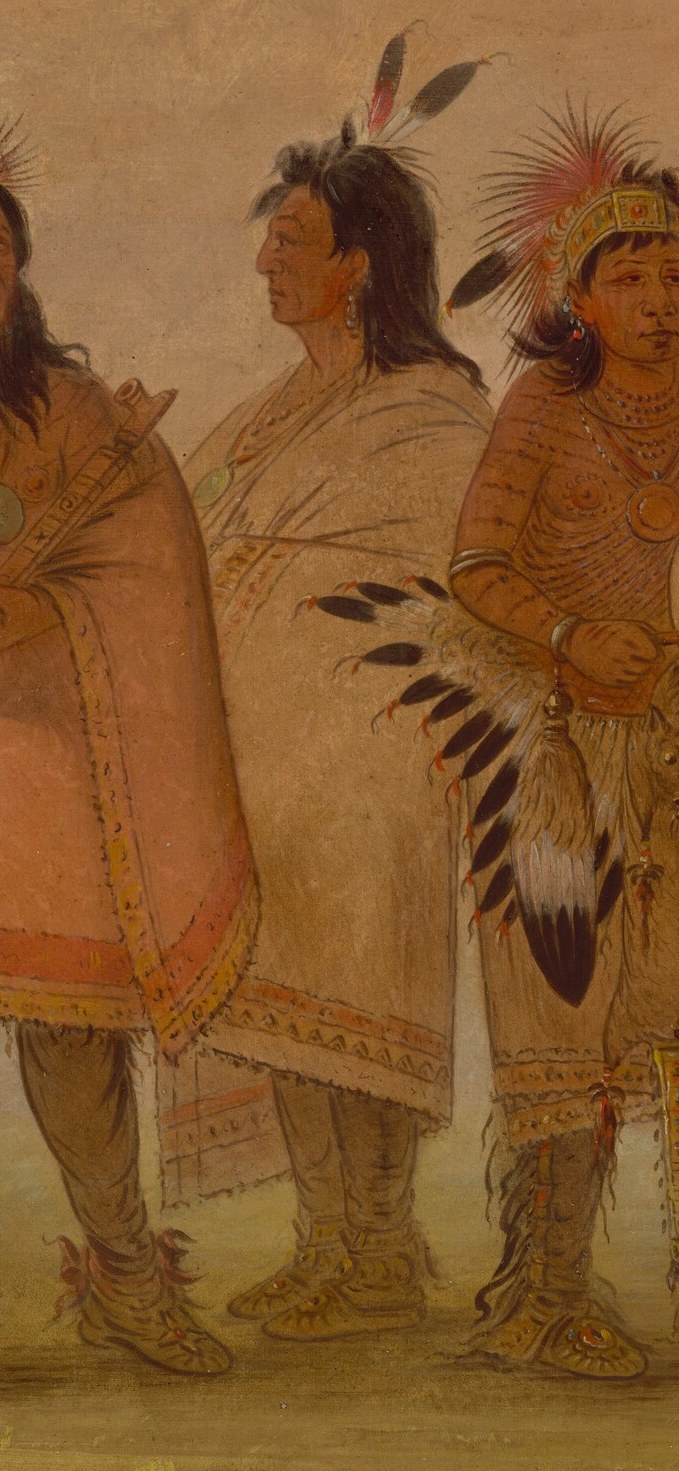
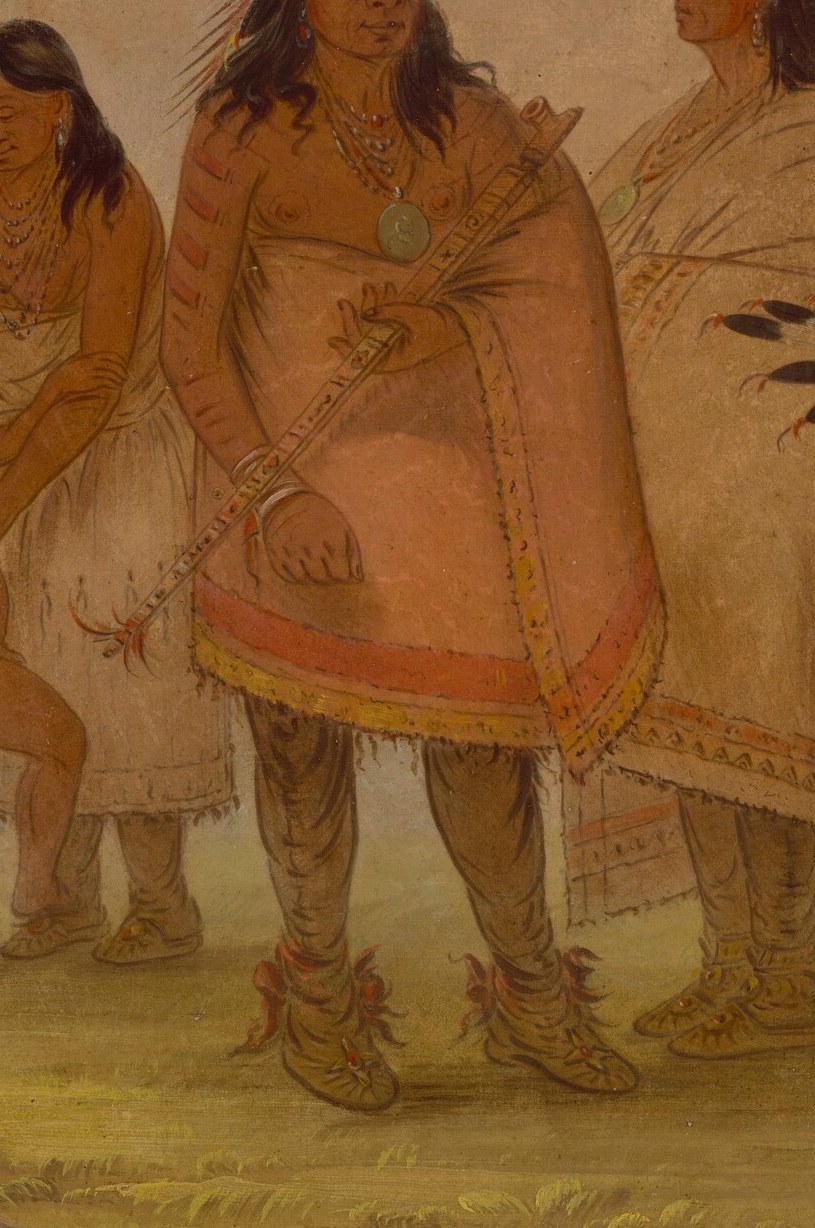
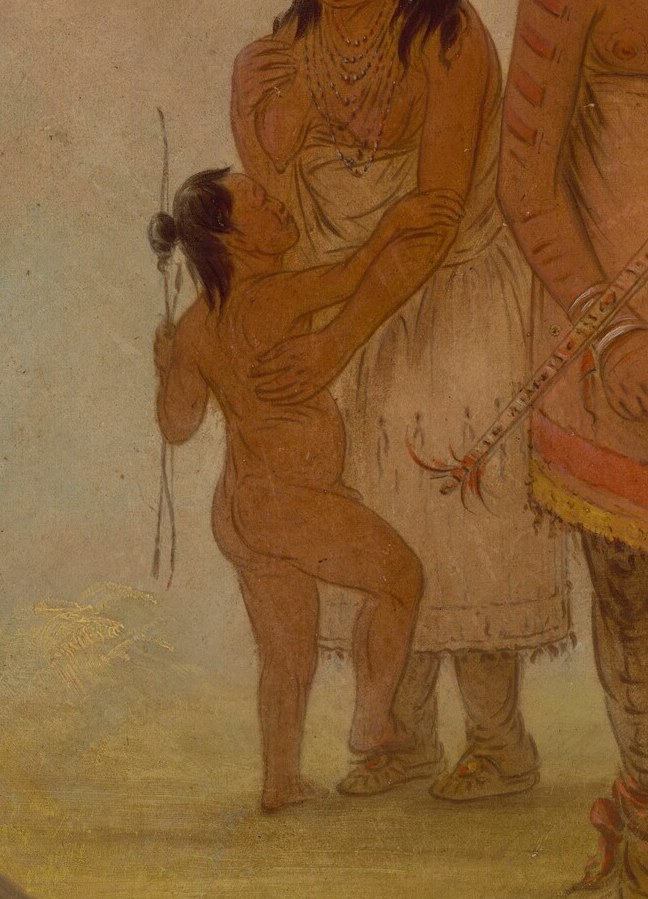
The piece depicts a powerful collective presence, showcasing figures from the Sioux nation. Look closely at the rich details, such as the feathered headdresses, the beaded necklace, and the woman's tender embrace of her child, all rendered with a documentary approach.
Catlin's purpose was to create both written accounts and visual sketches, preserving a record of the Indigenous peoples he encountered. His work remains an important visual chronicle of this period in American history.
What details in the regalia or postures speak most to you about the lives he aimed to capture?
Details
Transcript
In the 1830s, this artist traveled the American West. He sought to document the lives of Native American peoples. This painting shows figures from the Sioux tribe. Here, a woman cradles her child, reflecting family bonds. The intricate feathers and beads show their culture. His detailed studies capture a moment in time.