Woman Standing by a Tree by Renoir, Auguste
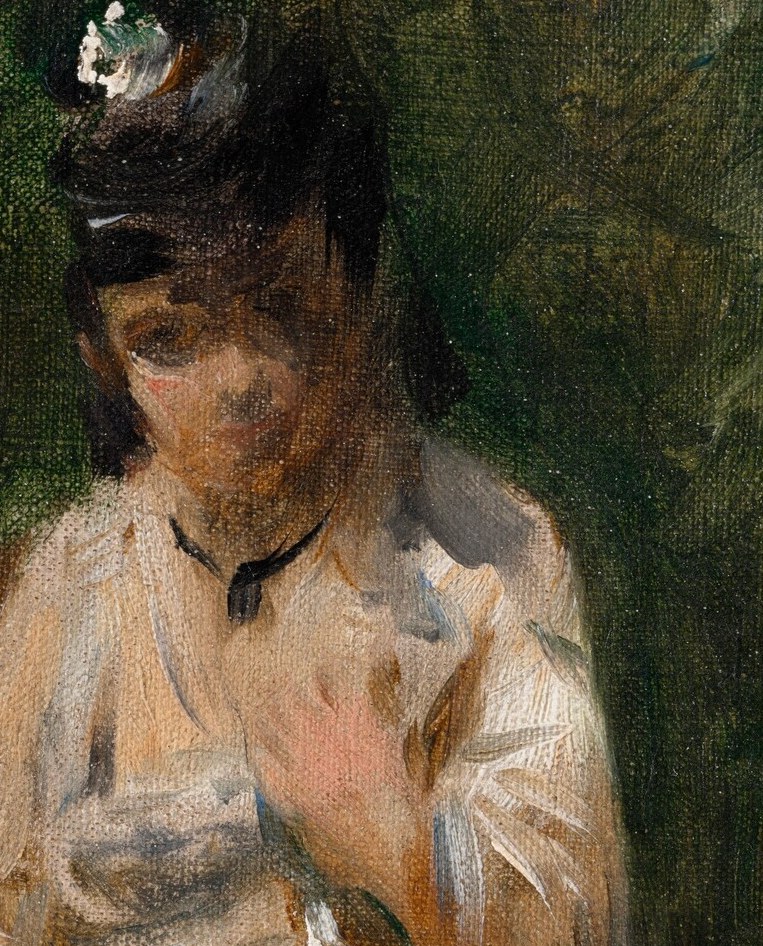
Pierre-Auguste Renoir's "Woman Standing by a Tree," painted in 1866, shows a quiet introspection unusual for his later, more vivacious works. This early oil portrait, housed in a private collection, hints at the innovative brushwork that would soon define Impressionism.
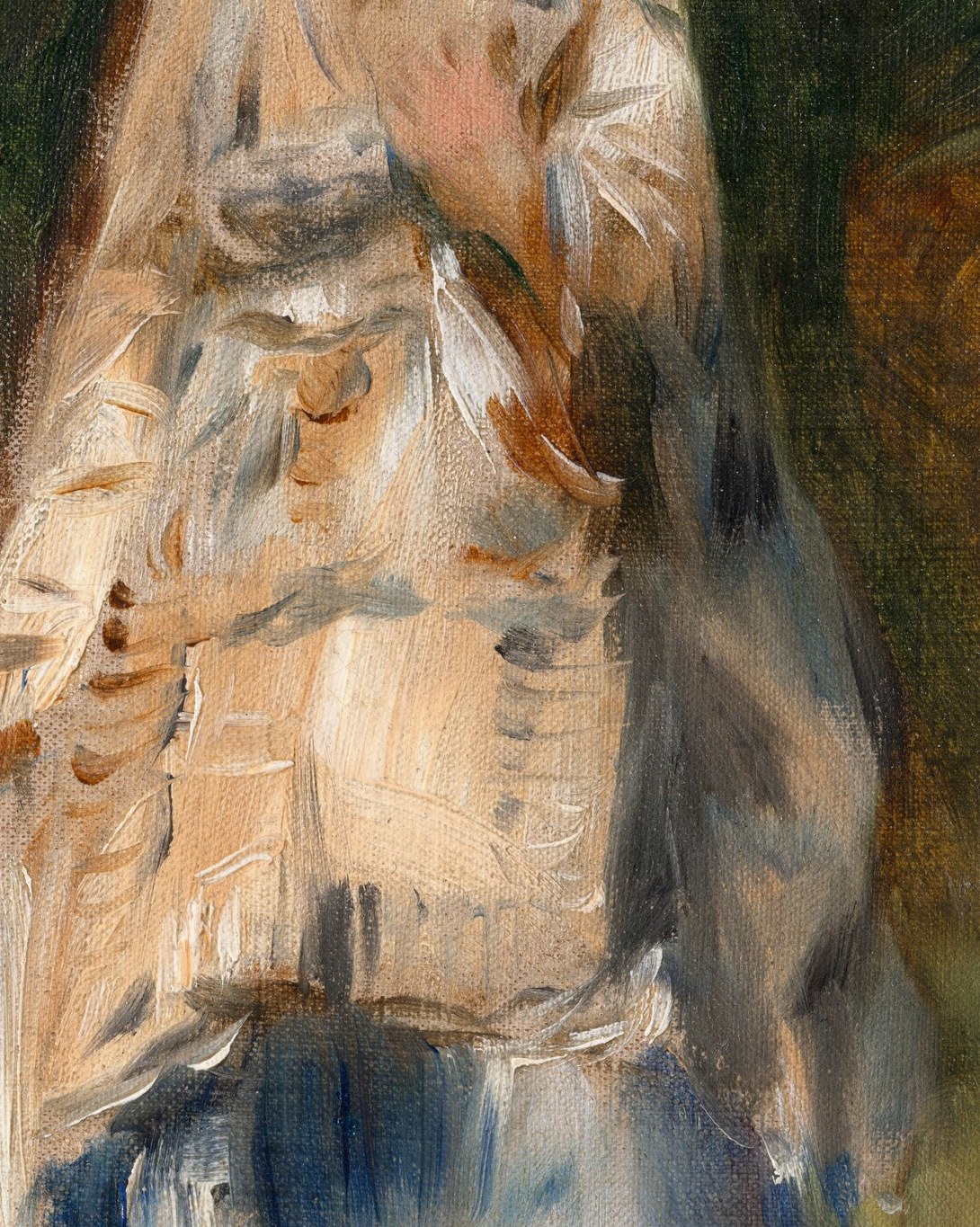
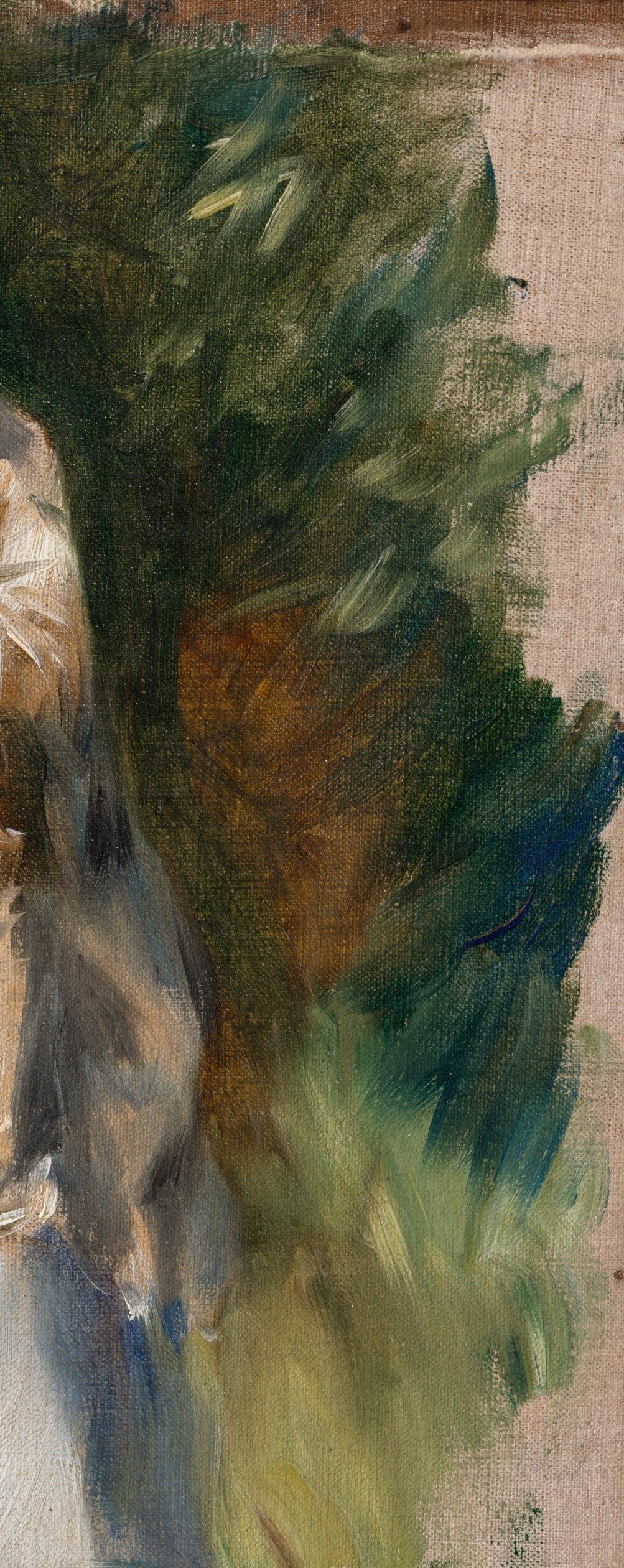
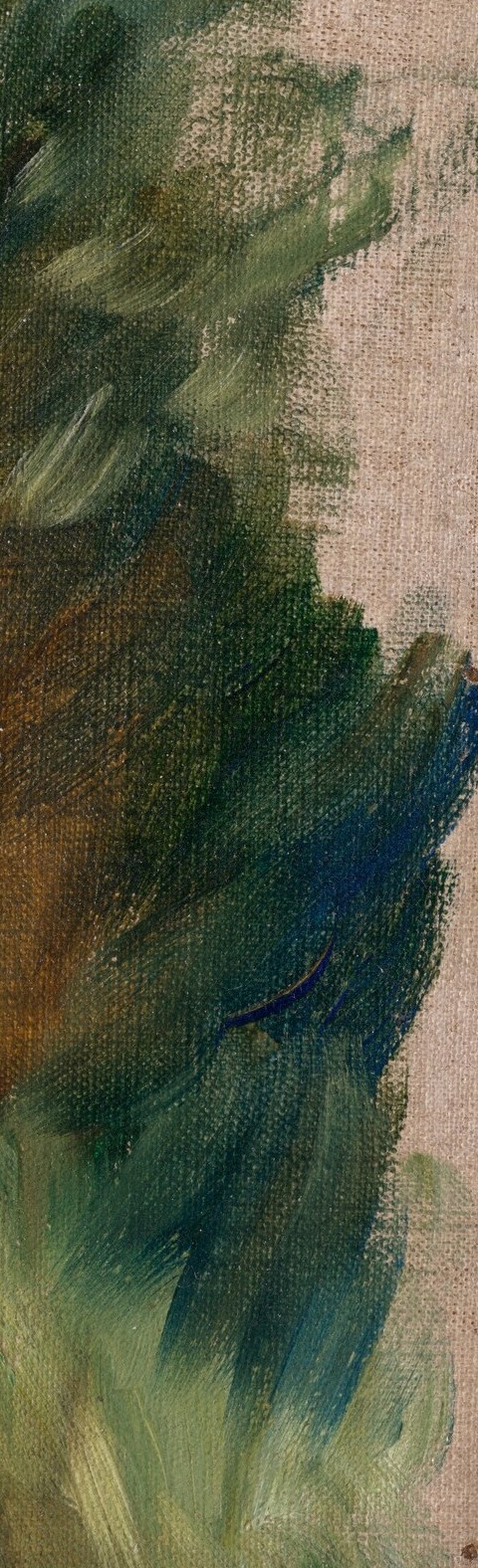
While the painting appears to be a straightforward portrait at first glance, a closer look reveals intriguing details. The delicate 'AR' monogram, Renoir's early signature, is subtly tucked away in the lower left corner. On the far right, an ambiguous dark form in the background invites speculation: is it a distant tree or perhaps another figure?
Renoir, who would become a founding figure of Impressionism, was still developing his style when he created this piece. His use of rapid, visible brushstrokes to capture light and texture was a departure from academic conventions of the time, signaling the experimental spirit that would soon transform French painting. This work offers a glimpse into the formative years of a master.
What do you see in the background? The beauty of these early works often lies in their subtle mysteries.
Details
Transcript
This early Renoir looks like a simple portrait. He painted it in 1866, years before Impressionism truly broke out. Her expression is unusually quiet for him. But look closely at the lower left corner. Renoir left his tiny 'AR' monogram, almost hidden in shadow. Now, turn your eye to the far-right edge. A mysterious form could be a second tree, or another person.