A View of Dordrecht in Winter by Siebe Johannes ten Cate (Dutch, 1858–1908)
Siebe Johannes ten Cate spent most of his working life in France, painting in the Impressionist style. But he never stopped painting the Dutch cities he grew up with. "A View of Dordrecht in Winter" (1892) is one of those paintings: a frozen river, a familiar skyline, and an artist's mark tucked in the corner. It hangs at the Rijksmuseum.
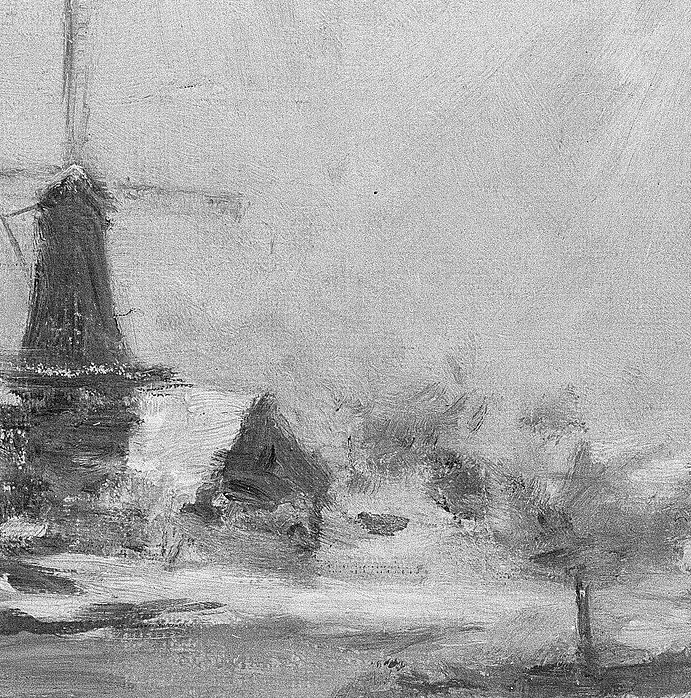
Look closely at the ice. A sailboat sits locked in place, its masts bare. The windmill's sails are still. Everything is frozen, except two seagulls cutting through the cold air, the only sign of life in a stopped world. Down in the corner, the painter wrote just the year: ninety-two.
ten Cate was Dutch-Frisian and moved to France early in his career. There he absorbed Impressionist technique (broad brushstrokes, atmospheric light), but his subject matter kept returning to the Netherlands. Harbors, canals, winter skies. This painting entered the Rijksmuseum's collection, where it remains a quiet, lesser-known record of a real city on a real frozen day.
There is something stubborn about painting the cold of home while living somewhere warmer. Maybe winter stays with you longer than summer does.
Details


Transcript
He lived most of his life in France. But he was Dutch. That skyline is Dordrecht. He knew it by heart. The windmill's sails are still. No wind, no grinding. Only two gulls keep moving. Life holding on. He signed it here. Just the year: ninety-two.