Eliza Wells by Stanley, Abram Ross
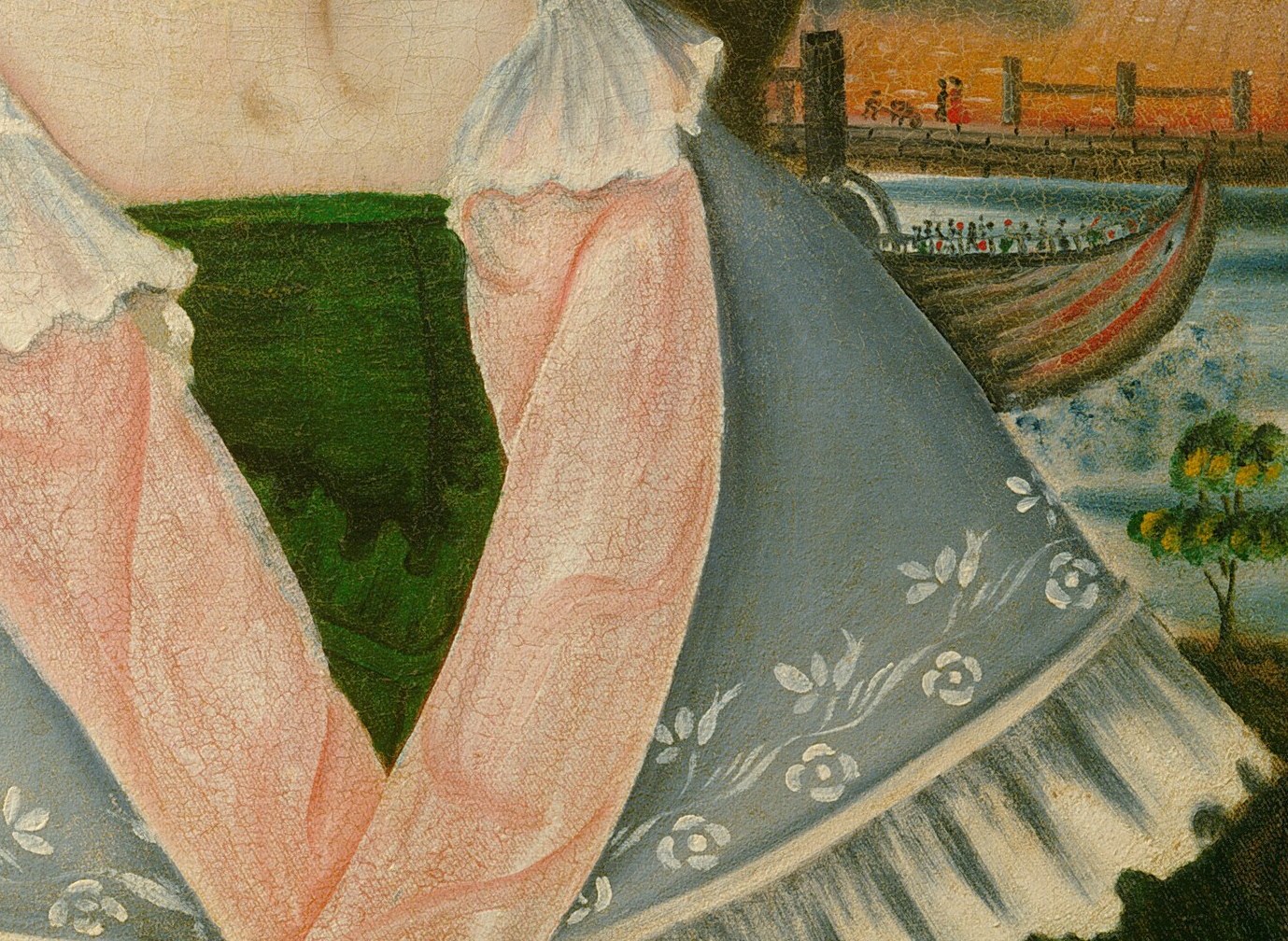
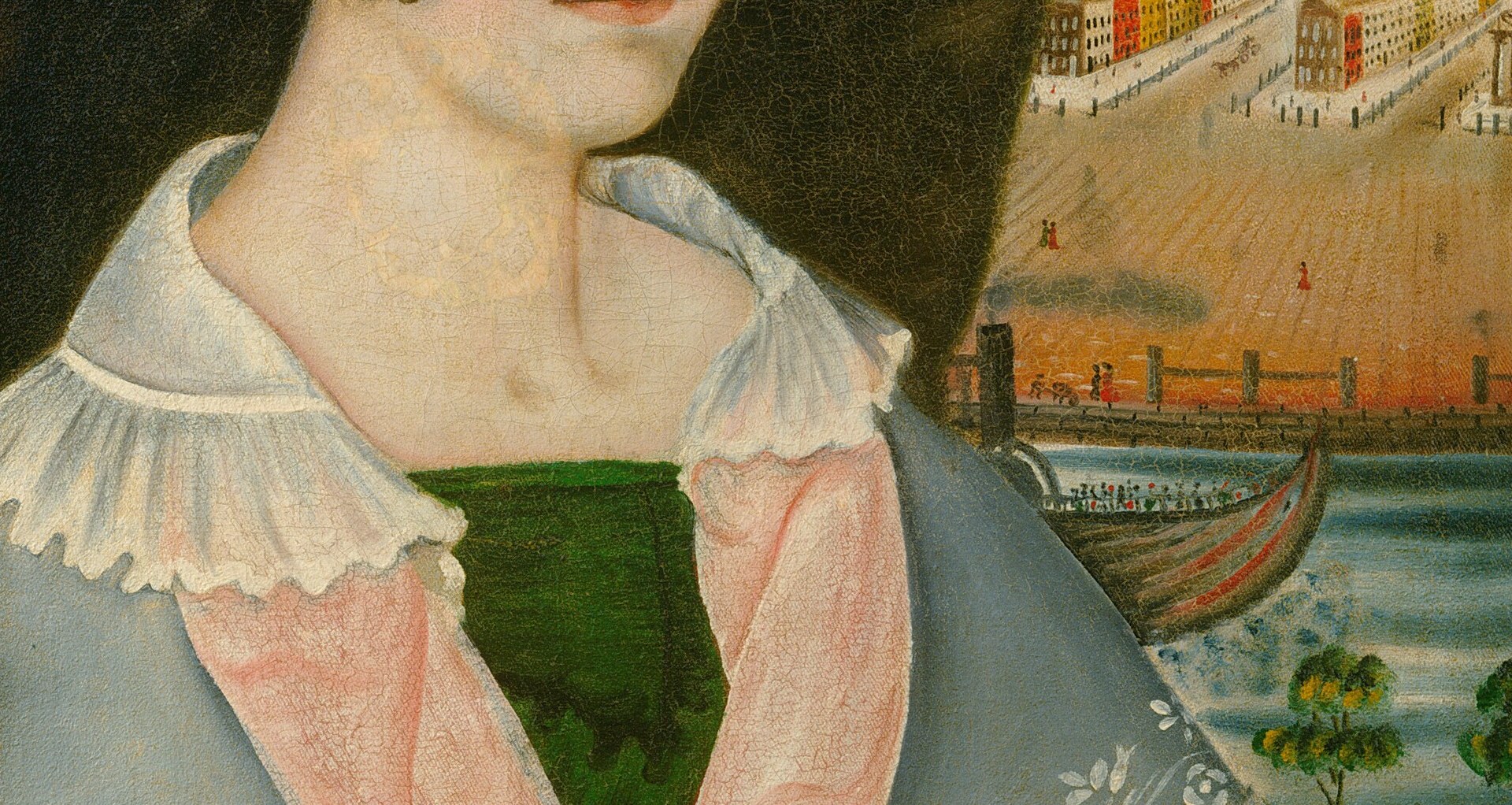
Abram Ross Stanley's 1840 portrait, "Eliza Wells," presents a formal depiction of its subject with a composed expression and direct gaze. While Eliza Wells is clearly the central focus, the painting is framed by intricate decorative borders.
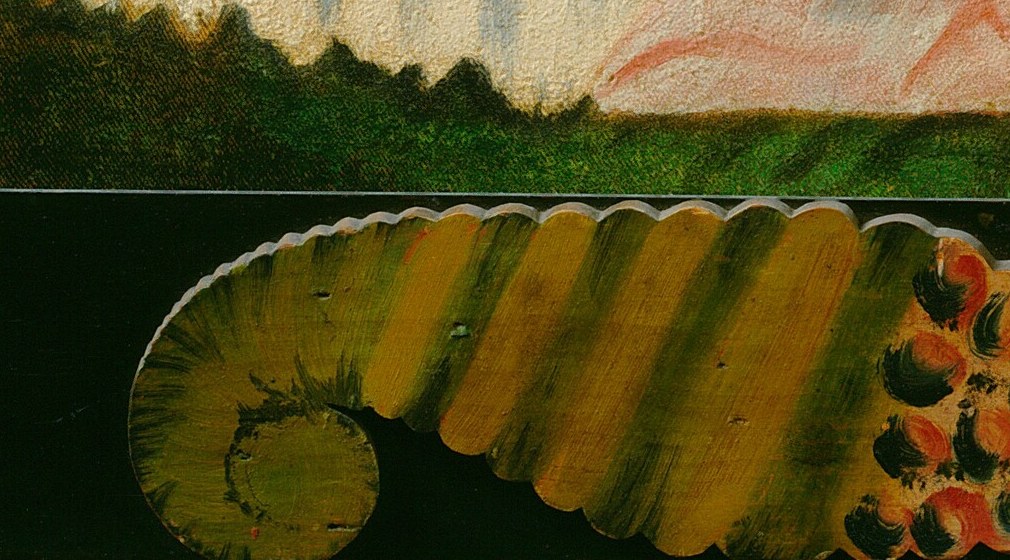
These borders feature stylized fruit, leaves, and a pair of birds at the top. However, it's the swirling, organic forms at the bottom of the portrait that hold a subtle secret. If you look closely at the stylized green and red ornament on the bottom left, you'll discover a clever detail.
What appears to be an abstract design is actually the artist's signature. Stanley intricately wove his name, 'Stanley,' into the swirl, a unique and subtle way to sign his work. This detail rewards close inspection, revealing a touch of the artist's ingenuity.
Did you spot the signature on your first look?
Details


Transcript
This portrait of Eliza Wells was painted in 1840. Her steady gaze and composure are the central focus. But the painter added curious, stylized borders. Look closely at the swirling ornament at the bottom left. It isn't an abstract design, but a signature. The artist signed his name, 'Stanley,' into the swirl.