Portrait of a Gentleman and His Daughter by Francois M. Guyol de Guiran
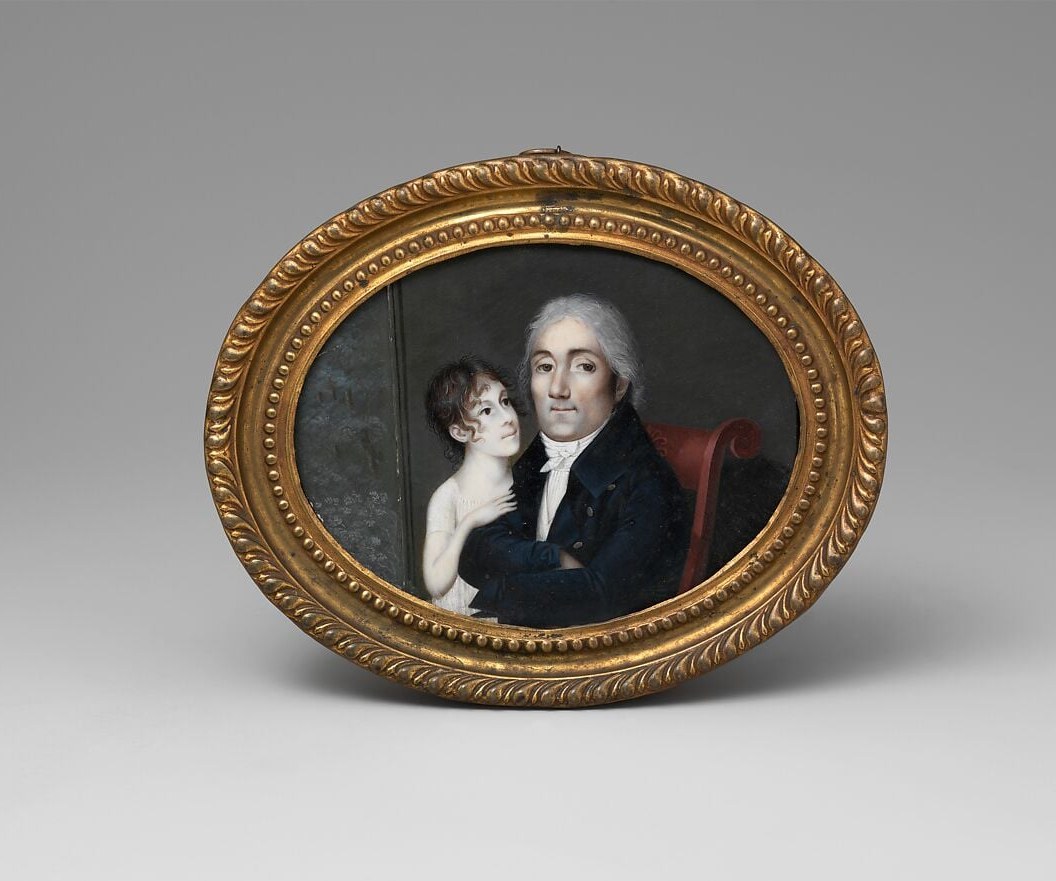
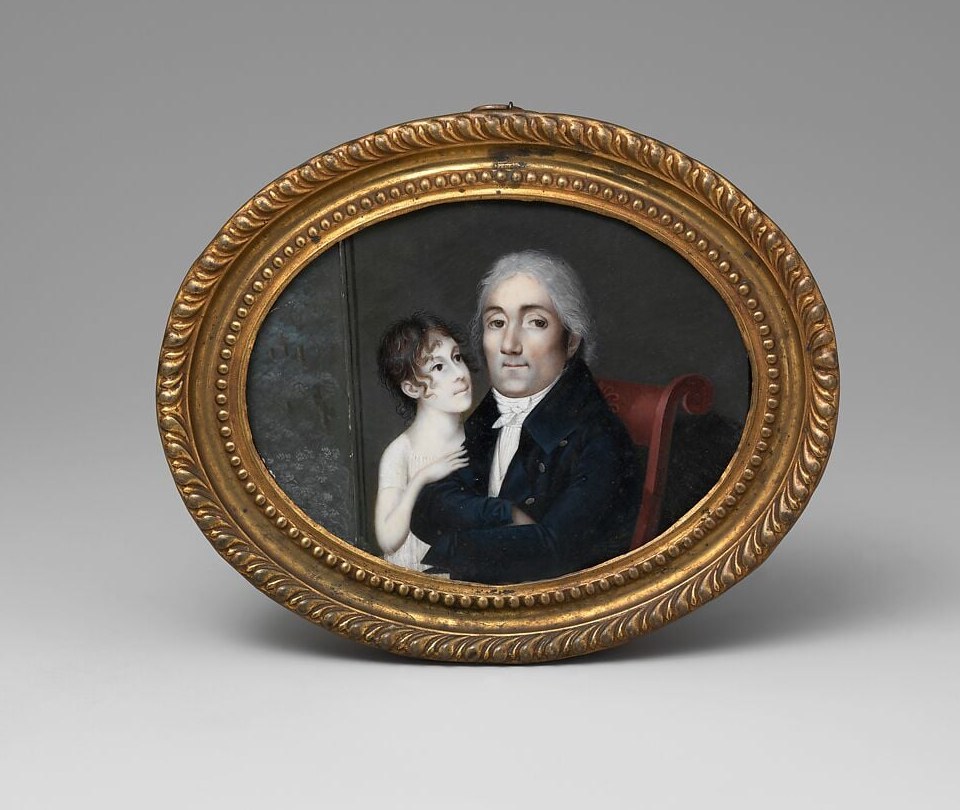
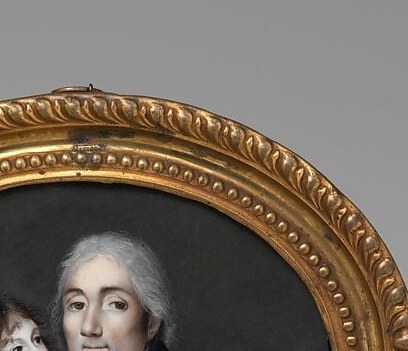
This is Portrait of a Gentleman and His Daughter, a watercolor on ivory miniature painted by Francois M. Guyol de Guiran around 1805. It lives in the American Wing of the Metropolitan Museum of Art, and if you look closely at its ornate gilt border, you'll notice something: it was meant to be worn, not hung on a wall.
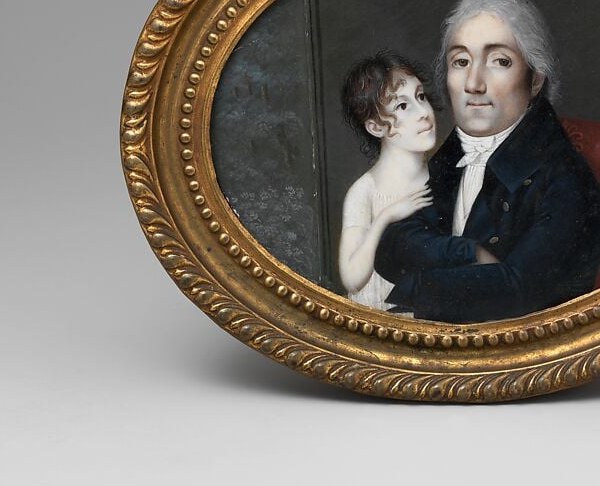
The painting is barely larger than a brooch. The father's dark fitted coat and the girl's white Empire-style dress anchor a careful tonal triangle, but the real weight of the piece is in the hands. He cradles her on his lap with a deliberate tenderness that transforms a formal sitting into a record of protection. Her loose ringlets and soft round face, placed slightly lower in the oval, create a quiet visual dialogue of trust.
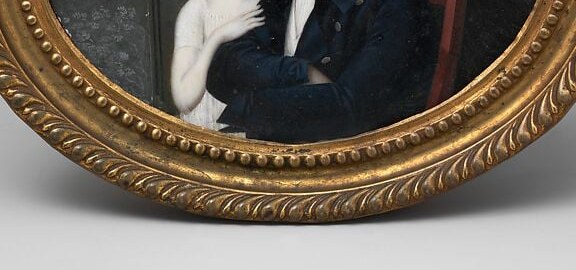
Guyol de Guiran was working in a specialized trade where the luminous surface of ivory beneath translucent watercolor gave skin an almost glowing lifelikeness. These miniatures functioned as portable tokens of love, or sometimes memorials for a lost child or spouse. The painted paper surround visible at the inner edge of the frame reveals the layered technique that produced that jewel-like finish.
The direct gazes of both figures ask us to return their stare, to complete a bond that a parent once kept close to their heart.
Details
Transcript
This isn't a canvas on a wall. It's a watercolor miniature, painted on a sliver of ivory. The gilt frame was meant to be worn, like a locket. Look at the father's hands. He isn't just posing. He's holding her. Her white muslin dress and loose curls mark the fashion of 1805. These portraits were private tokens of love, or sometimes, of mourning.